1. The UV Protection Test — Start Here, Always
If you only check one thing, make it this. UV protection is the entire reason sunglasses exist beyond fashion, and it's the one quality indicator you cannot eyeball. This is where most shoppers get it completely wrong.
What to look for on the label
Quality sunglasses will always state their UV protection level clearly on the tag, frame temple, or lens sticker. The two terms you want to see:
- UV400 — the gold standard. This means the lenses block all light rays with wavelengths up to 400 nanometers, covering 100% of UVA and UVB radiation.
- 100% UV protection — means the same thing. Both labels are acceptable.
Be skeptical of anything that just says "blocks UV" or "UV protection" without a specific percentage or UV400 designation. That language is technically meaningless — it could mean 40% protection or 80%. Neither is enough.
The counterintuitive truth about dark lenses
This one genuinely surprises people. Darker lenses do not mean better UV protection. UV blocking is determined by a chemical treatment applied to the lens during manufacturing — it has nothing to do with how tinted the lens looks.
Here's why this matters beyond inconvenience: when you put a dark lens in front of your eyes, your pupils dilate. They open wider because your brain registers the low light. If that dark lens has no UV coating, you're now allowing more UV radiation to reach your retina than if you'd gone without sunglasses entirely. A pair of cheap, dark-tinted frames without UV400 protection is genuinely worse than nothing.
The at-home UV flashlight test
You can do a rough UV protection check at home with a UV flashlight (the kind used to check hotel rooms or verify currency). Here's how:
- Shine the UV light at a paper bill — the watermark will glow.
- Hold your sunglasses between the flashlight and the bill.
- If the lenses block UV, the glowing watermark disappears or dims significantly.
Note: this test gives you directional confidence but isn't lab-accurate. As Dr. Andrea Thau, past president of the American Optometric Association, has pointed out: "We have methods of testing UV protection, and unfortunately, you cannot tell if they have UV protection from just looking at them." If you want definitive results, an optometrist can test your lenses with proper equipment during a regular eye exam.
2. The At-Home Lens Quality & Distortion Test
UV protection is invisible. Lens optical quality, on the other hand, you can test in about 10 seconds. This is the standard test recommended by the American Academy of Ophthalmology, and it works every time.
The straight-line test
- Find something with a straight, regular pattern — a tiled floor, a door frame, a window grid, venetian blinds.
- Hold the sunglasses at a comfortable distance from your face and cover one eye.
- Look through the lens at the straight line.
- Slowly move the glasses from side to side and up and down — keep your eye still, move only the glasses.
Good lenses: the straight lines stay perfectly straight throughout the movement. No swimming, no waviness.
Bad lenses: the straight line curves, wobbles, or distorts — especially in the center or near the edges of the lens. That's an optical aberration, and it means the lens wasn't manufactured to optical-grade standards.
Why this matters more than people realize
Low-quality lenses don't just look bad — they make your eyes work overtime to constantly correct the distortion they're seeing. After a full day in the sun, that translates to real eye strain, headaches, and fatigue. You'll end up taking them off. And then you're back to squinting in direct sunlight, which is exactly what you were trying to avoid.
Also check the lenses closely for bubbles, specks, internal scratches, or uneven color patches. These defects are manufacturing flaws, and any one of them is a reason to return the pair.
3. Frame & Hinge Quality — What Your Hands Tell You
Beyond the lenses, the frame is where the quality gap between a $30 pair and a $300 pair is most physically obvious — if you know what to feel for. This section is about the tactile test.
The flex test
Pick up the sunglasses and gently twist the frame. A quality frame will have a slight, controlled flex — it gives a little but springs back to shape. Cheap frames either feel completely rigid (and will snap under pressure) or feel flimsy, like they're about to fold in half.
Then gently press on the bridge. It should feel solid. Cheap frames often show stress marks or audible creaking under light pressure.
What the frame material tells you
The hinge test
This is the single most underrated quality check. Open and close the temple arms several times. In a quality pair, the hinges should:
- Move smoothly with zero wobble or play
- Open with a clean, solid resistance — not too stiff, not floppy
- Not squeak, creak, or feel gritty
- Spring back to position if they have spring hinges (common in mid-to-high-tier frames)
Cheap hinges are usually single-barrel, riveted plastic. They wobble immediately and are almost always the first thing to fail. Metal hinges with barrel construction — especially spring-loaded ones — are a real signal of a frame built to last.
If you're shopping for a specific frame style, our deep-dives on the best aviator sunglasses and the best Wayfarer sunglasses both highlight which specific pairs have the frame construction to back up the price tag.
4. How to Test if Sunglasses Are Really Polarized
A lot of sunglasses claim to be polarized. Not all of them actually are, and the difference matters — especially if you drive, spend time near water, or hit the snow. Here's a dead-simple test you can do anywhere, with nothing but your phone.
The phone screen test
- Hold the sunglasses up in front of your face and look through one lens at your phone screen (set to normal brightness, any app).
- Slowly rotate the sunglasses 90 degrees — so the lens goes from its normal horizontal orientation to vertical.
- Genuine polarized lenses will go nearly black (or very dark) when rotated 90 degrees, because they're designed to block horizontally-polarized light — which is exactly what phone screens emit.
- Non-polarized lenses will look the same at both angles.
That's it. The test takes about five seconds and is completely reliable.
Polarized vs. UV protection — they're not the same thing
This trips people up constantly. Polarization reduces glare by filtering out horizontally reflected light — the kind that bounces off wet roads, car hoods, and water. It dramatically improves comfort and contrast, especially when driving or outdoors in bright conditions. If driving is your main use case, our guide to the best sunglasses for driving women breaks down the most effective options.
But polarization is not UV protection. A polarized lens without a UV400 coating still lets harmful radiation reach your eyes. Always verify that your polarized sunglasses also carry the UV400 designation — some do, some don't.
If you want our full edit of tested polarized styles, we've covered the category in detail in our guide to the best polarized sunglasses for every occasion.
5. Certifications & Labels — What Actually Means Something
The sunglasses market is full of labels that sound official but don't mean much. Here's a breakdown of what to look for depending on where you're shopping.
UV400 / 100% UV Protection
The most important label. Non-negotiable. If it isn't there, the pair doesn't make the cut regardless of everything else.
CE Mark (Europe)
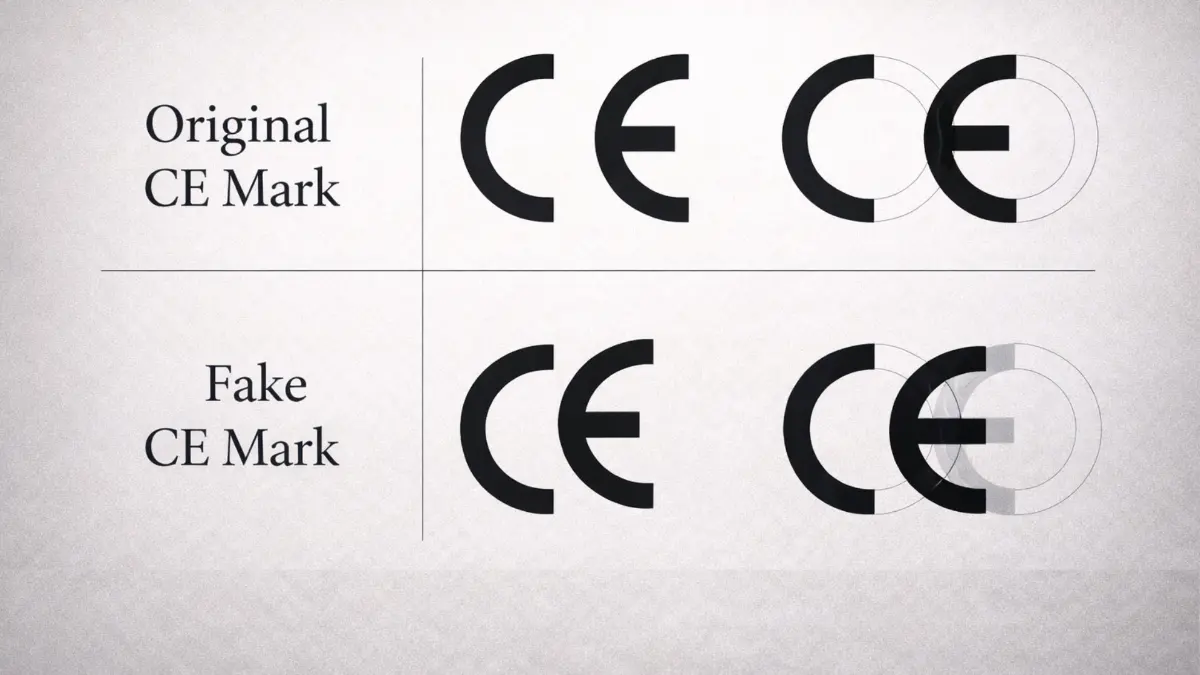
The CE mark means the product has been tested and meets European safety standards for personal protective equipment. In the EU, all sunglasses sold must carry this mark and comply with EN ISO 12312-1 optical standards. One thing to watch for: counterfeit sunglasses often fake the CE mark — but they almost always do it wrong. A real CE mark has specific lettering size and spacing. If the "C" and "E" are too close together, or look like the copyright symbol (©), it's a red flag.
ANSI Z80.3 (United States)
The American National Standards Institute standard for non-prescription sunglasses. Governs impact resistance, optical quality, and UV protection requirements. High-quality US brands will reference ANSI compliance. It's less commonly printed on the product itself but referenced in brand documentation.
FDA Impact Resistance Standards
In the US, all sunglasses sold must meet FDA impact resistance standards — meaning the lenses won't shatter into dangerous shards under normal use. This is a baseline, not a quality marker, but it's worth knowing that any pair you buy in a legitimate US store legally has to pass it.
Lens filter categories 0–4
Europe uses a filter category system that indicates how much visible light the lens allows through:
Most everyday sunglasses fall into Category 2–3. Category 4 is specialized and specifically not safe for driving.
6. Tint Uniformity & Lens Coatings — The Details That Separate Tiers
The tint uniformity check
Hold the sunglasses at arm's length and look at the lens against a plain white wall or overcast sky. The tint should be completely uniform — exactly the same shade all the way across, with no darker patches, lighter patches, or streaks. In gradient lenses (intentionally darker at top, lighter at bottom), the fade should be smooth and symmetrical on both lenses.
Uneven tint is a manufacturing defect. It means the lens material or coating was applied inconsistently — and it will cause uneven light input to your eyes, contributing to fatigue.
Lens coatings worth paying for
- Anti-reflective (AR) coating: Reduces internal reflections inside the lens. Useful for photographers, drivers, and anyone who finds lens glare distracting. Signals optical-grade craftsmanship.
- Scratch-resistant hardcoat: A must if you're rough on eyewear. Polycarbonate lenses need this — without it, they scratch almost immediately. Better pairs have it built in, not added as an afterthought.
- Hydrophobic coating: Repels water and reduces smearing. Your lenses shed rain and sweat rather than holding it. Small detail, major quality-of-life improvement.
- Mirror coating: Purely aesthetic, not functional for UV protection. Looks great on the right frame — just confirm UV400 is underneath it.
Lens material matters too
Polycarbonate is the most common quality lens material — lightweight, shatter-resistant, and takes coatings well.
Trivex is a step above, with better optical clarity and slightly better impact resistance.
Glass offers the best optical clarity of all but is heavier and will shatter.
Most premium fashion sunglasses use polycarbonate or proprietary lens materials like Oakley's Plutonite or Ray-Ban's crystal glass.
7. What the Packaging Actually Tells You
Packaging isn't the product — but it's a genuine signal. Quality eyewear brands put real thought and money into what comes in the box, because they know the unboxing moment reinforces the purchase decision. Here's what you should expect at different tiers:
- Budget ($15–$40): Soft pouch at best. No cleaning cloth, no authenticity documentation. This is fine if the lenses pass the tests above.
- Mid-tier ($50–$150): Semi-rigid case, cleaning cloth, basic documentation. Hinges feel better. Brand logo legible and consistent.
- High-end ($150+): Hard case (often branded), microfiber cloth, authenticity card, brand certificate. Lens coating feels polished, not just applied.
- Designer ($300+): Signature box, monogrammed case, multiple cleaning accessories, serial number on frame temple. If you're investing in a designer pair, all of this should be present and perfect.
When buying online, counterfeit sunglasses almost always show up in the packaging first: misspelled brand names on the case, "C" logos that look like © symbols, low-quality microfiber that feels like tissue paper, and UV400 stickers that peel off with zero effort.
8. Cheap vs. Expensive Sunglasses — The Real Truth
Let's talk about what price actually buys you, because the marketing in this category is particularly misleading.
What price does NOT guarantee
- UV protection. A $300 fashion-house pair without UV400 is objectively worse than a $25 Walgreens pair with it.
- Lens clarity. Plenty of mid-range brands have excellent optical-grade lenses. Plenty of luxury brands are charging for the logo, not the glass.
- Durability. A cheap TR90 sport frame can outlast a beautiful acetate pair if the acetate hinges are poorly riveted.
What price DOES often buy you
- Better lens coatings — built-in scratch resistance, hydrophobic treatments, better AR coatings.
- Better frame materials — genuine acetate vs. injection-molded plastic, titanium vs. cheap alloy.
- Better hinge construction — barrel hinges, spring-loaded temples, barrel screws that don't strip.
- Better optical precision — higher-tier brands invest in lens manufacturing tolerances that translate to genuinely clearer vision.
- Longevity — a $200 pair that lasts five years costs less per wear than a $30 pair you replace every season.
The sweet spot for most shoppers? Mid-tier. A well-made $80–$130 pair from a reputable optical or fashion brand — one that passes every test in this guide — gives you nearly everything a $300 pair does at a fraction of the cost. The premium above $200 is often brand equity, not engineering.
Frequently Asked Questions About Sunglasses Quality
How can you tell if sunglasses have real UV protection?
Look for the UV400 label or wording that says 100% UV protection on the tag, frame temple, or lens sticker. If neither appears, don't assume the lenses are protected. For certainty, an optometrist can test your lenses with a UV spectrometer during a standard eye exam. You can also do a rough at-home check with a UV flashlight and a paper bill — if the bill's watermark disappears when you hold the lenses between the light and the bill, the lenses are blocking UV.
What does UV400 mean on sunglasses?
UV400 means the lenses block all light waves up to 400 nanometers — which covers 100% of UVA (long-wave) and UVB (short-wave) radiation. It's the highest standard available in consumer sunglasses and is what every eye doctor recommends. The "400" refers to the wavelength cutoff in nanometers, not a product model number or quality rating system.
How do you test if sunglasses are polarized at home?
The easiest method is the phone screen test. Hold one lens up to your phone screen (any app, normal brightness), then rotate the glasses 90 degrees. Genuine polarized lenses will go very dark or nearly black when perpendicular, because phone screens emit horizontally polarized light — exactly what polarized lenses are designed to filter. Non-polarized lenses look the same at both angles.
Do darker lenses mean better UV protection?
No — and this is one of the most important myths to unlearn. Lens tint and UV protection are completely separate. UV protection comes from a chemical coating applied during manufacturing, which is invisible. A dark, untreated lens can actually be more harmful than going without sunglasses, because it causes your pupils to dilate (letting in more light) without filtering out the UV that's now entering your eye more easily. Always check for UV400 regardless of how dark the tint looks.
Are cheap sunglasses bad for your eyes?
Not necessarily — it depends entirely on whether they have UV400 protection and acceptable optical quality. A $20 pair from a reputable retailer with UV400 and clear lenses is safer than a $300 pair without UV protection. The risk with cheap sunglasses is that many lack proper UV coating, and some have lenses with distortion significant enough to cause eye strain over a long day. Run the tests in this guide before assuming any pair is safe, regardless of price.
What is the difference between cheap and expensive sunglasses?
The biggest functional differences are lens quality (coatings, optical precision), frame material (acetate and titanium vs. injection plastic), hinge construction (spring-loaded barrel vs. basic riveted), and longevity.
Expensive doesn't automatically mean better UV protection — that's separate. But premium frames typically have multi-layer lens coatings, better scratch resistance, and frames built to last years rather than seasons. The price-to-quality sweet spot for most people is the $80–$150 mid-tier range.
What frame materials indicate high-quality sunglasses?
The best frame materials, in order of quality signal: titanium (lightest, strongest, hypoallergenic, found in luxury frames), premium acetate (plant-derived, rich color, polished finish, mid-to-high tier), stainless steel (flexible, corrosion-resistant, common in quality metal frames), and TR90 nylon (lightweight and impact-resistant, used in sport and active styles). Injection-molded plastic is the budget option — functional but less durable and prone to warping under heat.
How do I test sunglasses lens quality at home?
Use the straight-line test recommended by the American Academy of Ophthalmology. Hold the sunglasses at a comfortable distance from your face, cover one eye, and look through the lens at a straight line — a door frame, tiled floor, or window grid works well. Slowly move the glasses from side to side while keeping your eye still. If the straight line stays perfectly straight, the lens is optically sound. If it curves, waves, or distorts at any point — especially near the center — the lens has aberrations that will cause eye strain over time.
What does the CE mark on sunglasses mean?
The CE mark (Conformité Européenne) indicates the product has been tested and meets European safety standards for personal protective equipment. In the EU, it's required on all sunglasses sold. A genuine CE mark has specific lettering proportions — if it looks like the © copyright symbol or the letters are unusually close together, it's likely a counterfeit. CE certification covers optical quality, UV protection requirements, and impact resistance standards under EN ISO 12312-1.
Can you test UV protection at home without special equipment?
You can do a rough test with a UV flashlight (widely available online for under $10). Shine it at a paper bill until the watermark glows, then hold the sunglass lenses in front of the light. If the watermark dims or disappears, the lenses are blocking UV. If it's still visible through the lens, UV is passing through. This test isn't lab-accurate but gives you directional confidence. For a definitive answer, an optometrist's UV spectrometer is the only reliable tool.
Are designer sunglasses better quality than non-designer?
Often, but not always — and the gap depends on the designer. True luxury eyewear houses (think Oliver Peoples, Cartier, Persol) do invest in proprietary lens technology, premium acetate, and meticulous hinge construction. But many fashion-first brands license their name to mass manufacturers and charge primarily for brand equity, not engineering. The way to tell: run the tests in this guide. A $300 pair should pass all of them easily. If it doesn't, you're paying for a logo.
How long should quality sunglasses last?
A well-made mid-tier pair ($80–$150) should last 2–5 years with normal care. Luxury pairs ($200+) should realistically last 5–10 years if you're not losing them. Budget pairs typically last 6–18 months before hinges fail or lenses scratch beyond usability. The single biggest factor in longevity is hinge construction — barrel hinges with spring mechanisms outlast cheap riveted hinges dramatically. Always store sunglasses in a hard case rather than tossing them into a bag.
What is polycarbonate vs. glass for sunglass lenses — which is better?
Both have legitimate advantages. Polycarbonate is lightweight, shatter-resistant, and takes UV and scratch coatings well — it's the most common quality lens material in fashion and sport sunglasses. Glass offers slightly superior optical clarity and scratch resistance but is heavier and will shatter under impact (though not into dangerous shards in modern lenses). Trivex is a mid-ground: lighter than glass with better optical quality than standard polycarbonate. For everyday fashion use, polycarbonate is the practical winner.
What lens filter category should I look for in everyday sunglasses?
For standard everyday outdoor use in the US — walking, driving, running errands — you want Category 2 or Category 3 lenses. Category 2 (18–43% light transmission) works well for mixed conditions. Category 3 (8–18% light transmission) is the better choice for consistently sunny days, beach wear, or driving. Category 4 is for extreme environments like glaciers or very high altitudes and is not legal for driving in most countries. Category 0 and 1 are essentially fashion lenses — not suited for real sun protection.
Is it worth getting polarized sunglasses?
Yes, if you drive, spend time near water, ski, or spend long stretches outdoors. Polarized lenses filter out the horizontal glare that reflects off wet roads, car hoods, water, and snow — the kind of blinding flash that's both uncomfortable and dangerous. For everyday urban wear or shopping, the difference is less dramatic but still noticeable. The key thing to confirm is that your polarized pair also has UV400 protection — the two features are independent and both matter.
What Y2K or retro sunglass styles still hold up in quality today?
The resurgence of Y2K-era shapes — shield lenses, tiny oval frames, wraparounds — has brought with it a wide range in quality. The frames that hold up are those where the revival is done in quality materials: genuine acetate, metal alloy bridges, and UV400 lenses regardless of tint color. Fast fashion versions often skip the UV coating entirely because the aesthetic is the sell. We've covered this in depth in our Y2K sunglasses guide — worth reading before you shop the trend.