According to Dr. Carrie Coughlin, a pediatric dermatologist at Siteman Kids at St. Louis Children’s Hospital, a good children’s sunscreen should be broad‑spectrum with an SPF in roughly the 30–50 range, since numbers above 50 only add a small amount of extra protection. She notes that mineral formulas using zinc oxide or titanium dioxide start protecting as soon as they’re applied, while chemical filters need about 20–30 minutes on the skin before they’re fully effective, and older kids with acne may benefit from using separate face and body sunscreens.
Source: Dr. Carrie Coughlin, Siteman Kids at St. Louis Children’s Hospital
Best Sunscreens for Sensitive & Eczema-Prone Skin
Reactive and eczema-prone skin has a compromised barrier, so the wrong formula can trigger a flare in minutes. We prioritized fragrance-free formulas built on high concentrations of non-nano zinc oxide, paired with soothing botanicals like calendula, oat, and chamomile that calm skin while they protect.
We screened out oxybenzone, octinoxate, dyes, and common allergens, and leaned toward picks carrying pediatrician, dermatologist, or National Eczema Association backing.
Clean + Kind Kids Mineral SPF 40
Best for: Reactive skin and label-reading parents who want every ingredient named
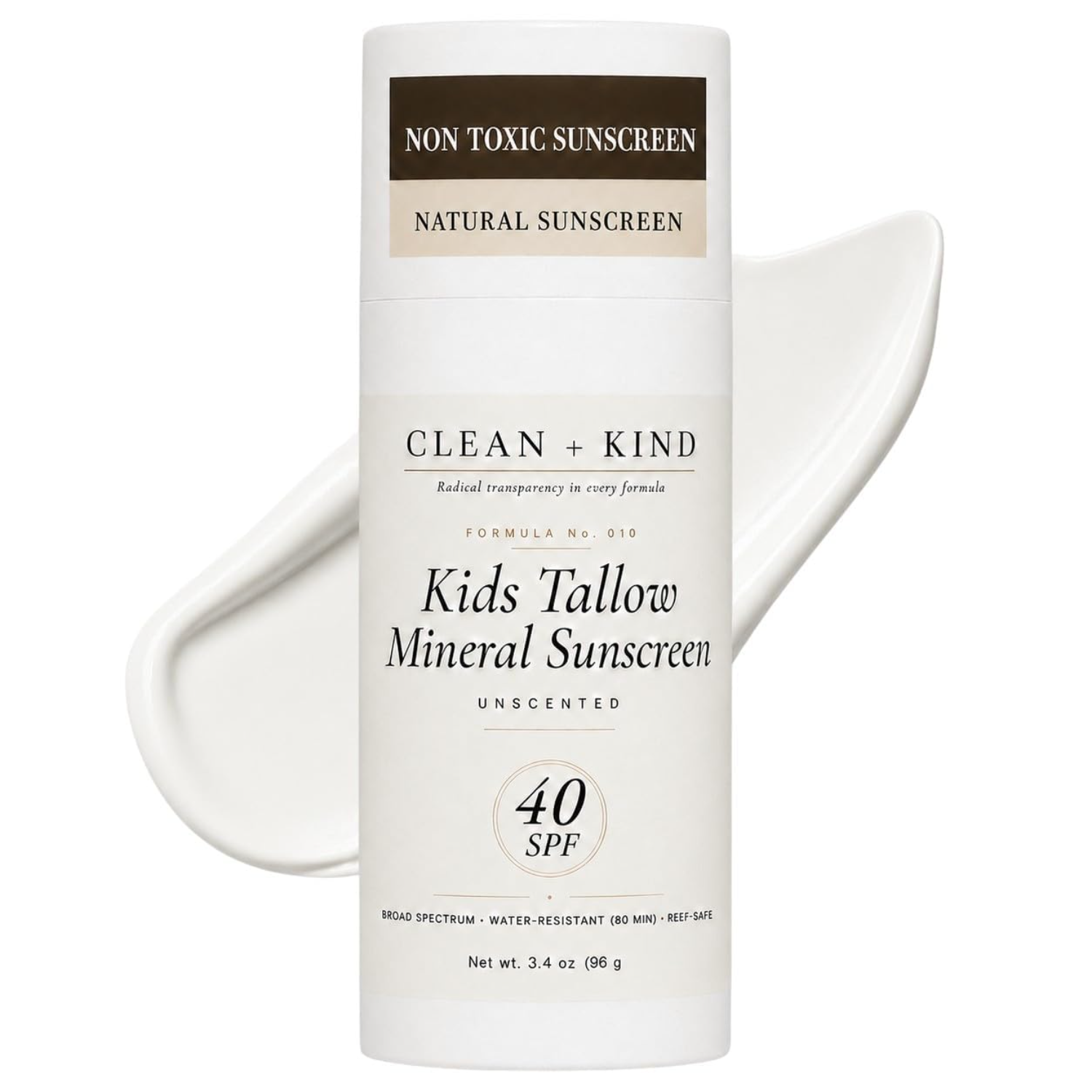
$23.99
This family-owned formula names all 10 ingredients right on the bottle and scores a 98/100 on Yuka. Grass-fed tallow, calendula, and red raspberry nourish the barrier while non-nano zinc blocks UV on contact.
Fur and Silk Editor Review ★★★★½
We reviewed Clean + Kind for the parent who reads every label, and the radical ingredient transparency genuinely stands out. Best for reactive, eczema-prone skin where you want to know exactly what is going on.
Babo Botanicals Sensitive Baby Mineral Sunscreen SPF 50
Best for: Eczema-prone and sensitive baby skin
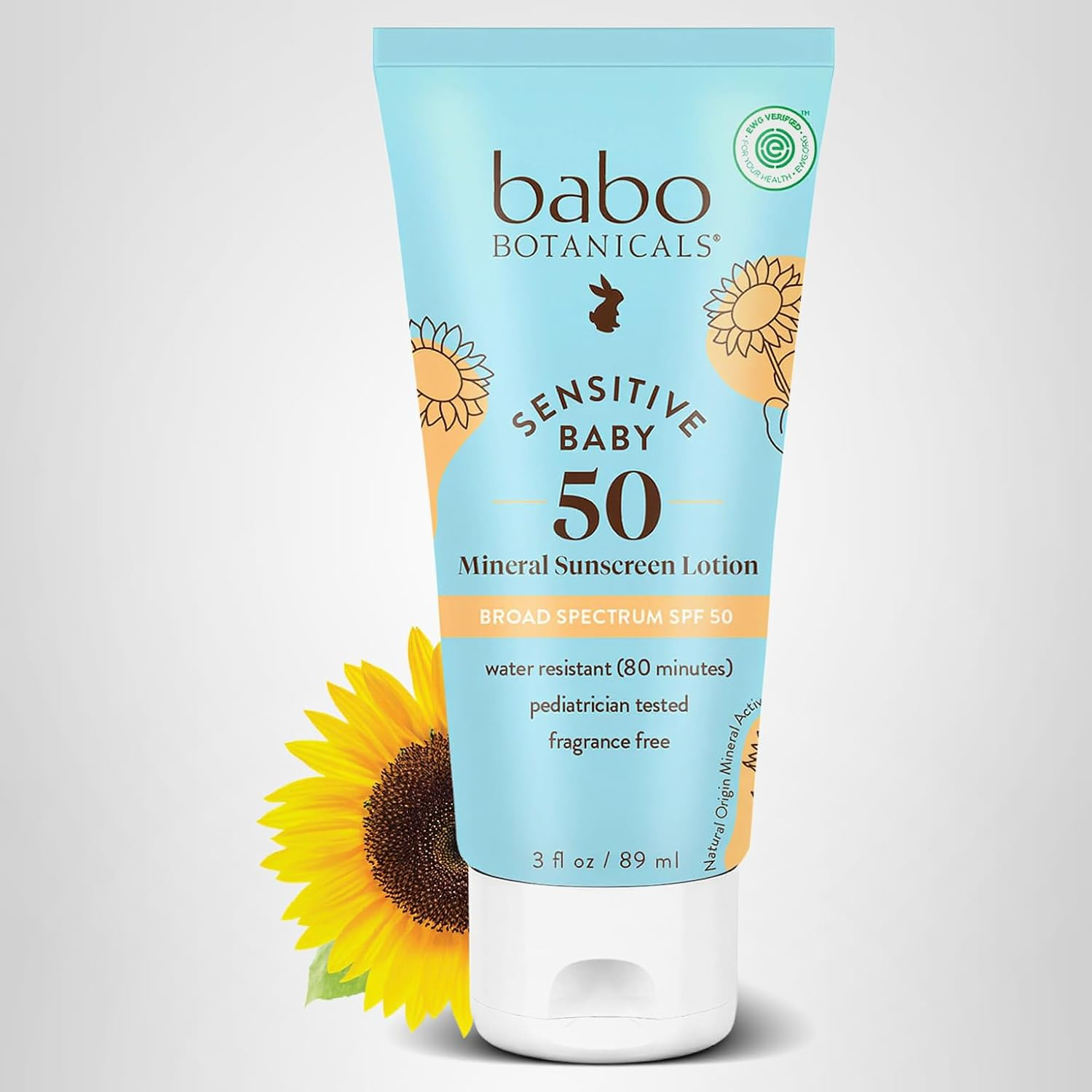
$18.50
A certified B Corp and EWG Verified pick founded by a mom who wanted better options. Its proprietary Nutri-Soothe blend of calendula, chamomile, watercress, and meadowsweet calms reactive skin while it protects.
Fur and Silk Editor Review ★★★★★
We reviewed Babo Botanicals for the reactive-skin parent and found a genuinely thoughtful, soothing formula that goes on sheerer than most mineral options. Best for eczema-prone or easily irritated babies who want a clean, calming pick.
Vigority Beef Tallow Sunscreen for Kids SPF 50
Best for: Dry, sensitive skin that needs extra nourishment
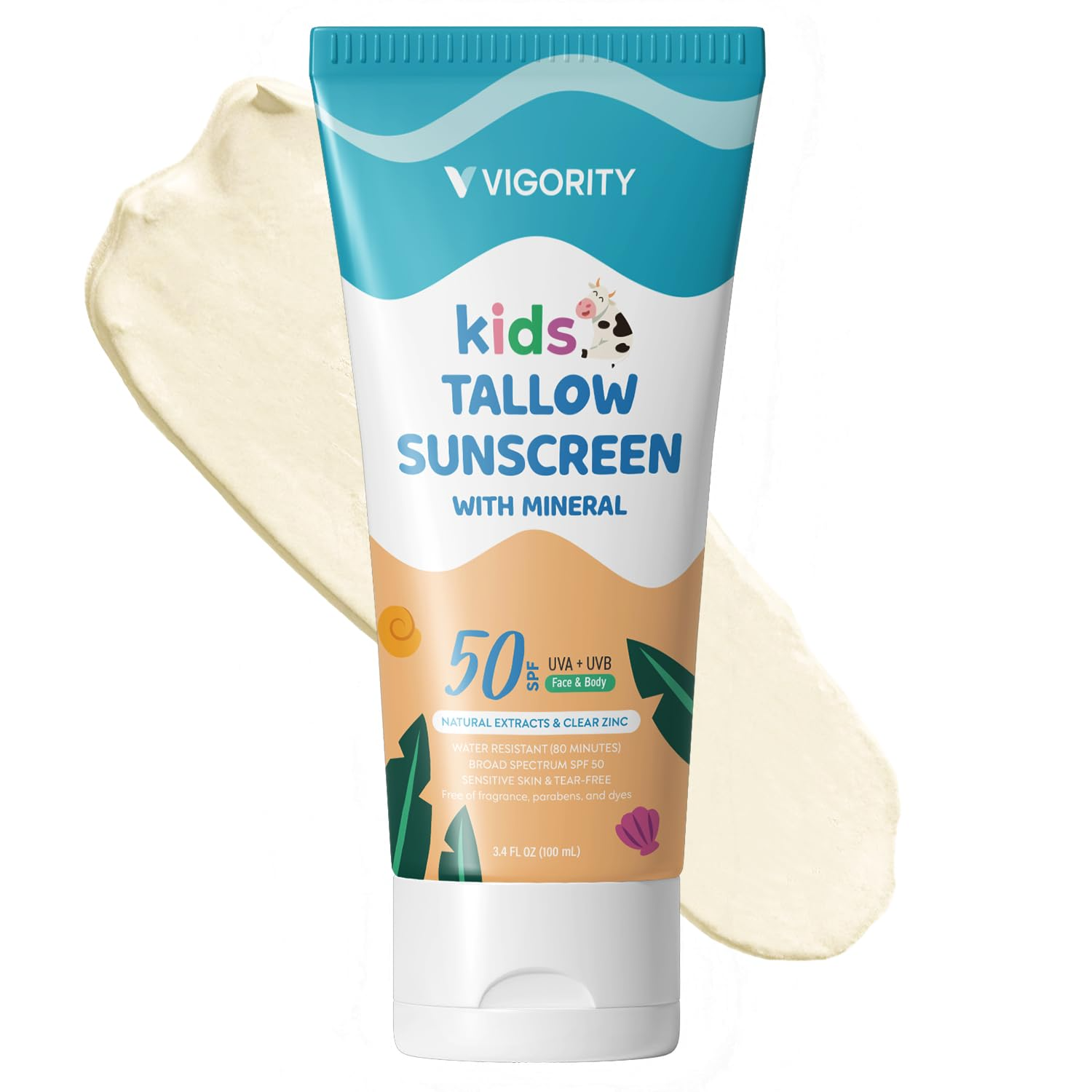
$24.99
A non-greasy cream that pairs non-nano zinc with grass-fed beef tallow, vitamins, and food-grade botanicals. The tallow base nourishes delicate skin, making it a tear-free, year-round option for dry or reactive complexions.
Fur and Silk Editor Review ★★★★½
We reviewed Vigority for parents drawn to the tallow trend, and it delivers real nourishment without the greasy feel you might expect. Best for dry, sensitive skin that needs hydration alongside protection.
Aveeno Baby Continuous Protection Zinc Oxide Sunscreen SPF 50
Best for: Eczema-prone skin on a drugstore budget
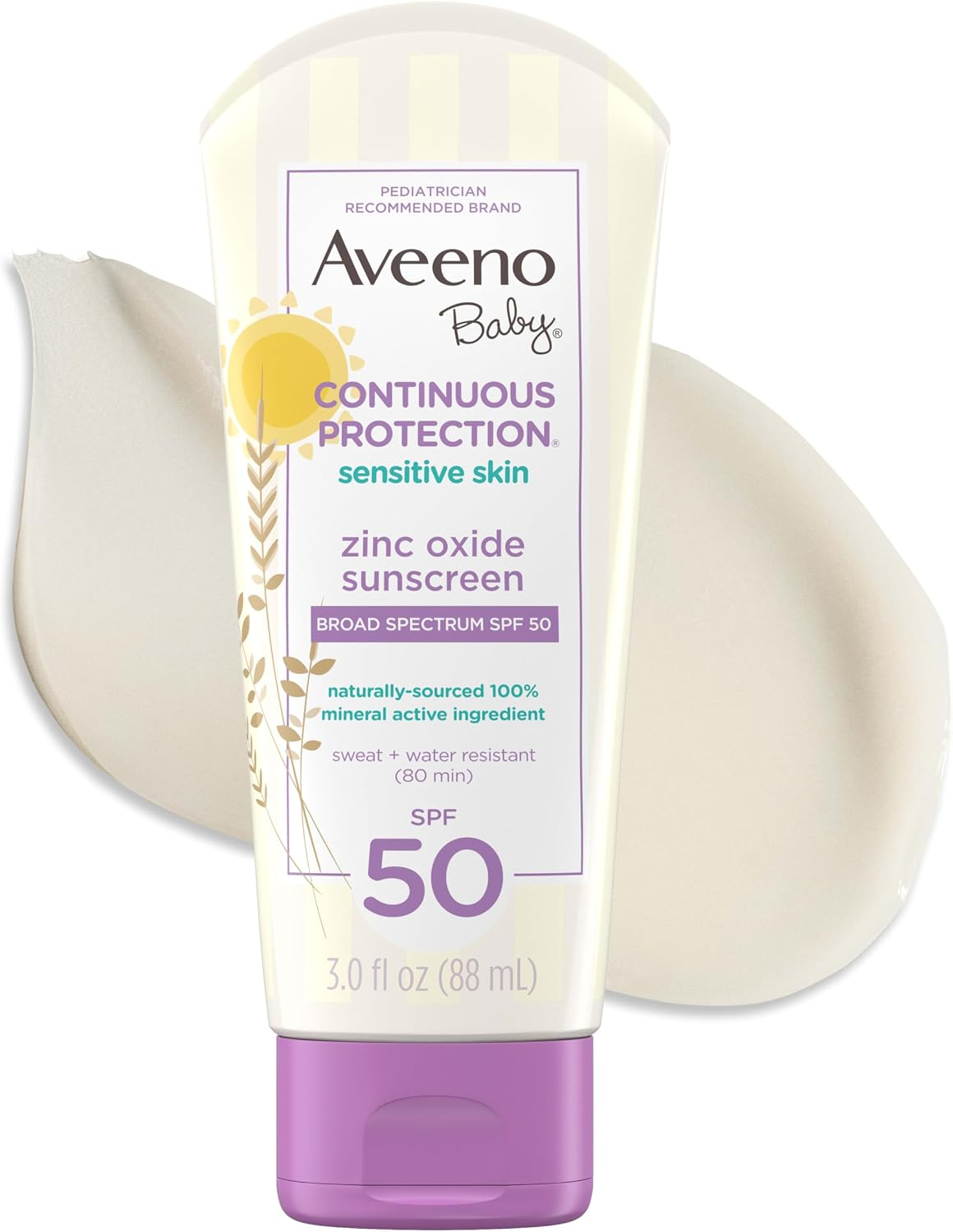
$16.50
The pediatrician-recommended brand many of us grew up with, now in a modern mineral formula. Its ACTIVE NATURALS Oat is clinically proven to soothe, earning both the National Eczema Association Seal and a Skin Cancer Foundation nod.
Fur and Silk Editor Review ★★★★½
We reviewed Aveeno Baby as the value pick and found it punches above its price, with both NEA and Skin Cancer Foundation backing on an oat-and-zinc formula. Best for budget-conscious families who want trusted, easy-to-find protection.
Best Sunscreen Sticks for Face & On-the-Go
For a wriggling child, a stick is often the only realistic way to cover the face, ears, nose, and hairline without sunscreen running into the eyes. Pediatric dermatologists favor sticks for facial application precisely because they grip contours and resist sweat.
We looked for a true twist-up format, a no-white-cast glide, and zinc-led formulas with conditioning extras like shea butter and vitamins C and E, so reapplication on the go stays quick and mess-free.
MDSolarSciences Mineral KidStick SPF 40
Best for: Quick, mess-free face and ear coverage
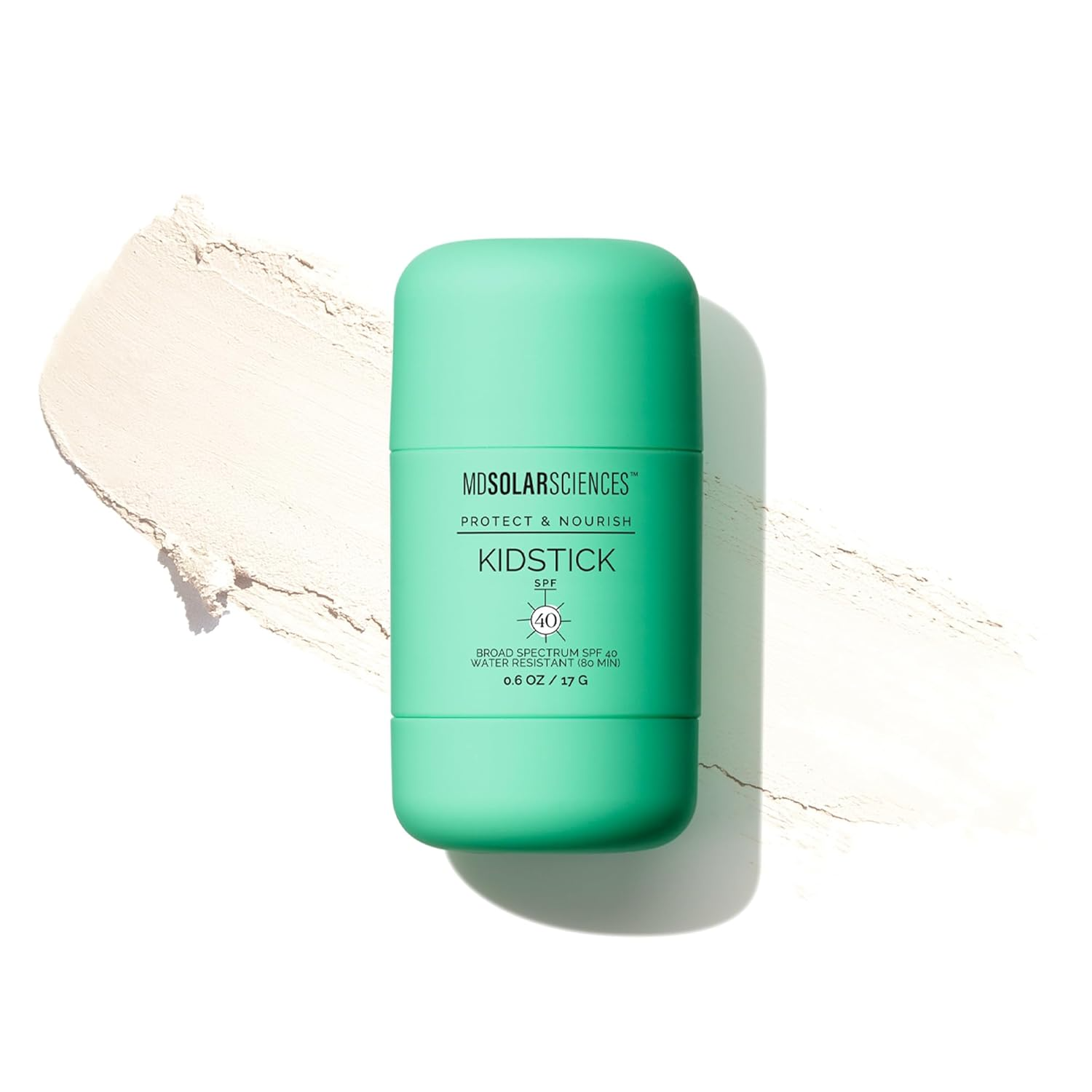
$24.00
Dermatologist-developed by Dr. Robert J. Friedman specifically for children's delicate skin. The hypoallergenic stick glides on with shea butter and vitamins C and E, so there is no greasy residue and no fight at reapplication.
Fur and Silk Editor Review ★★★★½
We reviewed this KidStick for the daily face-and-ears battle, and the dermatologist pedigree plus clean glide make it a genuine fuss-reducer. Best for parents who want a pediatrician-style facial pick that travels easily.
Supergoop! PLAY Mineral Stick SPF 50
Best for: Active kids and shared family use on face and lips
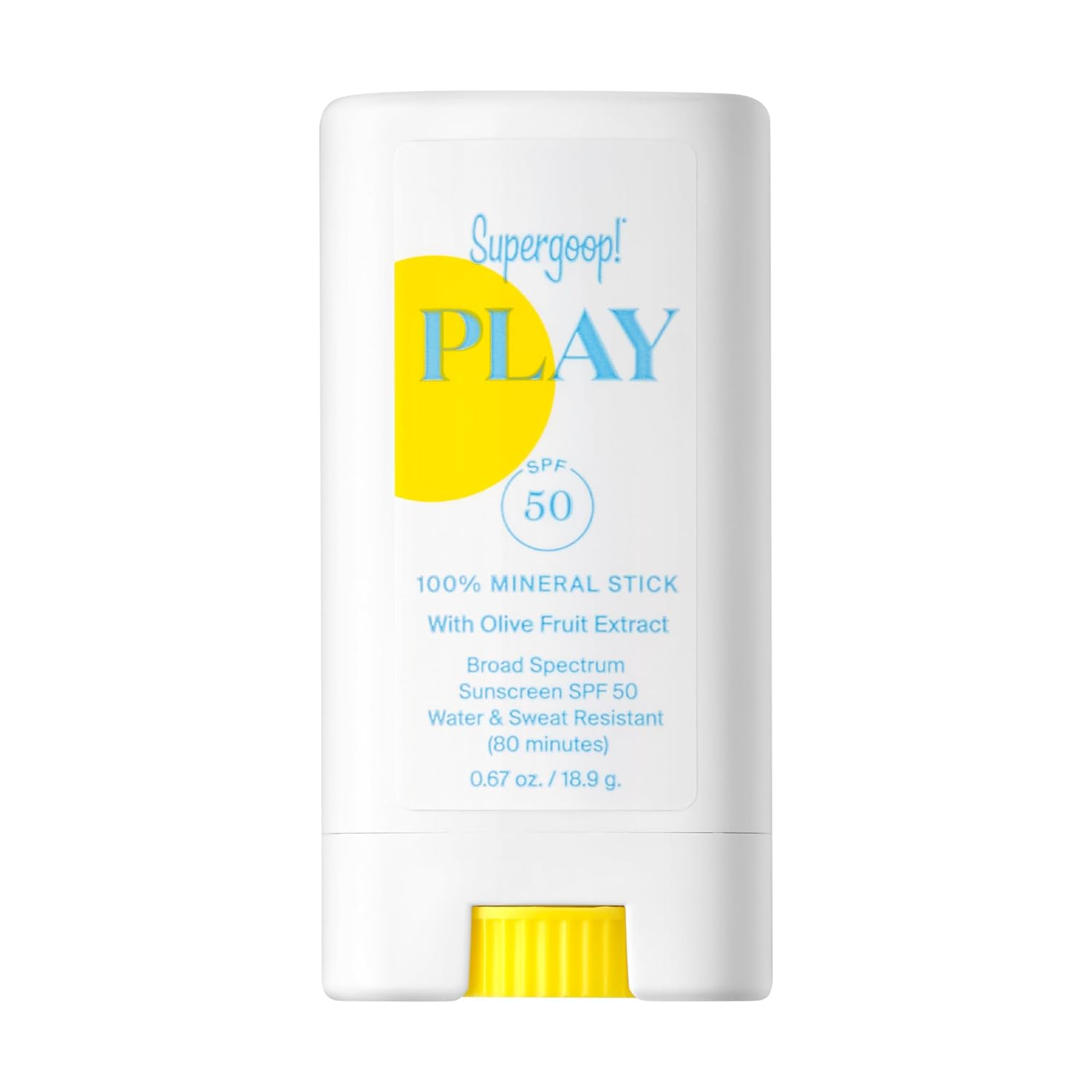
$20.00
A lightweight, blendable zinc stick made with olive fruit extract plus shea and cocoa butter. It bounces UV away without feeling sticky, and the higher SPF 50 makes it a go-to for active days and quick touch-ups.
Fur and Silk Editor Review ★★★★½
We reviewed the Supergoop PLAY stick as the all-ages option, and the lightweight glide plus SPF 50 make it equally good on a parent's face and a child's. Best for active families who want one stick everyone can share.
Best Sunscreens for Swimming, Beach & Active Days
Water and sweat strip sunscreen fast, and no formula is truly waterproof, so we focused on the 80-minute water-resistance ceiling the FDA allows, paired with tear-free formulas that will not sting little eyes mid-splash.
We also prioritized reef-safe, oxybenzone-free actives for ocean days, plus practical touches like cream-and-stick pairings and bigger bottles that survive a full season of pool trips. Reapplication after toweling off is still essential no matter the rating.
Blue Lizard Baby Mineral Sunscreen SPF 50+
Best for: Pool and beach days with a built-in reapplication cue
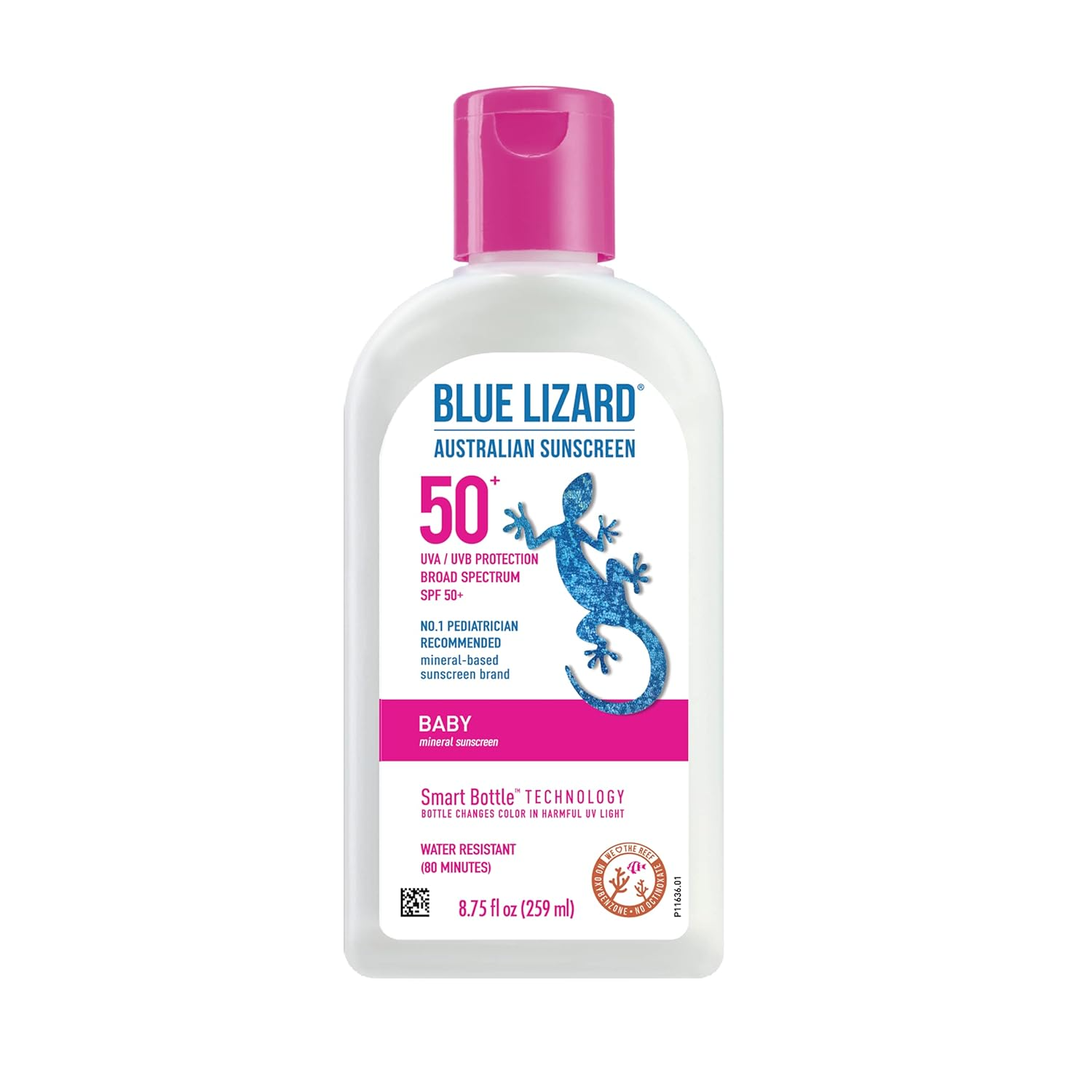
$48.99
The pediatrician-favorite that has anchored doctors' offices for over 20 years, here in a generous 8.75 oz bottle built for a full summer. Its Smart Bottle cap changes color in UV light as a built-in reminder to reapply during long days out.
Fur and Silk Editor Review ★★★★★
We reviewed Blue Lizard Baby and the color-changing Smart Bottle is a genuinely useful reapplication cue for long pool days, on a formula that does not sting eyes. Best for parents who want a trusted, no-guesswork pick that lasts the season.
Badger Kids Mineral Sunscreen Combo, SPF 40 Cream + SPF 35 Face Stick
Best for: Full beach-day coverage with body cream plus a face stick
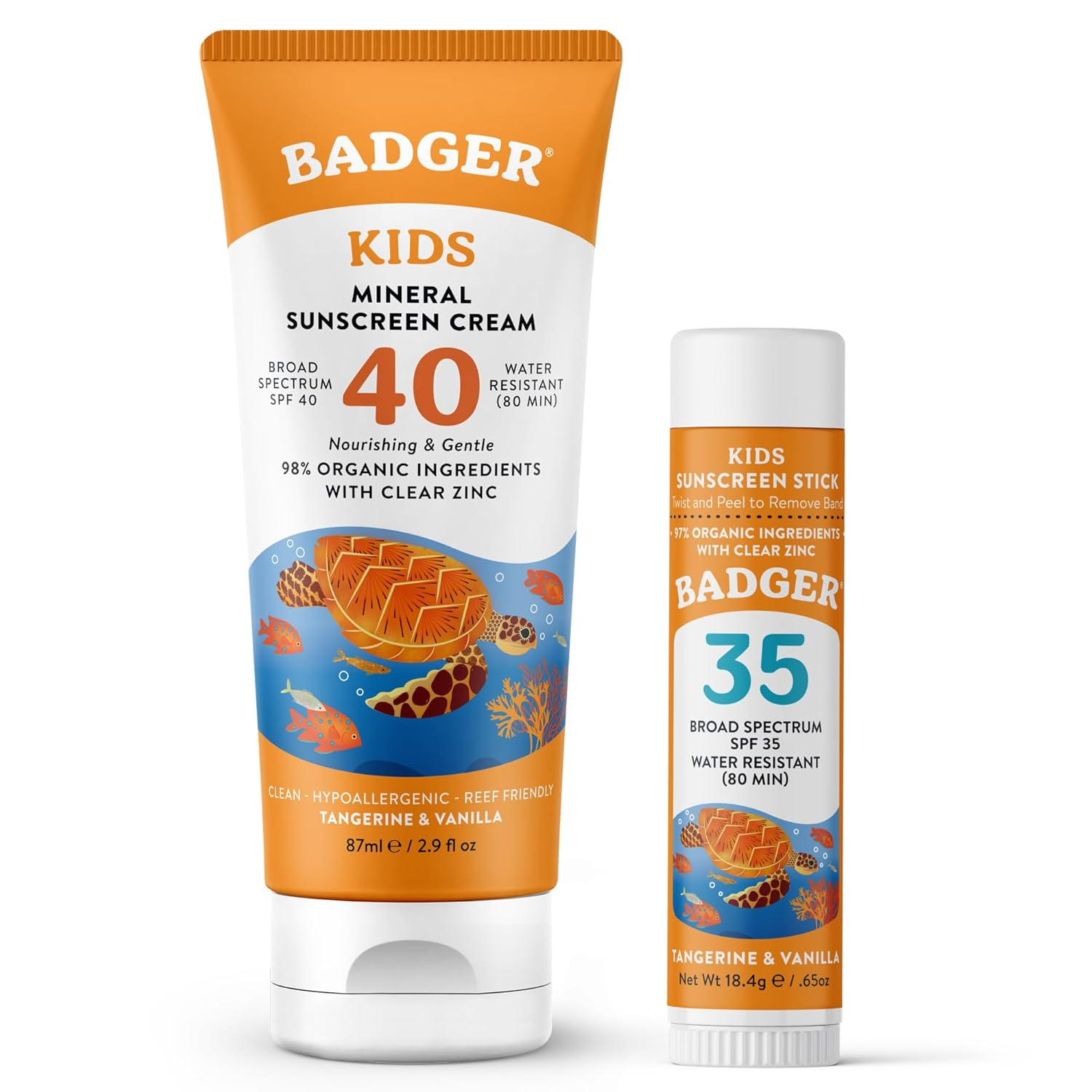
$29.99
A two-piece set pairing a body cream with a dedicated face stick, both 98% organic with a non-nano zinc barrier that works on contact. The sunflower oil base rubs in clear, and kids love the light tangerine-and-vanilla scent.
Fur and Silk Editor Review ★★★★★
We reviewed the Badger combo for full beach days, and the cream-plus-stick pairing means the body and the tricky face spots are covered in one purchase. Best for active families who want organic ingredients and a system that handles a whole day outdoors.
Best Sunscreens for Everyday & Whole-Family Use
For daily wear, the formula you will actually reach for matters most, so we looked for easy-blending lotions with little to no white cast on every skin tone, gentle enough for a baby yet pleasant enough that adults will wear them too.
We favored broad-spectrum SPF in the pediatrician-recommended 30-50 range, fragrance-free or low-irritant bases, and dermatologist-tested formulas that double as face and body coverage for the whole household.
EltaMD UV Pure Kid-Friendly SPF 47
Best for: A derm-favorite formula the whole family can share
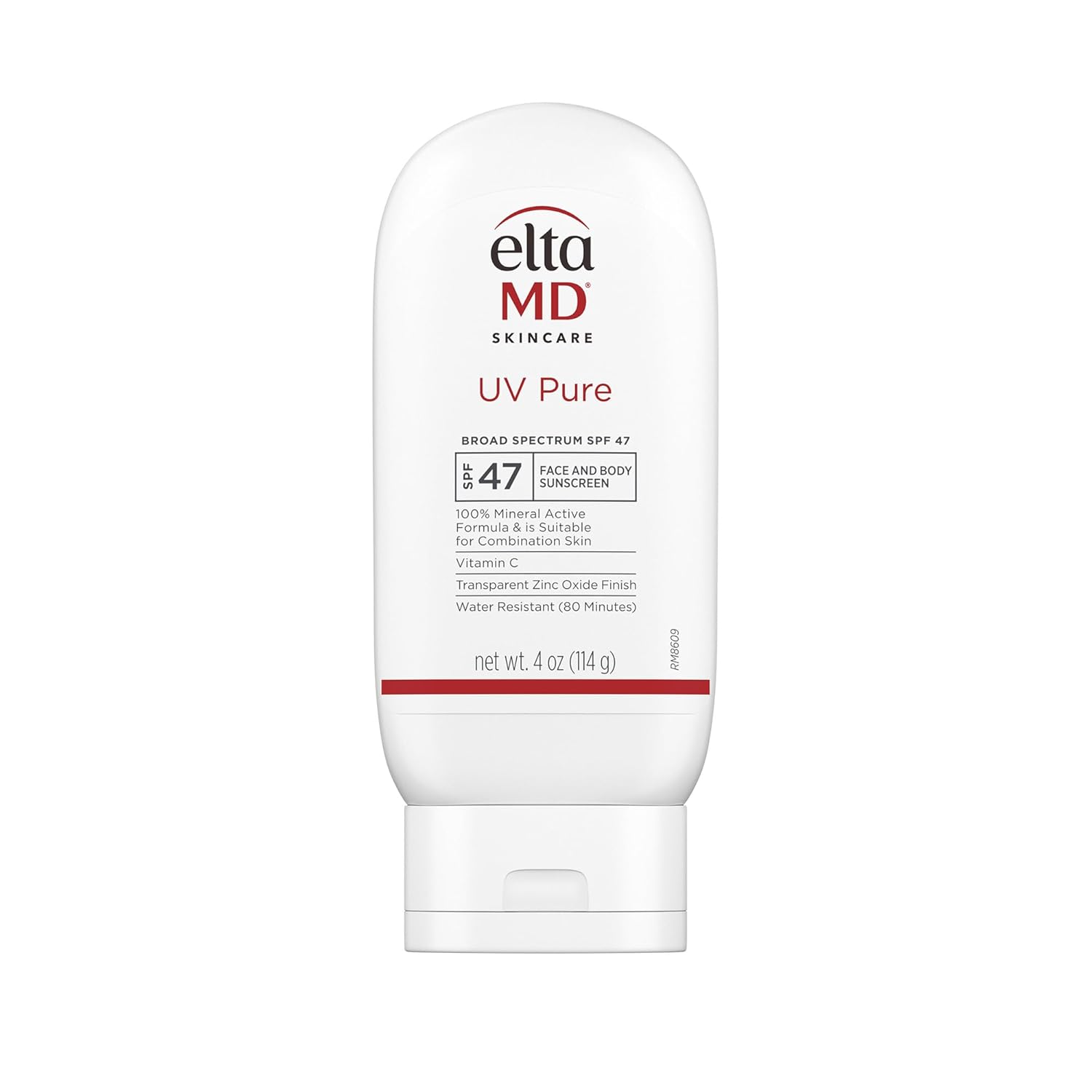
$43.00
The dermatologist-recommended brand in a kid-friendly, 100% mineral formula that applies to both wet and dry skin. It absorbs fast with no greasy feel and suits adults and kids alike, making it the obvious one-bottle solution for the household.
Fur and Silk Editor Review ★★★★★
We reviewed EltaMD UV Pure as the whole-family pick, and the derm-favorite formula earns the hype with a fast, weightless feel on adults and kids both. Best for households that want one trusted bottle everyone can use.
La Roche-Posay Anthelios Kids Gentle Lotion SPF 50
Best for: Easy daily wear with no white cast on any skin tone
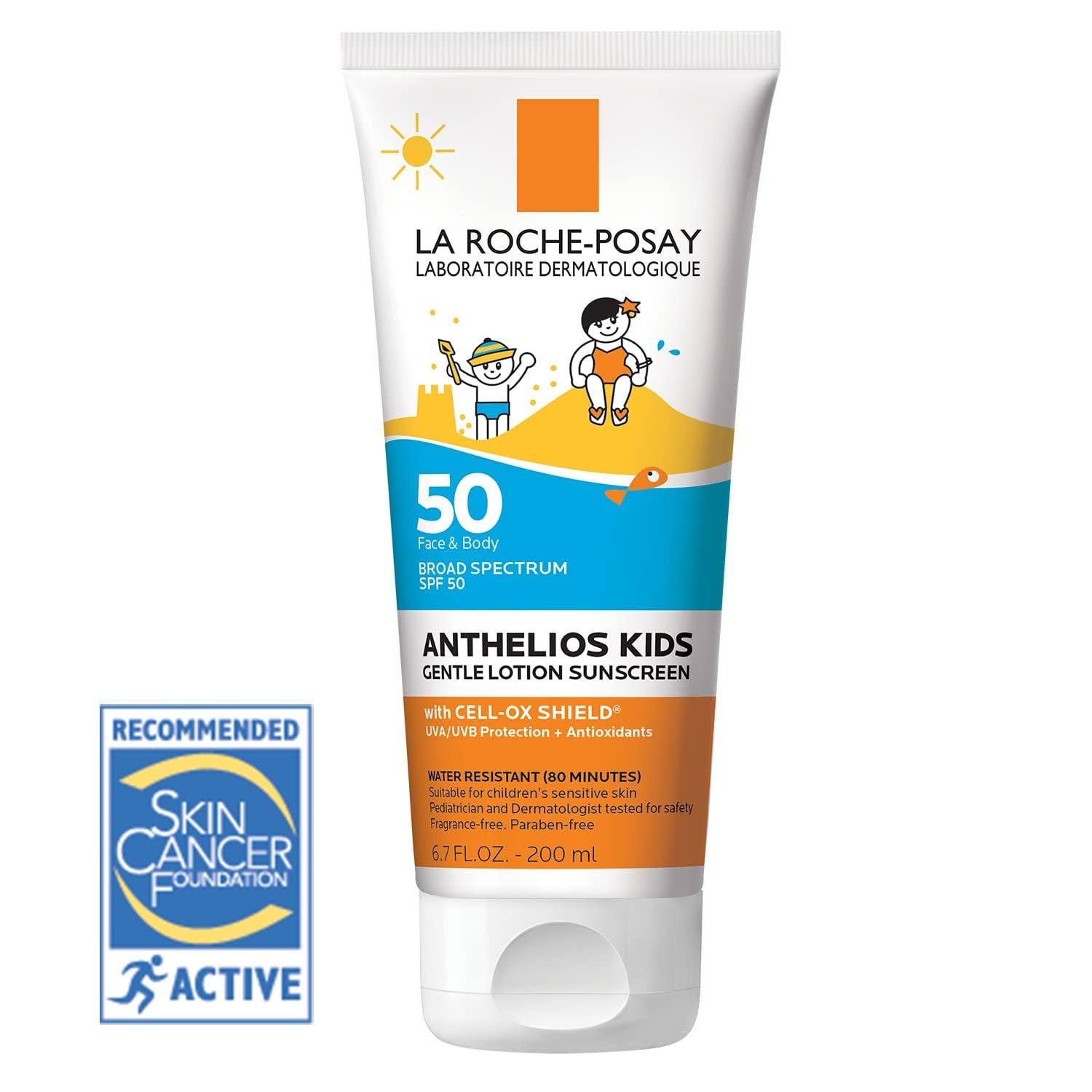
$33.99
A pediatrician- and dermatologist-tested lotion built on Cell-Ox Shield technology, pairing broad-spectrum protection with antioxidants. It blends on every skin tone without a white cast, and sand brushes right off afterward.
Fur and Silk Editor Review ★★★★½
We reviewed the Anthelios Kids lotion for everyday ease, and the no-cast finish on every skin tone plus the sand-brushes-off trick make daily wear effortless. Best for parents who want a blendable, derm-tested lotion for all complexions. (Note: this is an absorbing-filter formula, not mineral.)
Mustela Mineral Sunscreen Lotion SPF 50
Best for: A lightweight, elegant feel kids will not fuss over
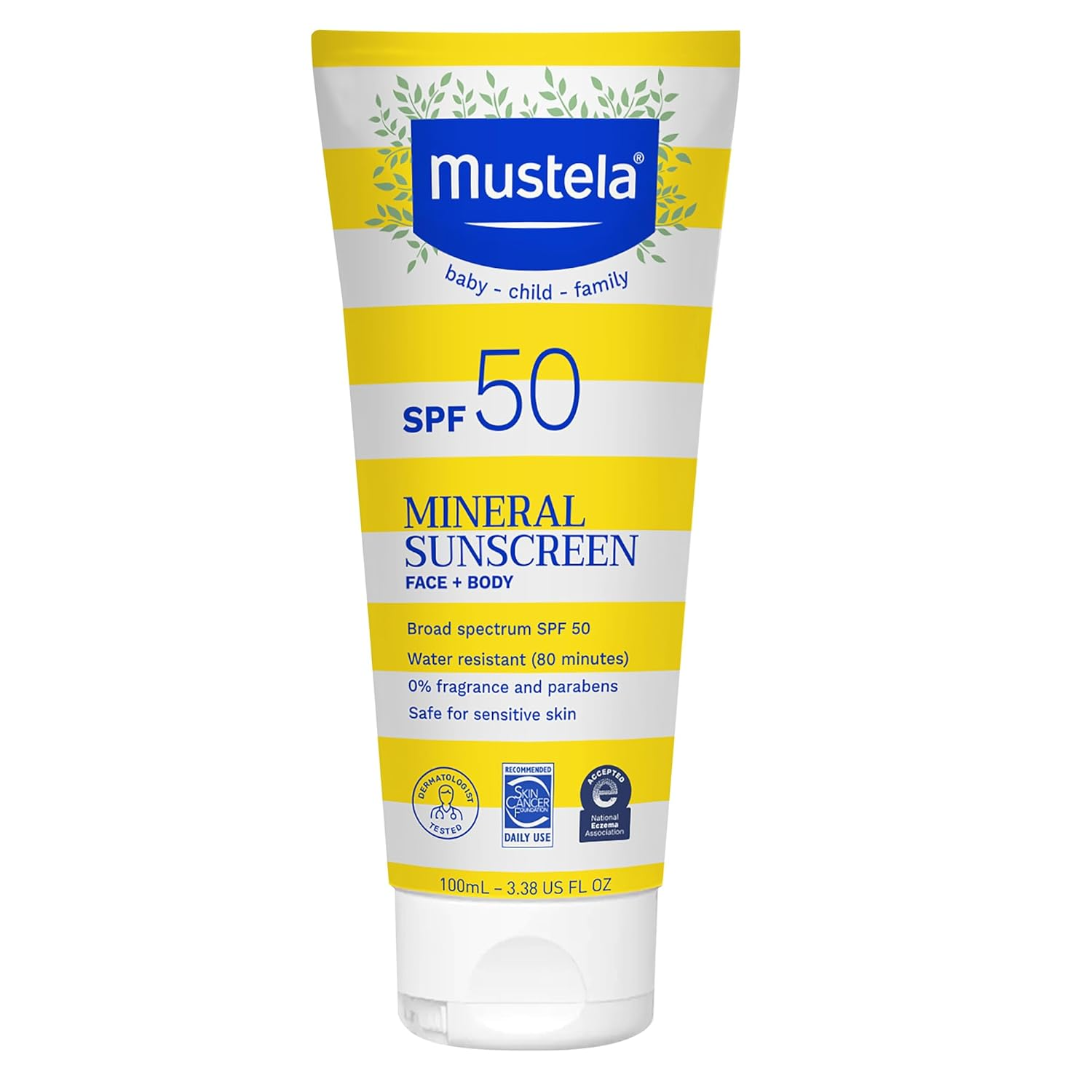
$22.00
The French pharmacy staple European parents have trusted for generations, made with 93% naturally derived ingredients. It blends almost like a moisturizer, so it suits sensitive skin and anyone put off by typical mineral textures.
Fur and Silk Editor Review ★★★★★
We reviewed Mustela and it solves the usual mineral complaint, blending like a moisturizer with barely any white cast. Best for parents who want an elegant, lightweight formula their child will not fight.
Tubby Todd Face and Body Mineral Sunscreen Kit
Best for: One clean system for both face and body
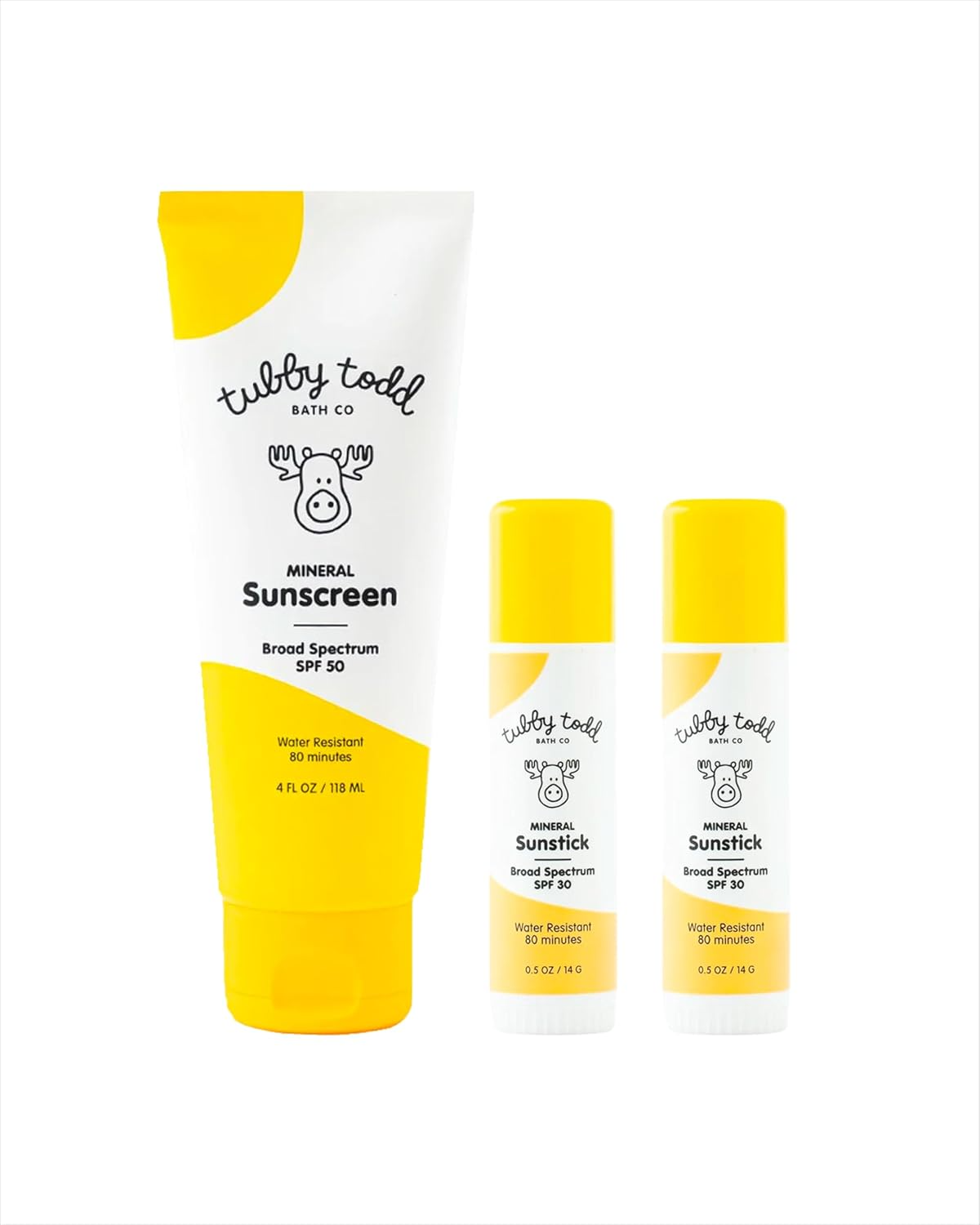
$60.00
A bundle pairing a creamy body lotion with a twist-up face stick, both fragrance-free and free of dyes and silicones. The lotion covers arms and legs while the stick handles ears, noses, and hairlines without messy hands.
Fur and Silk Editor Review ★★★★½
We reviewed the Tubby Todd kit and the lotion-plus-stick pairing is genuinely practical for covering body and tricky face spots in one clean system. Best for families who want a single fragrance-free setup for both.
Thinkbaby Safe Sunscreen SPF 50+
Best for: Ingredient purists who read every label
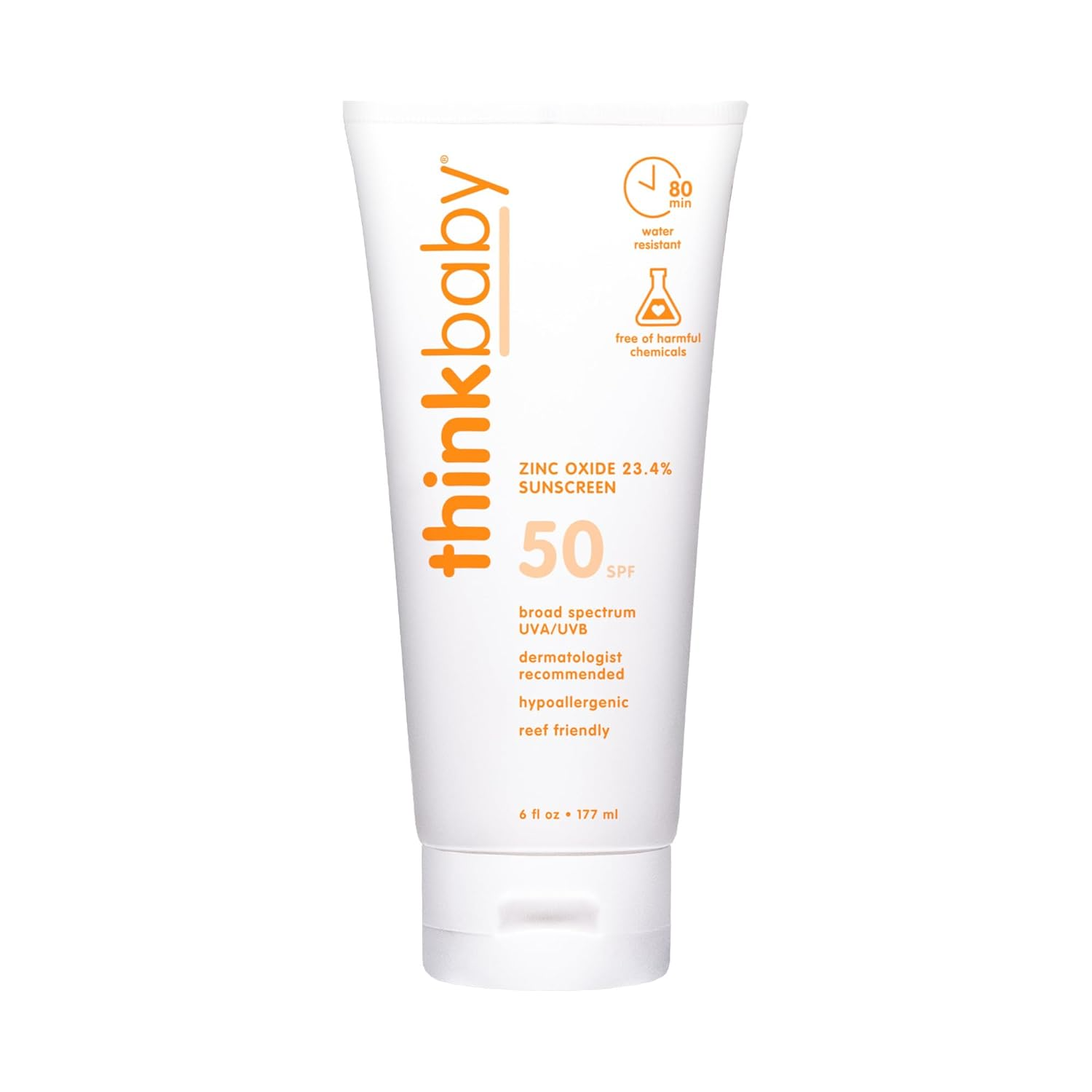
$23.99
The first sunscreen to pass Whole Foods' Premium Care standard, with an EWG "1" rating every year since 2010. It goes all-in on zinc and reads like high-end skincare, with hyaluronic acid and antioxidant seed oils.
Fur and Silk Editor Review ★★★★★
We reviewed Thinkbaby for the label-reading parent and found one of the cleanest profiles available, on a high-zinc formula that still absorbs fast. Best for ingredient purists who want maximum coverage with nothing questionable.
Quick Baby Sunscreen Safety Tips for Parents
Babies under 6 months: Keep them in the shade, use hats and UPF clothing, and only apply small amounts of mineral sunscreen to exposed areas if your pediatrician okays it.
Babies 6–24 months: Stick to fragrance-free mineral lotions (not sprays), SPF 30–50, and reapply every 2 hours or after swimming.
Toddlers and bigger kids: The same rules apply, but you can prioritize texture and ease of use so they actually let you put it on.
How to Choose the Right Sunscreen for Your Baby
If your child has eczema or reactive skin: Babo Botanicals and Clean + Kind are built for flare-prone skin, both fragrance-free with soothing botanicals. Aveeno Baby carries the National Eczema Association Seal if you want a drugstore option.
If you want the cleanest ingredients: Thinkbaby has the strictest standards and the longest EWG top-rating track record, while Clean + Kind names all 10 ingredients right on the bottle.
If you are on a budget: Aveeno Baby gives you solid, NEA-accepted mineral protection at drugstore prices, no specialty store required.
If you need quick face and ear coverage: A stick is your friend. The MDSolarSciences KidStick is dermatologist-developed for kids, and the Supergoop PLAY stick works across the whole family.
If it is a pool or beach day: Blue Lizard's color-changing Smart Bottle reminds you to reapply, and the Badger combo pairs a body cream with a face stick for full coverage. Reapply after toweling off, since no sunscreen is truly waterproof.
If you want one formula for the whole family: EltaMD UV Pure is dermatologist-recommended and works on adults and kids alike, and the Tubby Todd kit covers both face and body in one clean system.
If you hate how mineral sunscreens feel: Mustela blends like a moisturizer without a heavy texture, and La Roche-Posay Anthelios Kids goes on with no white cast on any skin tone.
If your child has deeper skin tones and wants less white cast: Reach for the most blendable options here, like La Roche-Posay, Mustela, or the no-cast sticks, and rub the formula in fully in small sections rather than one thick layer.
Real-Life Application Hacks for Squirmy Babies
Knowing which sunscreen to buy is only half the battle — the other half is actually getting it onto a child who would rather be anywhere else. A few things that genuinely help:
Apply at home, before swimsuits and shoes. Putting sunscreen on while you are still calm and indoors means you are not battling a sandy, overstimulated toddler at the beach.
Use a clean makeup sponge or soft brush for the face. If your baby hates the feeling of hands rubbing their skin, a sponge or brush is gentler and often less of a fight.
Make it part of a routine. Sing a short "sunscreen song" or apply it right after a familiar step like brushing teeth, so it feels predictable rather than like a random ambush.
Why Mineral Sunscreen Is Non-Negotiable for Kids
Here is why every pediatric dermatologist will tell you to go mineral for your little ones:
Physical vs. Chemical Protection: Mineral sunscreens (zinc oxide and titanium dioxide) create a physical barrier that reflects UV rays away from skin. Chemical sunscreens absorb UV rays and convert them to heat, and recent studies show those chemical filters can be detected in the bloodstream within 24 hours of application. For developing bodies, mineral is simply the safer bet.
Gentle on Sensitive Skin: Baby skin is basically brand new — it has not built up the protective barriers adult skin has. Mineral filters are far less likely to cause irritation, allergic reactions, or stinging. If your child has eczema or reactive skin, mineral is essentially your only option.
Reef-Safe Bonus: Most mineral sunscreens skip the oxybenzone and octinoxate that damage coral reefs. So you are protecting your child and the ocean at once.
FDA "GRASE" Status: The FDA classifies zinc oxide and titanium dioxide as "Generally Recognized as Safe and Effective" — the only two sunscreen ingredients with that designation. Everything else is still under review.
Baby Sunscreen FAQs
When can I start using sunscreen on my baby?
The FDA and American Academy of Dermatology recommend starting sunscreen at 6 months old. Before that, keep babies out of direct sunlight and rely on shade, hats, and protective clothing. If sun exposure is unavoidable for babies under 6 months, you can apply a small amount of mineral sunscreen to exposed areas, but always check with your pediatrician first.
How much sunscreen should I use on my baby?
More than you think. The general rule is a nickel-sized amount for baby's face alone, and enough to generously cover all exposed skin. Most people under-apply by about 50%, which cuts the actual protection dramatically.
How often should I reapply sunscreen on my child?
Every two hours when outdoors, and immediately after swimming, sweating, or towel-drying — even if the sunscreen says "water-resistant." Water resistance means it maintains SPF protection for 40-80 minutes while wet, but you still need to reapply after that window.
Why do mineral sunscreens leave a white cast?
The zinc oxide and titanium dioxide that make mineral sunscreens so safe are tiny particles that sit on skin and reflect light. That is what causes the white appearance. Modern formulas have gotten much better at minimizing this, but some white cast is normal, and it actually helps you see where you have covered.
Is higher SPF actually better for kids?
SPF 30 blocks about 97% of UVB rays, while SPF 50 blocks about 98%. The difference is small, but for kids who are extra sun-sensitive or spending extended time outdoors, SPF 50 provides that extra margin. More important than the SPF number is applying enough and reapplying often.
Are spray sunscreens safe for kids?
The FDA recommends avoiding spray sunscreens for children because they are easy to inhale and difficult to apply evenly. Stick with lotions and creams for kids, and if you must use a spray, apply it to your hands first, then rub onto their skin.
The Bottom Line
If you have read this far, you are already doing the most important thing — caring enough to get this right. And here is the reassuring part: all six sunscreens on this list will do the job beautifully. They are all mineral-based, all pediatrician-approved, and all effective at keeping your little one's skin safe. The "best" one really comes down to your family: your budget, your priorities on ingredients, the texture your child will tolerate, and how easily you can restock it.
What matters most is not finding a perfect bottle — it is using sunscreen consistently, without it becoming a daily fight. The best sunscreen is simply the one you will reach for again and again. Pick one that fits your family, keep it somewhere you will not forget it, and let sun protection become as routine as buckling a car seat. You are doing a good job, and your child's future skin will thank you for it.
Looking for sunscreen options for yourself? Check out our guides to the best sunscreens for sensitive skin and best Korean sunscreens for lightweight, skin-loving formulas.