Sunglasses Shapes Chart: Every Type at a Glance
Use this sunglasses shapes chart as a quick reference. Each name jumps to its full description below, and the last column shows the face shapes that style usually balances best.
| Shape | Name | Also Called | Defining Feature | Flatters |
|---|---|---|---|---|
| Aviator | Pilot, teardrop | Teardrop lenses and a double bridge | Oval, square, heart | |
| Navigator | Square aviator, pilot | Aviator double bar with squared-off lenses | Round, oval | |
| Browline | Clubmaster, combination frame | Heavy top rim, thin wire underneath | Oval, round, diamond | |
| Round | Circle, Lennon, wire round | Two true circles | Square, oblong, diamond | |
| Wayfarer | Trapezoid frame | Trapezoid lenses, wider at the top | Round, oval | |
| Cat-Eye | Upswept, winged | Upswept, pointed outer corners | Round, square, oval | |
| Square | Boxy frame | Lenses as tall as they are wide | Round, oval | |
| Rectangular | Rectangle, slim frame | Lenses clearly wider than tall | Round, oval | |
| Oval | Slim oval, 90s oval | Soft horizontal ovals, no corners | Square, diamond, oblong | |
| Butterfly | Wing frame | Wide lenses that flare out like wings | Heart, square, oval | |
| Geometric | Angular, polygon frame | Straight edges meeting at clear corners | Round, oval | |
| Hexagonal | Hex frame | Six sides with flat top and bottom | Round, oval, heart | |
| Octagonal | Octagon frame | Eight sides with short angled corners | Round, oval | |
| Oversized | Big frame, statement frame | Lenses well beyond standard size | Oval, oblong, square | |
| Oversized Round | 70s round, big round | Very large circular lenses | Square, oblong | |
| Chunky | Thick-frame, bold acetate | Very thick, heavy rims | Oval, oblong, square | |
| Flat-Top | Flat brow, straight-top | One ruler-straight line across the top | Round, oval | |
| Rimless | Frameless | No frame around the lenses | Most face shapes | |
| Semi-Rimless | Half-rim | Rim on top only, open at the bottom | Oval, round, heart | |
| Shield | Mono-lens, visor | One continuous lens across both eyes | Oval, oblong, heart | |
| Wraparound | Sport, wrap | Lenses that curve around the sides | Oval, oblong, square |
Classic Metal Sunglasses Styles
Thin metal frames were the first sunglasses to go mainstream, and four classic shapes still define the category. They are light, adjustable at the nose pads and easy to wear with almost anything. The differences between them come down to the lens outline and the bridge, which is why the aviator, navigator, browline and round frame are worth learning side by side. If you're looking for a first pair of sunglasses that will last for years, this family is the safest place to start.
Aviator Sunglasses
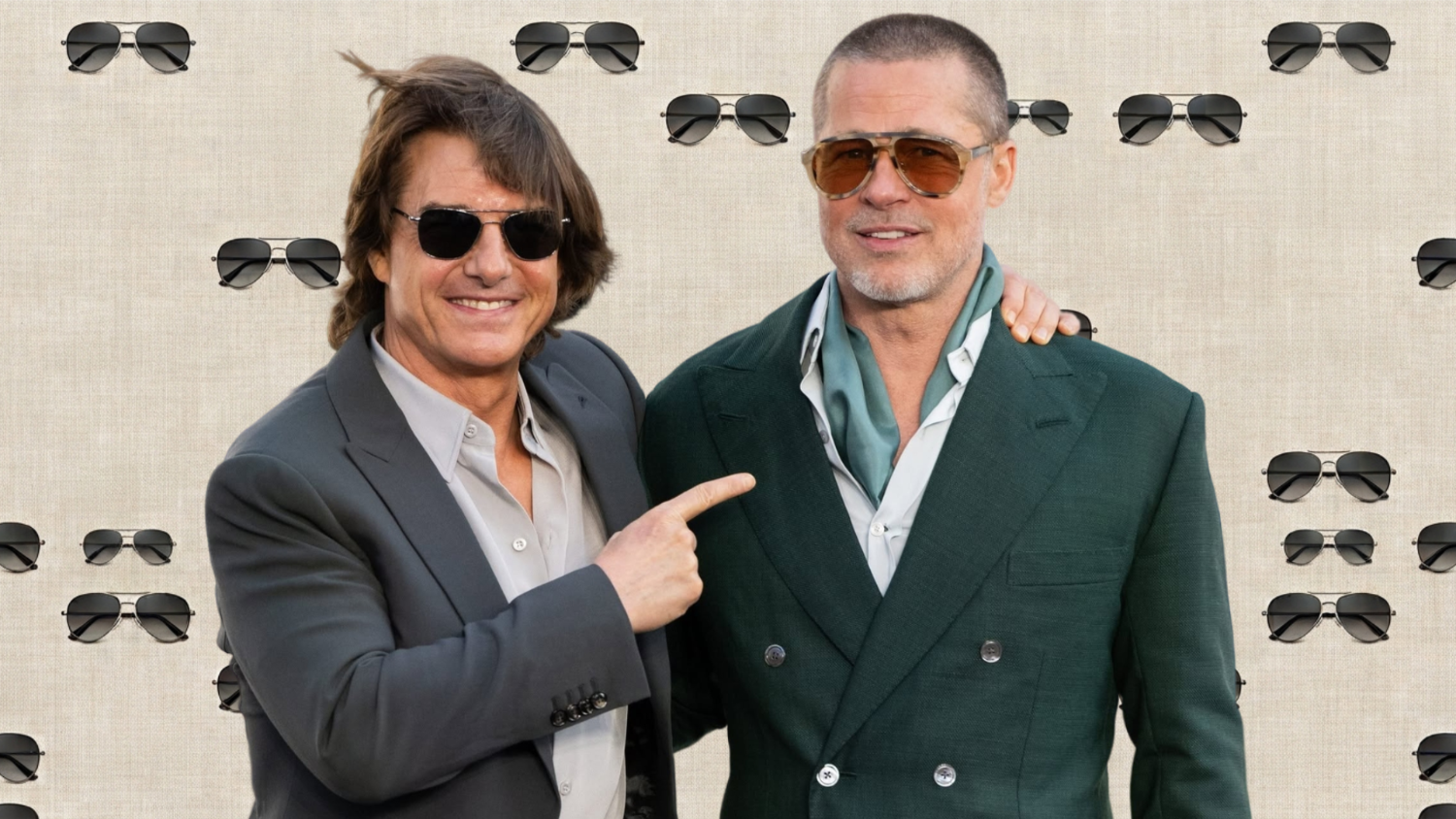
The aviator was designed as equipment first. It was developed in the 1930s for military pilots, and the lens drops low toward the cheek so a downward glance at an instrument panel stays shaded. That low inner corner is still the detail that separates a true aviator from a lookalike.
Today the shape comes in more variations than almost any other style: single-bridge versions, acetate aviators with thicker rims, and oversized pilot frames that lean more fashion than flight deck. Mirrored and gradient lenses are common, but the silhouette stays recognizable whatever the lens.

Navigator Sunglasses
Think of the navigator as the aviator with the curves edited out. The top bar and thin wire stay, but the lenses drop straight and finish in squared corners instead of a teardrop point. Ray-Ban's Caravan is the best-known version of the shape.
That extra structure is why navigators often work on faces where a classic teardrop feels too soft. The look leans more 1970s than military, especially with brown or gradient lenses.
Browline Sunglasses
A browline frame puts all its weight on top. The heavy upper rim traces the line of the eyebrow, while the lower half of each lens hangs from a thin wire that almost disappears. The style began in prescription eyewear before moving into sunglasses.
Many shoppers know it as the Clubmaster, the Ray-Ban model name that became shorthand for the whole category. Because the frame adds visual width at the brow, it is a useful way to balance a narrow forehead.
Round Sunglasses
Round frames set up a contrast with your bone structure. On angular faces, the circles soften strong jaws and cheekbones; on already-round faces, they repeat the curve instead of balancing it.
Material changes the mood more than you might expect. Fine wire reads vintage and intellectual, while thick acetate in the same shape feels modern and graphic. Small round lenses look retro; larger ones move toward the oversized 70s style covered below.


Classic Acetate Sunglasses Styles
Acetate is a plant-based plastic that can be cut thick, polished and colored in ways metal cannot. The six shapes in this family are where most well-known sunglasses styles live: wayfarer, cat-eye, square, rectangular, oval and butterfly. Thicker rims give each shape more presence, so small changes in a corner or a curve read clearly on the face. These frames tend to have more personality than metal ones, and they come in tortoiseshell, solid colors and clear finishes.
Wayfarer Sunglasses
Ray-Ban introduced the Wayfarer in 1952, and the name has spread far beyond the brand in everyday speech. Most people now call any trapezoid acetate frame a wayfarer, whoever made it.
The original tilts slightly forward at the top, which gives the frame its attitude. Newer versions sit flatter and have softer corners, a quieter take that suits people who find the classic tilt too strong. Either way, the heavier top line gives the face clear definition.

Cat-Eye Sunglasses
The lift at the outer corner is the whole point of a cat-eye. It pulls attention up and out toward the temples, which reads as an instant lift for the face. Designer Altina Schinasi is generally credited with the original upswept frame, and the shape became a defining look of the 1950s.
The amount of lift varies widely. A soft cat-eye barely turns up and wears almost like a classic frame, while a sharp wing is a statement on its own. That range is why the shape works for both everyday and evening wear.

Square Sunglasses
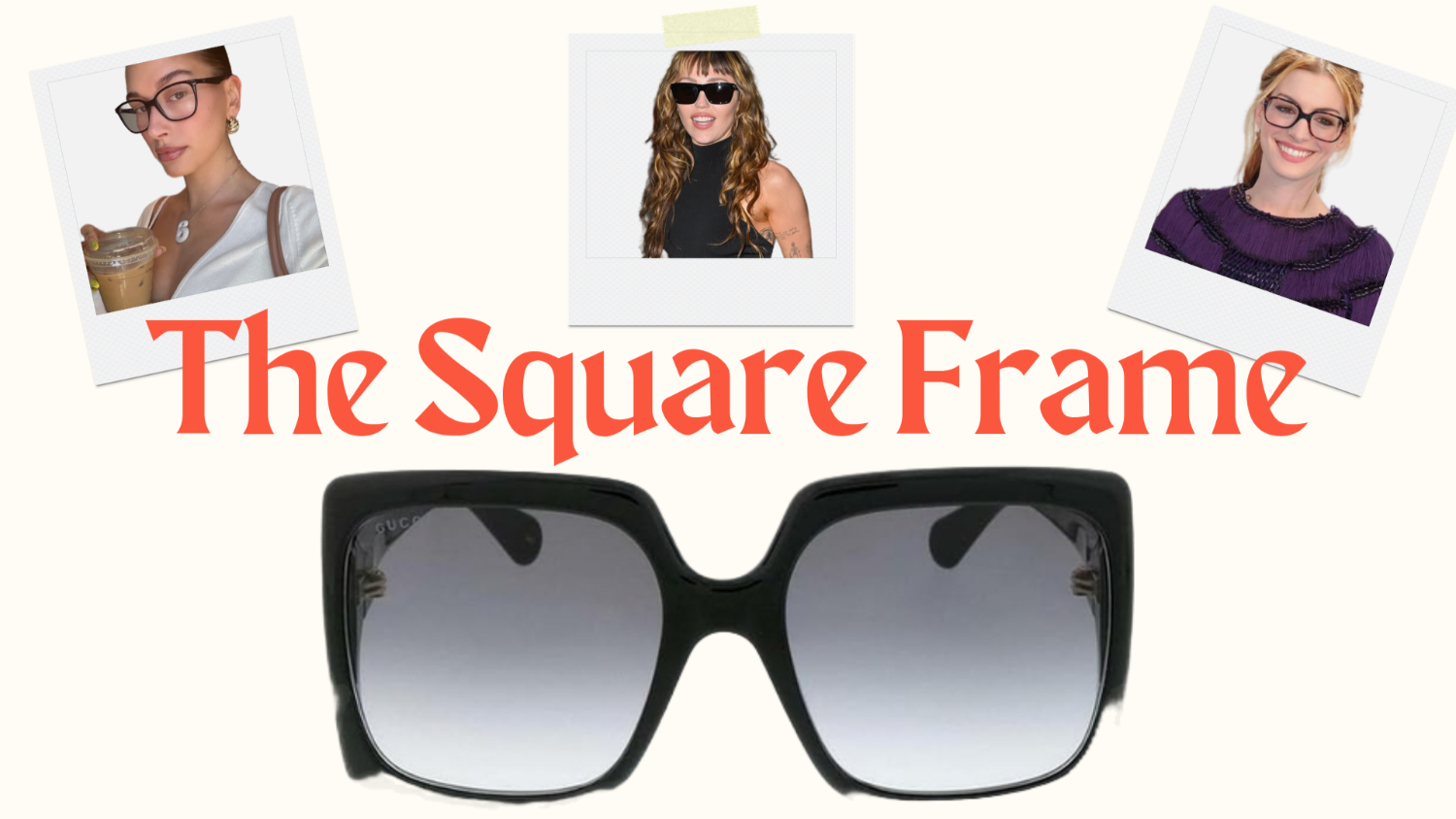
Square frames add structure where a face has curves. Equal height and width give a bold, even outline, and the softened corners keep it from looking harsh.
Square is often confused with the wayfarer, but a square lens keeps its sides straight instead of tapering toward the bottom. It is also deeper than a rectangle, so it covers more of the eye area.
Rectangular Sunglasses
A rectangle draws a horizontal line across the face. That line can make a round or short face look longer and more defined.
Narrow rectangles were everywhere in the 1990s and are back as a minimal alternative to bigger statement frames. Deeper rectangles wear closer to classic square frames, so check the lens height if you want more coverage.

Oval Sunglasses
Oval lenses have no corners at all, which makes them the gentlest shape on this list. They are wider than they are tall, and usually smaller than round frames.
The slim oval came back with the 1990s minimal revival. It softens angular features, but tiny ovals cover very little, so they're better suited to style than to long days in strong sun.
Butterfly Sunglasses
Butterfly frames are large lenses that widen toward the outer edges and sweep down toward the cheeks. They take the upward energy of a cat-eye and spread it into a broader, rounder curve without the sharp point.
Because the lenses are big, butterfly frames give generous coverage and a glamorous, retro feel. They tend to suit medium and larger faces better than petite ones.
Geometric Sunglasses Shapes
Geometric sunglasses replace curves with straight edges and visible corners. They are newer than the classic shapes, rising in the 2010s as brands looked for alternatives to round wire frames. The hexagon and octagon are the two most common, and each one has a distinct character once you can count the sides. Most geometric frames are thin metal, which keeps the angles crisp without making the frame heavy.
Geometric Sunglasses
Geometric is an umbrella term for any lens built from straight edges. Pentagons, hexagons, octagons and irregular angled shapes all fall under it.
These frames add angles a face may not have, which is why they are popular for softening round features. Fine metal versions keep the look light; acetate makes the angles feel bolder.
Hexagonal Sunglasses
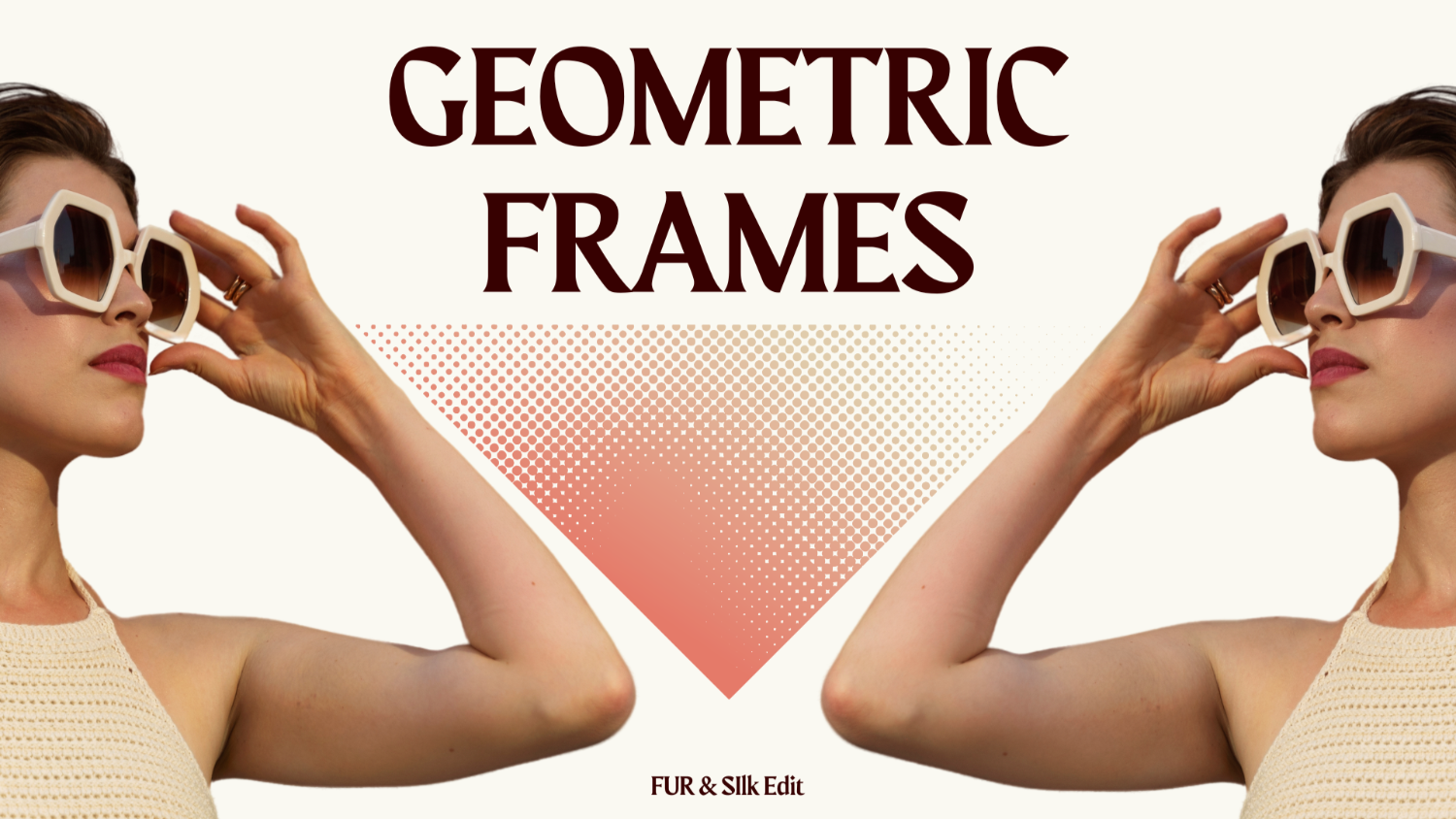
A hexagonal lens has six sides, with a flat top, a flat bottom and two angles on each side. It sits between round and square: soft enough to wear every day, angular enough to stand out.
Ray-Ban's Hexagonal helped push the shape into the mainstream in the 2010s. Thin metal versions are the most common, though thicker acetate hexagons are gaining ground.

Octagonal Sunglasses
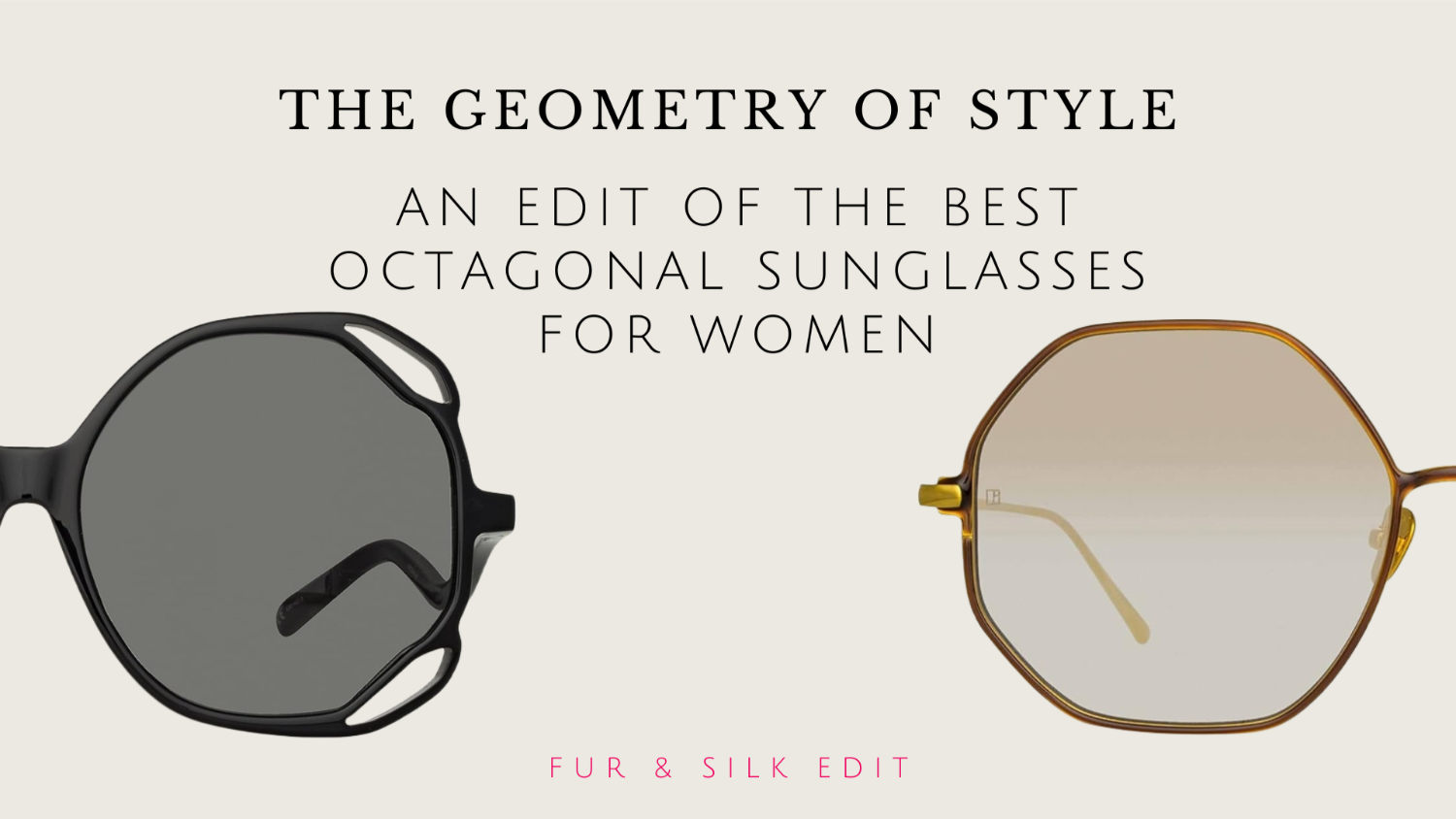
An octagonal lens adds two more sides than a hexagon, so each corner is shorter. The result reads closer to round from a distance and clearly angular up close.
That subtlety makes the octagon an easy first step into geometric frames. It often comes in gold or silver wire, sometimes with a flat top bar.
Oversized and Statement Sunglasses Styles
Some sunglasses styles are defined less by outline and more by scale or weight. Oversized frames go big on lens size, chunky frames go big on rim thickness, and flat-top frames make a single bold line the focus. Oversized round sits between the two, borrowing the circle from classic frames and scaling it up. These are the styles that drive trends, so they change more from season to season than the classics do.
Oversized Sunglasses
Oversized describes size rather than a single shape. Any frame with lenses that reach above the brow and down toward the cheek counts, whether square, round or butterfly.
Beyond the glamour, big lenses cover more of the delicate skin around the eyes and block more light from the sides. On a small face, the proportions can overwhelm, so the bridge and frame width matter as much as the look.


Oversized Round Sunglasses
Take a classic round frame and scale it up, and you have the oversized round. The big circles and low bridge are pure 1970s, and the shape is one of the defining sunglasses trends of 2026.
On angular faces, the large curves feel relaxed and soft. Thin metal versions look lighter and more bohemian, while acetate versions feel more polished.

Chunky Sunglasses
In a chunky frame, the rim itself is the design. Almost any shape can be chunky; what defines the style is acetate thick enough to be seen from across a room.
Heavy frames add weight and definition, which is why they balance long faces well. They also sit heavier on the nose, so a good fit at the bridge makes a real difference over a full day.