1. Stream2Sea Coral Care SPF 30 — Best Overall Innovation
This recommendation includes a Creator Connections partnership.
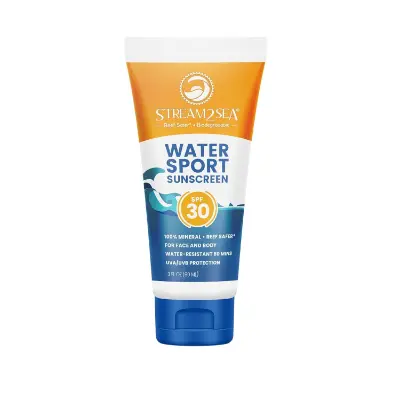
Price: ~ $17.30
Stream2Sea didn't just create a sunscreen that doesn't harm coral, they literally made one that helps coral grow. Yeah, you read that right. Their Coral Care formula is the world's first sunscreen scientifically proven to nourish coral reefs, and the research to back it up is legit.
The formula uses titanium dioxide as the active ingredient, plus a proprietary antioxidant blend with green tea, tulsi leaf, seaweed, aloe, and coconut oil. It's biodegradable, tested safe for both freshwater and marine environments, and USDA Certified Biobased. The eco-friendly sugarcane resin packaging is just the cherry on top.
What I Love
This one has serious cred in the diving and snorkeling community — it's what professional dive operators and marine biologists actually use. The texture is non-greasy and absorbs pretty quickly for a mineral sunscreen. There is a learning curve with application (start with less than you think, warm it between your hands first), but once you get it down, no complaints. The fact that it won a Bronze Award at Cannes Lions for innovation tells you everything about how seriously Stream2Sea takes this stuff.
The Verdict: If you're serious about ocean conservation AND sun protection, this is the sunscreen to beat. It's the only formula that actively helps the reefs you're swimming in.
2. Thinksport SPF 50+ — Best for Athletes & Water Sports
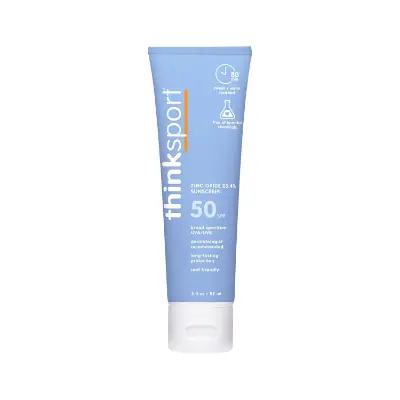
Price: ~ $15.49
Thinksport has been the gold standard for clean, reef-safe sun protection since before it was trendy. They were literally the first sunscreen to pass Whole Foods Premium Care requirements, and they've held EWG's top rating for over a decade. When you need serious protection for serious activity, this is the one.
What sets Thinksport apart is how well it holds up during intense activity. We're talking surfers, triathletes, marathon runners — people who are sweating, swimming, and beating up their sunscreen all day. The 80-minute water resistance actually means something here, and users consistently report it outlasting other mineral options.
What I Love
This is my go-to recommendation for anyone who's active outdoors. The price point is genuinely reasonable for what you're getting, especially the family-size 6oz option.
The Verdict: The workhorse of reef-safe sunscreens. If you need maximum protection that can keep up with your active lifestyle, Thinksport delivers.
3. Raw Elements Face + Body SPF 30 — Best for Eco-Packaging & Sustainability
.webp)
Price: ~ $20.99
Raw Elements is what happens when a surfer gets fed up with sunscreens that harm the ocean he loves. Founded by Brian Guadagno on the beaches of Hawaii, this brand is all about doing things the right way — even when it's harder.
But what really sets Raw Elements apart is their commitment to sustainability. You can get this sunscreen in a recyclable/reusable tin (zero plastic waste) or a bio-resin tube made from sugarcane. Their Ocean Ramsey collaboration stick donates 10% to Save the Turtles International and One Ocean Conservation. This is a brand that walks the talk.
What I Love
The tin packaging is genius for beach bags and backpacks — it won't leak or break, and you feel good about the zero-waste aspect. The formula is water-resistant beyond 80 minutes and works ridiculously well for something so natural. It's gentle enough for babies and powerful enough for extreme athletes.
One reviewer nailed it: "The best choice for reef safe sunscreen. Protects us in all of our outdoor activities. Living in Hawaii the sun is relentless, but this keeps me protected and I know I'm doing something great for our ocean."
The Verdict: For the eco-warrior who wants their sunscreen to match their values. Raw Elements proves that sustainable packaging and serious protection aren't mutually exclusive.
4. All Good SPF 50 Mineral Sunscreen Butter — Best Organic & Minimalist Formula
.webp)
Price: ~ $9.99
All Good took the minimalist approach and nailed it. This sunscreen butter has exactly 6 ingredients — and that's not a typo. When most sunscreens have ingredient lists longer than your arm, All Good said "less is more" and delivered the cleanest formula you'll find anywhere.
The secret weapon is 25% non-nano zinc oxide — that's the maximum allowable concentration by the FDA. Paired with organic coconut oil, organic beeswax, organic calendula (grown on their own farm), organic jojoba oil, and vitamin E, this butter-like formula creates a serious physical barrier against UV rays while moisturizing your skin.
Because the formula contains no water (it's anhydrous), it doesn't need preservatives at all. That means zero potentially irritating chemicals, making it perfect for sensitive skin, eczema-prone skin, and even babies. If you're shopping specifically for little ones and want more kid-friendly options, we've got a dedicated guide to the best sunscreens for babies and kids with age-specific picks and pediatrician tips.
What I Love
The pocket-sized tin is perfect for face application — easy to throw in your bag, pocket, or even a wetsuit. The butter texture feels luxurious and moisturizing, not greasy or sticky.
The Verdict: The purist's choice. If you want the simplest, cleanest, highest-protection reef-safe sunscreen with zero unnecessary ingredients, All Good is your answer.
5. Blue Lizard Sensitive Mineral SPF 50+ — Best Drugstore & Family-Friendly Option
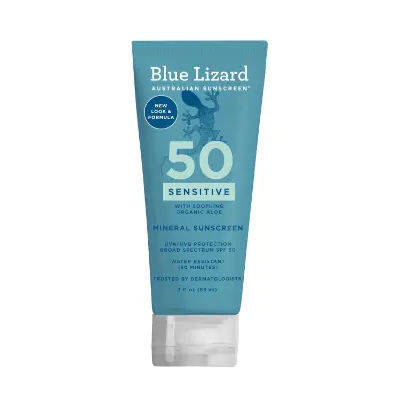
Price: ~ $11.49
Blue Lizard is the OG of mineral sunscreen that you can actually find at your local Target, Walgreens, or CVS. They've been the #1 pediatrician-recommended mineral sunscreen brand for over 20 years, and their Sensitive formula is reef-safe, dermatologist-trusted, and budget-friendly enough to stock up without guilt.
The coolest feature? Smart Cap Technology. The bottle cap changes color in harmful UV light, reminding you when it's time to apply. It sounds gimmicky, but it's actually super useful — especially for kids or when you're distracted at the beach.
What I Love
This is the sunscreen I recommend to families, sunscreen skeptics, and anyone who wants reliable protection without having to special-order from a boutique brand. The price-per-ounce is excellent, the formula is gentle enough for babies 6 months and up, and the 80-minute water resistance actually holds up.
The Verdict: The practical choice. Blue Lizard proves that reef-safe, family-friendly sunscreen doesn't have to be expensive or hard to find.
Quick Comparison: Which Reef-Safe Sunscreen Is Right for You?
Why Your Sunscreen Matters More Than You Think
Let's talk about why "reef-safe" and "ocean-safe" sunscreen isn't just marketing hype:
The Coral Crisis Is Real: Scientists estimate that 14,000 tons of sunscreen enter reef areas every single year. At Hanauma Bay in Hawaii alone — one of the world's most popular snorkeling spots — 412 pounds of sunscreen wash into the water daily. That's a lot of chemicals hitting coral that's already stressed from warming oceans.
Chemical Sunscreens Are the Problem: Ingredients like oxybenzone, octinoxate, octocrylene, and avobenzone have been shown in lab studies to cause coral bleaching, DNA damage in baby coral, and hormone disruption in marine life. Oxybenzone is particularly nasty — even at concentrations as low as 62 parts per trillion (that's like a drop in six Olympic swimming pools), it can trigger coral bleaching.
Mineral Sunscreens Are the Solution: The safest reef-friendly sunscreens use mineral (physical) UV filters — specifically non-nano zinc oxide and titanium dioxide. These ingredients sit on top of your skin and physically reflect UV rays instead of absorbing into your skin and washing off into the water. They're also the only two sunscreen ingredients the FDA considers "generally recognized as safe and effective."
"Reef-Safe" Isn't Regulated: Here's the tricky part — brands can slap "reef-safe" or "reef-friendly" on their packaging without meeting any standard. The only way to know for sure is to check the active ingredients yourself. Look for zinc oxide and/or titanium dioxide, preferably non-nano, and make sure there are no chemical UV filters hiding in the formula.
How to Choose Your Perfect Reef-Safe Sunscreen
If you're a snorkeler or diver: Go with Stream2Sea Coral Care. It's the only sunscreen that actually helps the reefs you're swimming in, and it's trusted by marine biologists and dive operators.
If you're an athlete or water sports enthusiast: Thinksport SPF 50+ is your best bet. The highest protection on this list with proven performance during intense activity.
If you want zero-waste, eco-friendly packaging: Raw Elements in the tin is perfect. Zero plastic, zero waste, and it supports ocean conservation with every purchase.
If you have sensitive skin or want the cleanest ingredients: All Good SPF 50 has only 6 ingredients and no preservatives. It's as clean as sunscreen gets.
If you want something easy to find and family-friendly: Blue Lizard Sensitive is available at Target, Walgreens, and CVS. Pediatrician-recommended for 20+ years.
What to Look for in a Truly Reef-Safe Sunscreen
Don't just trust the label — check these boxes before you buy:
✅ DO Look For:
- Non-nano zinc oxide and/or titanium dioxide as the ONLY active ingredients
- "Hawaii Act 104 Reef Compliant" on the label
- Water-resistant (80 minutes is the max allowed)
- Biodegradable formula
- Eco-friendly packaging (bonus points)
❌ AVOID These Ingredients:
- Oxybenzone (banned in Hawaii)
- Octinoxate (banned in Hawaii)
- Octocrylene
- Avobenzone
- Homosalate
- Octisalate
- PABA (para-aminobenzoic acid)
- Any "nano" zinc oxide or titanium dioxide
🤔 Be Skeptical Of:
- "Reef-friendly" or "reef-safe" claims without ingredient proof
- "Biodegradable" without third-party certification
- Spray sunscreens (harder to apply adequately, can be inhaled)
Reef-Safe Sunscreen FAQs
Are reef-safe sunscreens as effective as regular sunscreens?
Yes! Mineral sunscreens with zinc oxide and titanium dioxide provide excellent broad-spectrum UVA/UVB protection. The FDA considers these two ingredients the safest and most effective UV filters available. You're not sacrificing protection by going reef-safe.
Why do some reef-safe sunscreens leave a white cast?
Zinc oxide and titanium dioxide are white minerals that physically sit on your skin to reflect UV rays. The "white cast" is actually visible sun protection. Tinted versions and better formulations have minimized this issue, but some whiteness is normal — especially with higher zinc concentrations.
Do I still need to reapply reef-safe sunscreen?
Absolutely — every 2 hours when outdoors, and immediately after swimming or heavy sweating. The 80-minute water resistance rating is the maximum allowed by FDA, but it's still best to reapply after water activity.
Can I bring reef-safe sunscreen to Hawaii/Mexico/Caribbean?
Yes! In fact, you may be required to. Hawaii has banned the sale of sunscreens containing oxybenzone and octinoxate since 2021. Parts of Mexico (especially eco-parks like Xcaret and cenotes) require biodegradable sunscreen. All the products on this list are compliant.
Is "reef-safe" the same as "reef-friendly"?
Unfortunately, neither term is regulated. Any brand can use these terms without meeting any standard. Always check the active ingredients to verify — you want only non-nano zinc oxide and/or titanium dioxide.
Are reef-safe sunscreens safe for babies and kids?
Mineral sunscreens are actually the preferred option for babies and children because they sit on top of the skin rather than absorbing into it. The FDA recommends avoiding sunscreen on babies under 6 months (use shade and protective clothing instead), but mineral sunscreens are considered the safest choice for kids over 6 months.
The Bottom Line
Look, switching to reef-safe sunscreen is one of those rare choices where you win on every front. You get effective sun protection with ingredients the FDA actually trusts. You avoid potentially harmful chemicals absorbing into your skin. And you help protect the coral reefs and marine ecosystems that make beach vacations worth taking in the first place.
The five sunscreens on this list represent the best of what's available in 2026 — from innovative coral-nourishing formulas to minimalist organic options to budget-friendly drugstore picks. They've been tested by athletes, recommended by dermatologists, and trusted by marine biologists.
My personal daily driver? Stream2Sea Coral Care for snorkeling trips and Thinksport SPF 50+ for everyday outdoor activity. But honestly, you can't go wrong with any of these. The best reef-safe sunscreen is the one you'll actually apply (and reapply) every single day.
Your skin will thank you. The coral reefs will thank you. And your future self — enjoying those same beautiful beaches and thriving underwater ecosystems years from now — will definitely thank you.
Now go slather up and hit the water guilt-free. 🌊