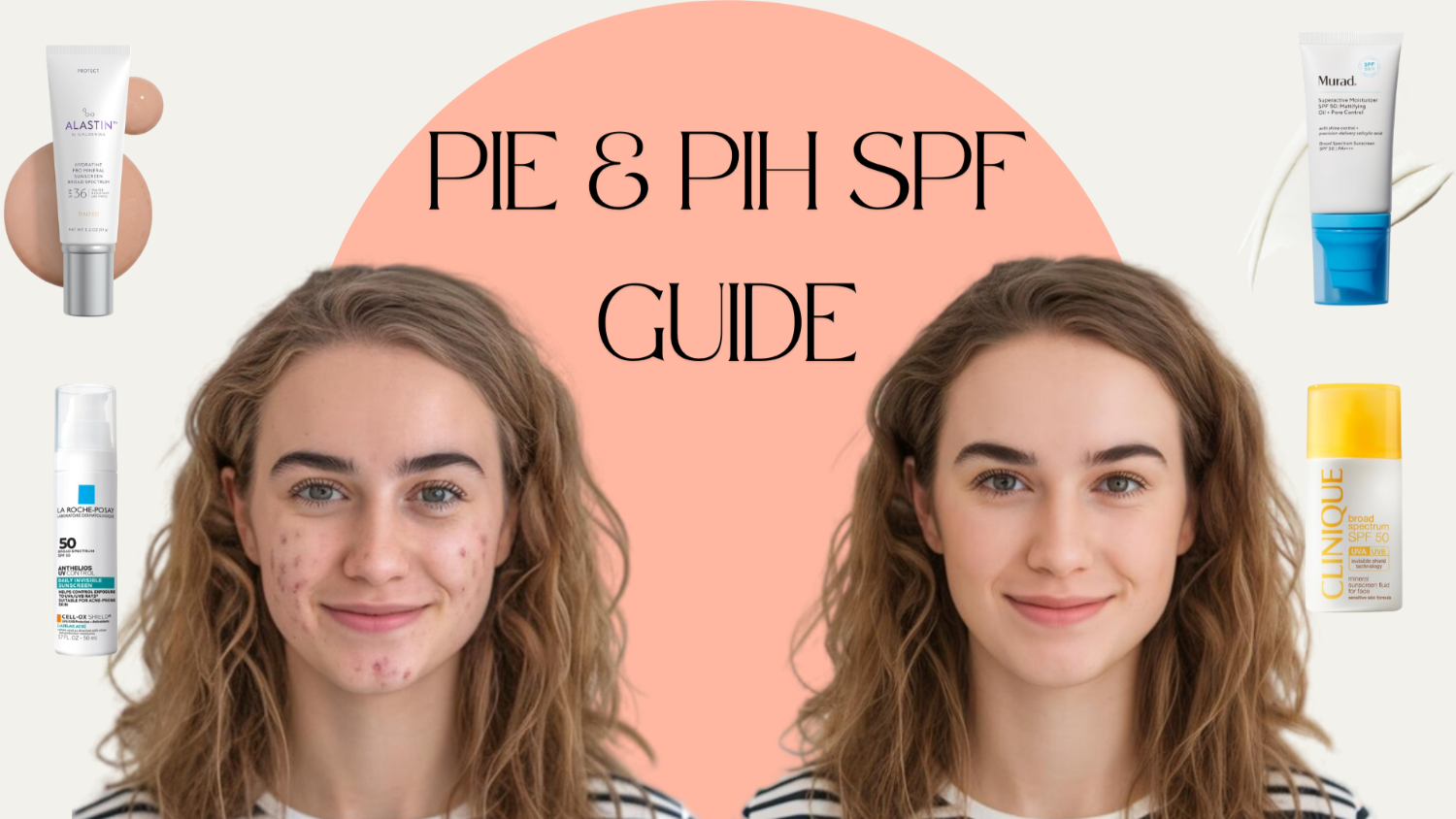
Best Sunscreens for Red Post-Acne Marks (PIE): Soothing, Barrier-First Mineral Formulas
If your marks are pink, red, or purple, you're dealing with post-inflammatory erythema (PIE) — a vascular issue caused by dilated capillaries under healing skin, not excess pigment. Quick way to check: press a clear glass against the mark. If the color briefly disappears, it's PIE. Dermatologists are clear that sun exposure makes these red marks worse and last longer.
Dr. Sonya Kenkare of the Illinois Dermatology Institute told WebMD that the most valuable treatment is "keeping the skin protected from the sun and practicing gentle skin care."
That word — gentle — is why we built this category entirely around calming mineral formulas. WebMD's guidance recommends a mineral sunscreen with at least 8% zinc oxide, and NYC dermatologist Dr. Morgan Rabach notes that the zinc in physical formulas carries its own anti-inflammatory benefit. So every pick here protects healing skin without stinging, overheating, or adding new irritation to marks that are, at their core, inflammation that hasn't finished settling.
Source:
What Should You Know About Post-Inflammatory Erythema?
What Is Post-Inflammatory Erythema? These Post-Acne Red Spots Aren’t Scars
PCA Skin Weightless Protection Broad Spectrum SPF 45
Best for: red marks on skin that wants its SPF to actively calm, not just cover.
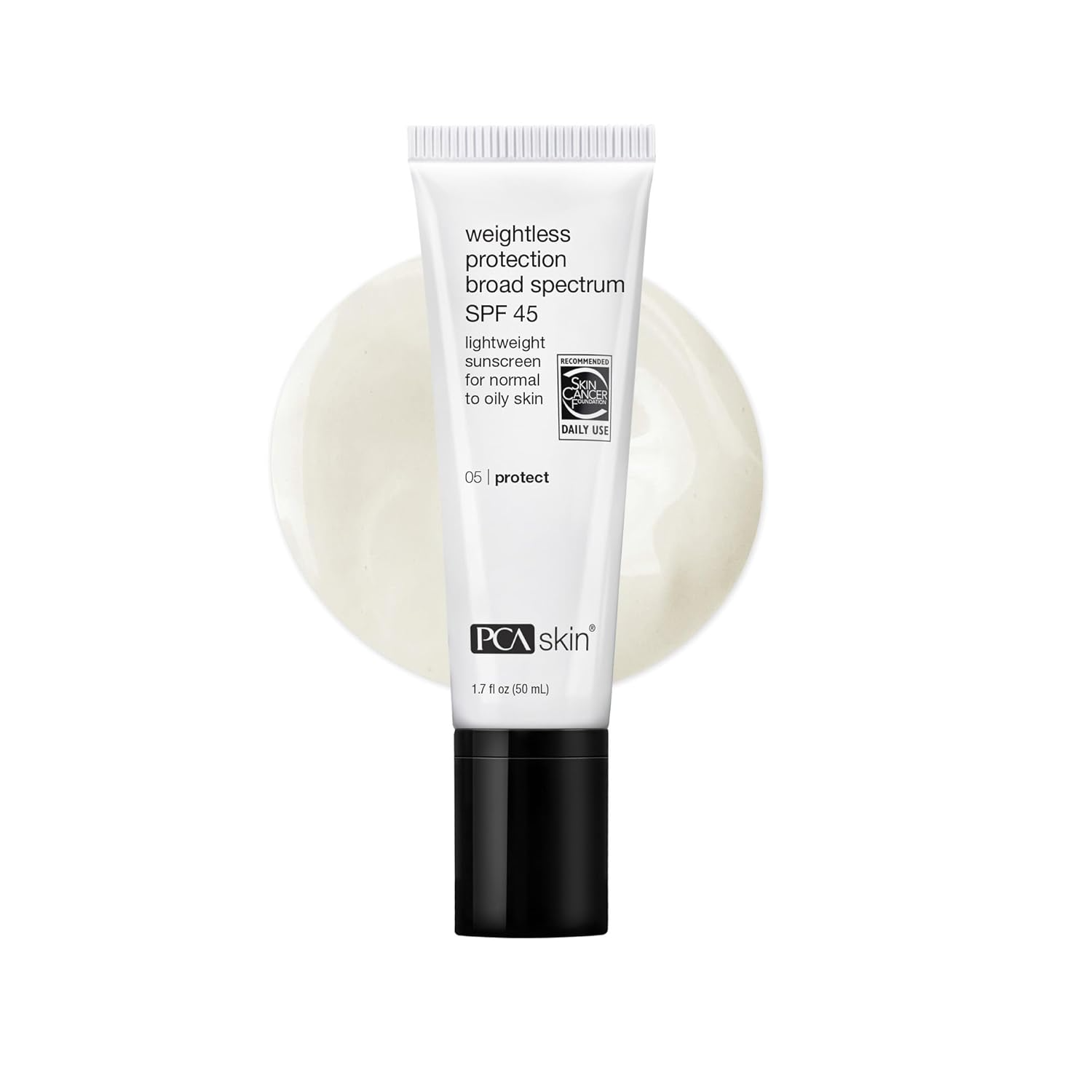
Price: $52.00
This one earns its name — it sinks in and vanishes so completely you'll forget it's there by the time you finish your coffee. The chamomile-derived soothing complex is the quiet hero, settling the reactive, flushed feeling that healing skin loves to hold onto.
Fur and Silk Editor Review ★★★★½
We kept reaching for this on days when skin felt hot and irritable around old marks, and it never once pushed back. It settles in like it was never there, which is exactly what healing skin wants. Best for red marks on skin that flushes at the slightest provocation.
Don’t forget the under-eye area — it’s one of the most delicate parts of your face and needs a more gentle approach, so check our guide to the best under-eye sunscreens.
EltaMD UV Skin Recovery 100% Mineral Sunscreen SPF 50
Best for: the reader whose red marks come with all-over redness and wants both visibly softened.
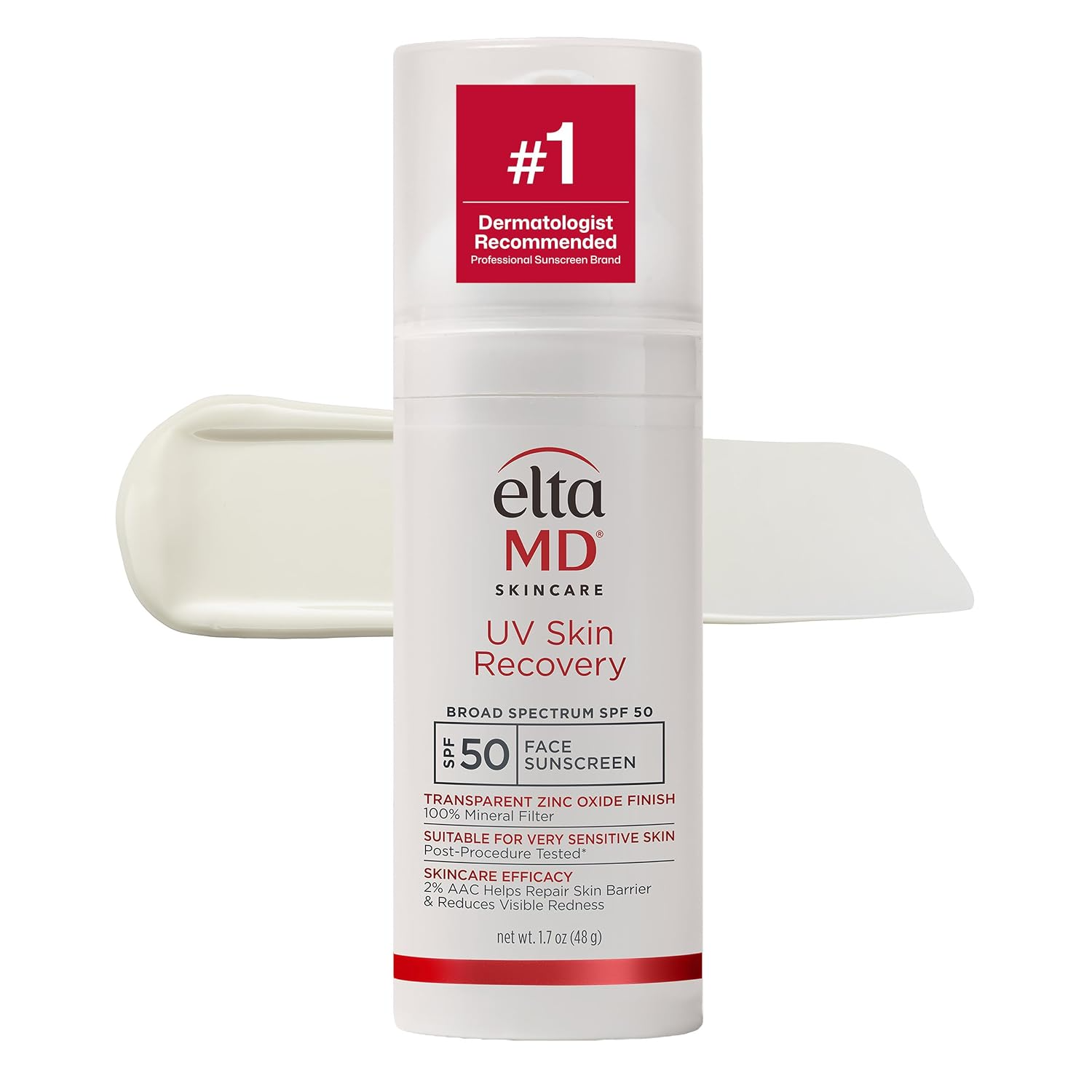
Price: $50.00
This is the category flagship for a reason: it's clinically shown to reduce the look of redness by 14% within 15 minutes of application. The cica-and-ceramide blend keeps working underneath, supporting the barrier repair that red marks need to finish healing.
Fur and Silk Editor Review ★★★★★
Red marks looked genuinely softer within minutes of smoothing this on, and skin stayed calm and comfortable through the whole day. It feels less like sunscreen and more like a recovery step. Best for red post-acne marks on skin that's also fighting overall redness.
Clinique SPF 50 Mineral Sunscreen Fluid for Face
Best for: the most reactive skin that needs the "won't irritate anything further" guarantee.
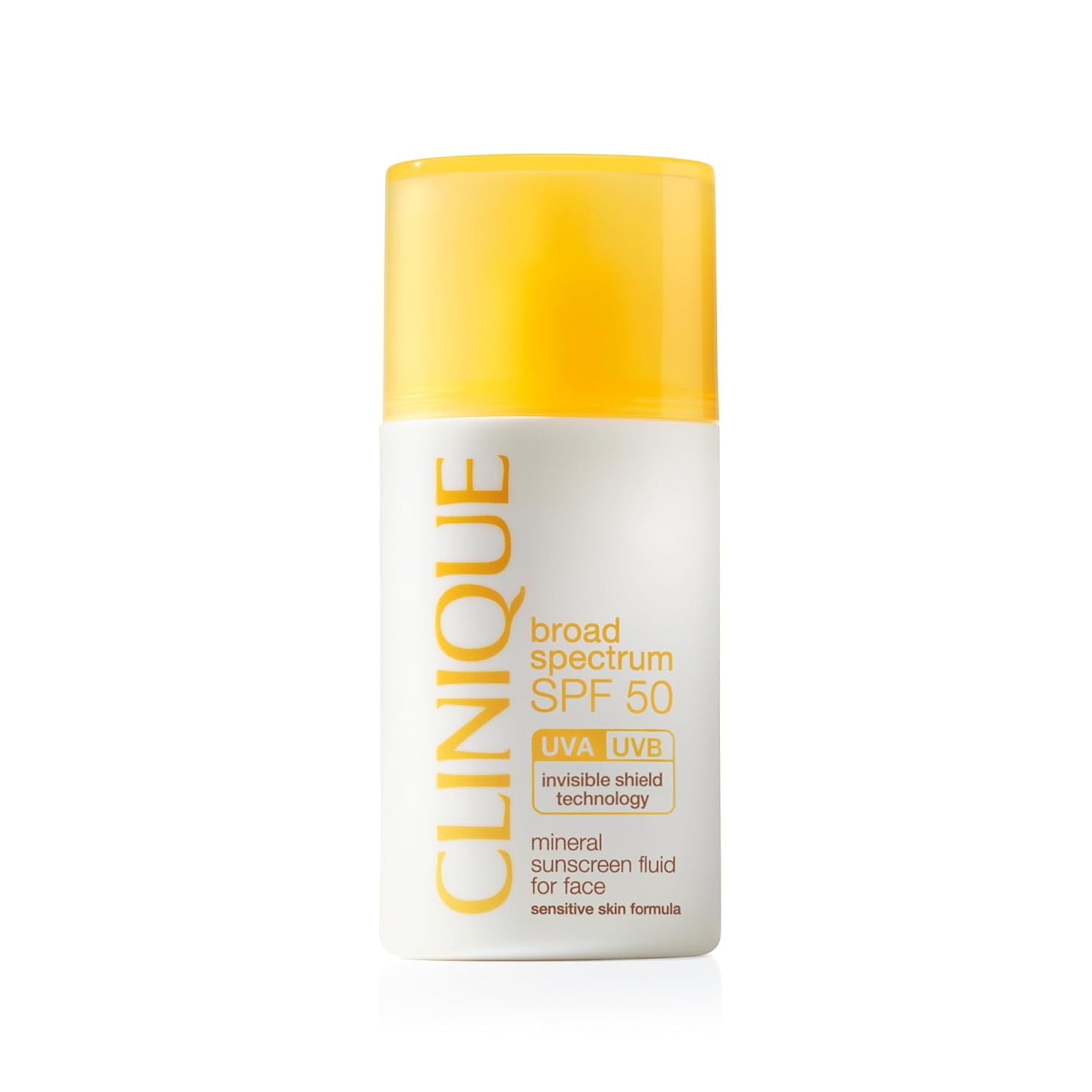
Price: $38.00
Here's the gentleness benchmark: this formula is pediatrician-tested and safe for babies six months and up, which tells you everything about how it treats fragile, healing skin. The fluid texture spreads thin and disappears, making it the easiest pick on this list to actually wear every day.
Fur and Silk Editor Review ★★★★½
When skin was at its most temperamental, this was the one we trusted without a second thought — no sting, no heat, no reaction, ever. It simply protects and gets out of the way. Best for red marks on skin so reactive that everything else feels like a gamble.
La Roche-Posay Toleriane Double Repair UV SPF 30 Moisturizer
Best for: anyone who wants barrier repair and sun protection handled in a single morning step.
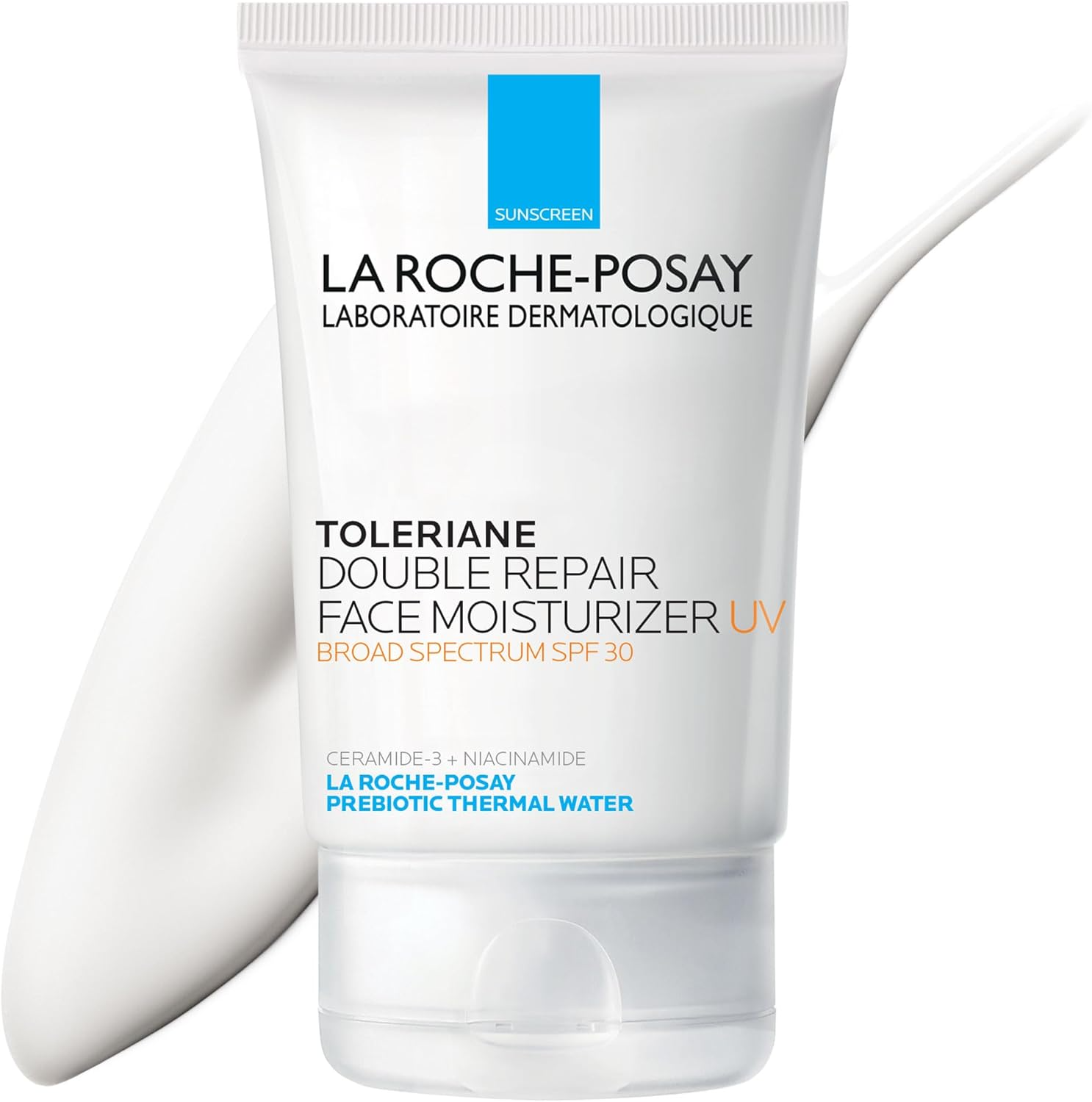
Price: $24.99
Red marks live in skin whose barrier hasn't fully recovered, and this moisturizer-SPF hybrid is built around exactly that repair job. It delivers up to 48 hours of hydration while restoring the skin's protective barrier, so marks heal in the environment they need.
Fur and Silk Editor Review ★★★★½
This became the lazy-morning hero — one layer and skin felt cushioned, calm, and protected until evening. For the price, it's almost unfair to the rest of the category. Best for red marks on skin that needs its barrier babied back to health on a budget.
Best Sunscreens for Brown Post-Acne Marks (PIH): Brightening Formulas That Fade While They Protect
If your marks are brown, tan, or gray, you're dealing with post-inflammatory hyperpigmentation (PIH) — excess melanin left behind where a breakout used to be. Sunlight feeds that pigment: every unprotected exposure tells your skin to make more melanin in the exact spot you're trying to fade. That's why the American Academy of Dermatology recommends daily sunscreen as the first step for dark spots — it prevents new ones from forming and helps existing ones clear.
But the picks in this category go a step further than protection. Each one builds in a proven brightening ingredient — niacinamide, vitamin C, or azelaic acid — so the formula actively fades your marks while the SPF protects them. You're treating and protecting in one step, which is the entire game with PIH.
ALASTIN Skincare HydraTint Pro Mineral Sunscreen SPF 36
Best for: the reader who wants brown marks visually blurred today while protection does the long-term work.
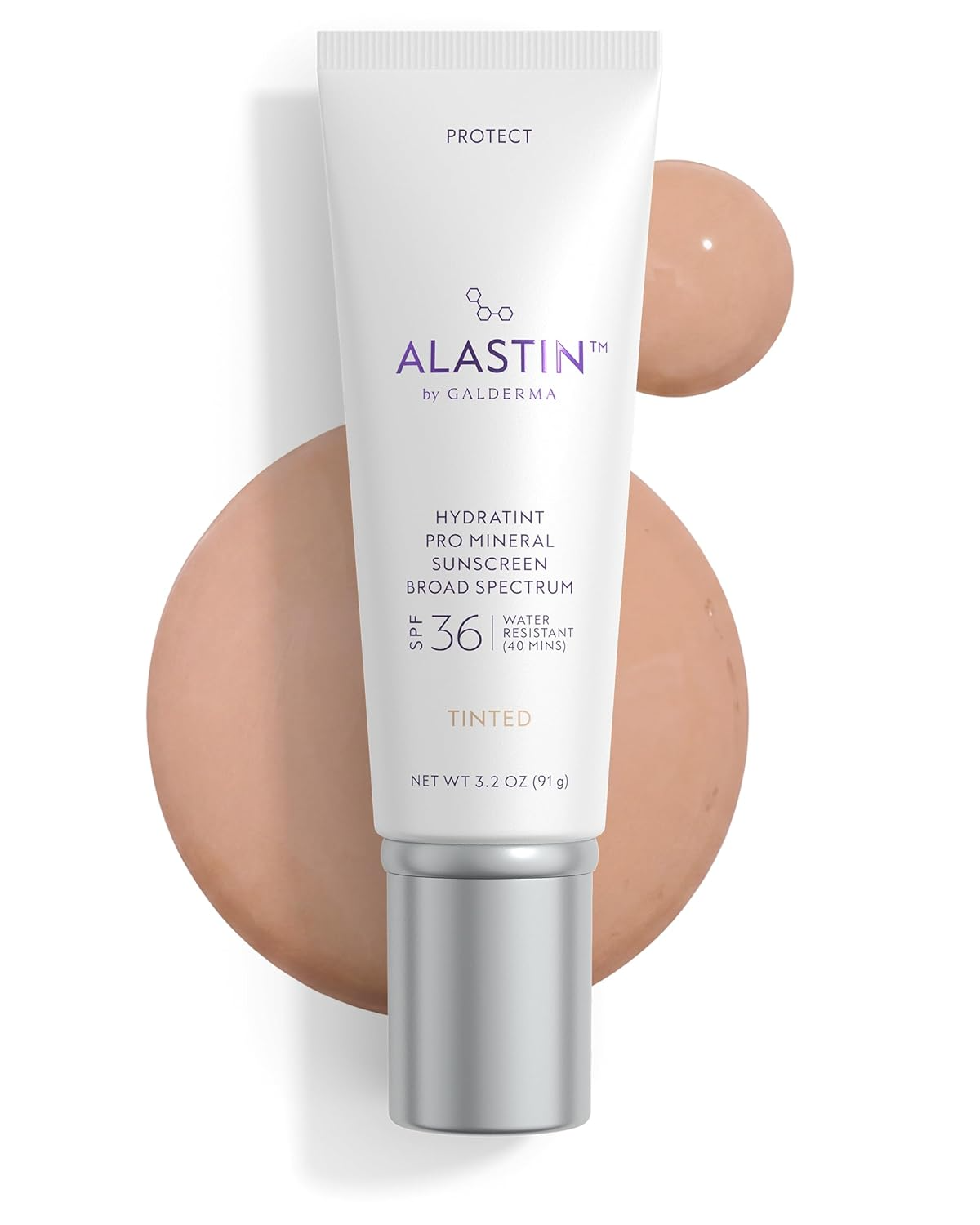
Price: $84.00
The sheer universal tint does double duty here: it softens the look of brown marks on contact while the pigments extend protection into the visible light range that keeps dark spots stimulated. It's the med-spa favorite that makes "sunscreen" and "my skin but better" the same step.
Fur and Silk Editor Review ★★★★½
Marks looked instantly quieter under the tint, and skin had that even, rested finish that usually takes concealer. It's a splurge, but it replaces two products every single morning. Best for brown marks you want camouflaged now and faded later.
Tatcha The Milky Sunscreen Broad Spectrum SPF 50+
Best for: the reader who wants visible dark-spot correction from a formula that feels like a luxury essence.
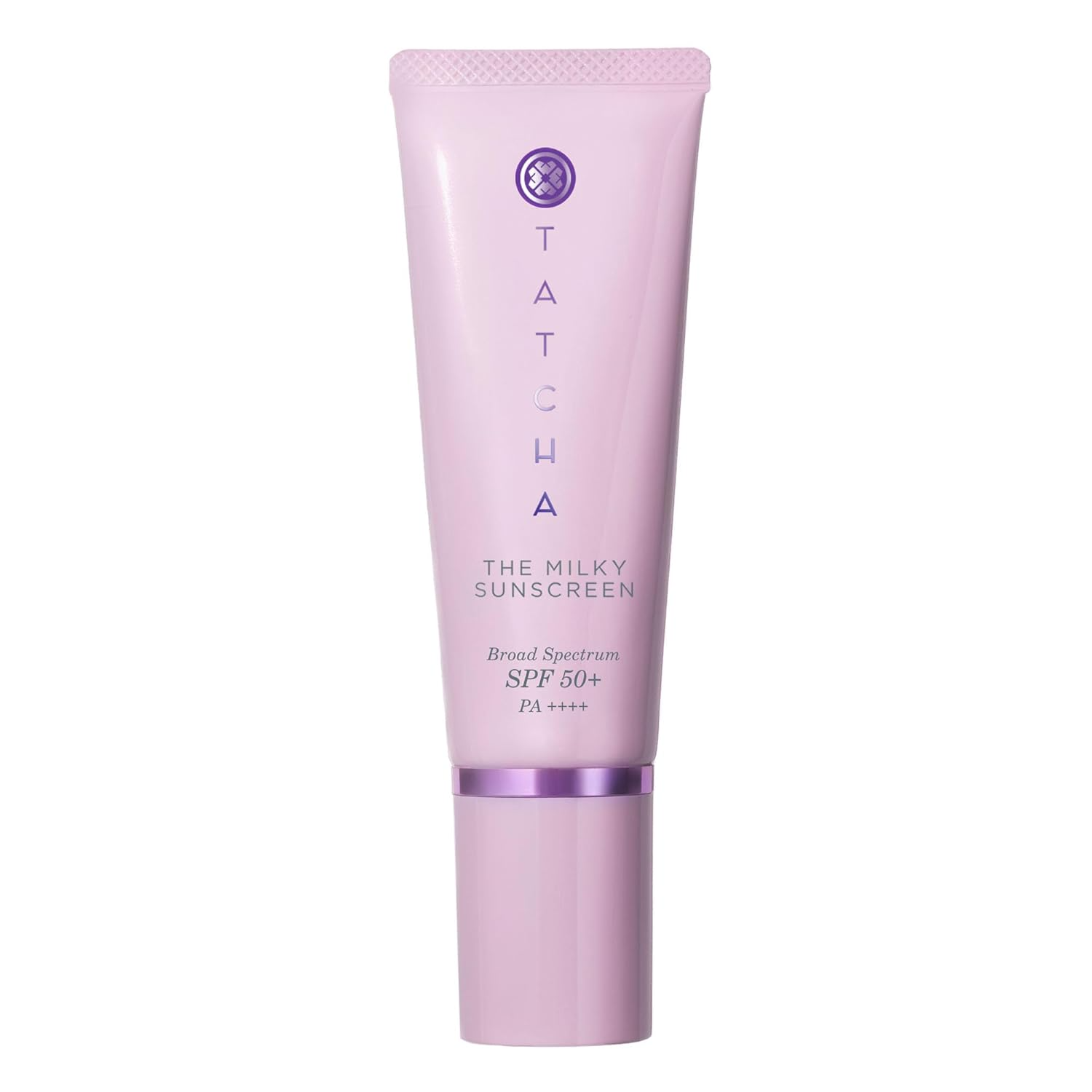
Price: $50.00
This one is built around correction, not just prevention — users showed visible improvement in dark spots, redness, and fine lines within two weeks in brand studies. The ectoin-powered formula also delivers deep cellular hydration, so healing skin gets soothed while old marks get addressed.
Fur and Silk Editor Review ★★★★★
It disappears into skin like a milky essence and somehow leaves the complexion looking brighter by the week. Wearing it never feels like a chore, which is half the battle with SPF. Best for brown marks on skin that wants its sunscreen to feel like skincare.
EltaMD UV Clear Face Sunscreen SPF 46
Best for: brown marks on skin that's still acne-prone — the dermatologist default for a reason.
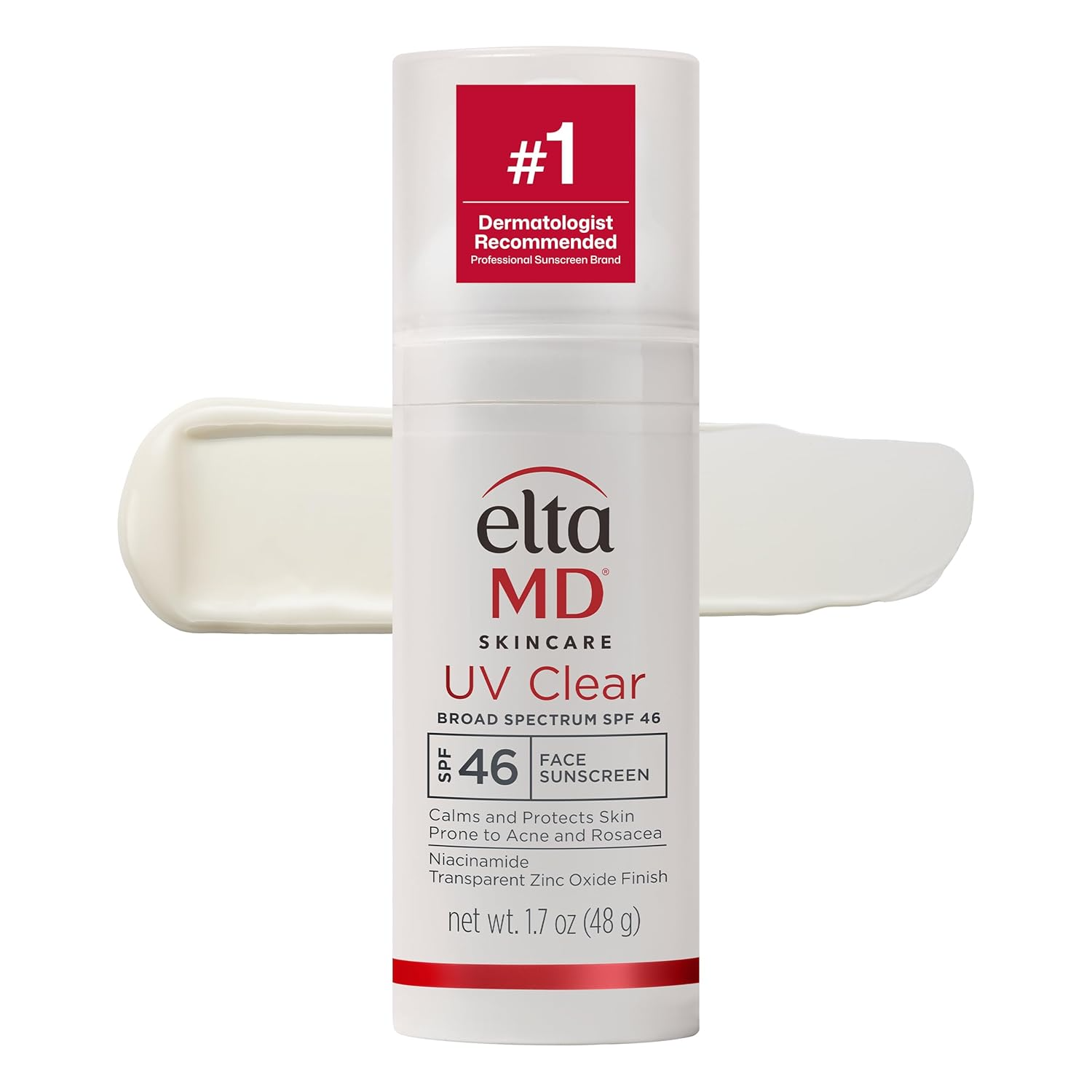
Price: $45.00
The 5% niacinamide is the star: it's right at the concentration studies show blocks pigment transfer to the skin's surface, which is precisely how brown marks form. Nearly 48,000 reviews deep, this remains the pick dermatologists name first when acne-prone patients ask about dark marks.
Fur and Silk Editor Review ★★★★★
Weeks in, the newest marks were fading noticeably faster than the ones we'd left unprotected in the past, and skin never once broke out from it. There's a reason this bottle empties fastest in our lineup. Best for brown marks on skin that hasn't fully stopped breaking out.
Paula's Choice 5% Vitamin C Sheer Sunscreen SPF 50
Best for: the reader who wants a serious brightening serum and a high SPF fused into one bottle.
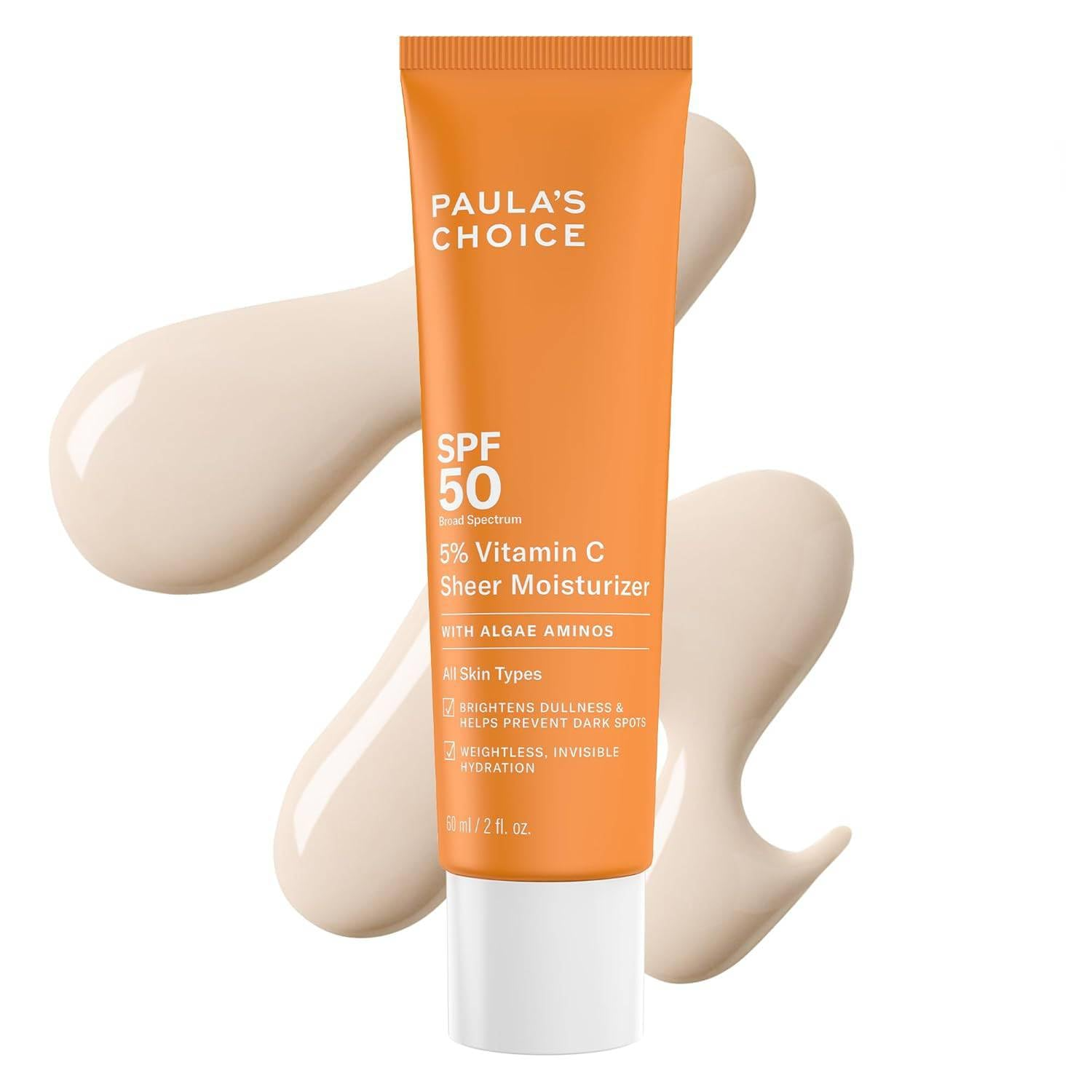
Price: $45.00
Three stabilized forms of vitamin C at a full 5% concentration make this the most treatment-forward pick in the category, brightening marks while the antioxidant shield reinforces the SPF itself. Amino acids round it out with barrier support, so the actives never come at your skin's expense.
Fur and Silk Editor Review ★★★★½
Skin took on that lit-from-within brightness within the first couple of weeks, and stubborn brown marks started looking less saturated. It's a serum and an SPF pulling the same direction. Best for brown marks you want actively brightened, not just protected.
La Roche-Posay Anthelios UV Clear SPF 50 with Azelaic Acid
Best for: marks that are part red, part brown — azelaic acid is one of the rare actives that addresses both.
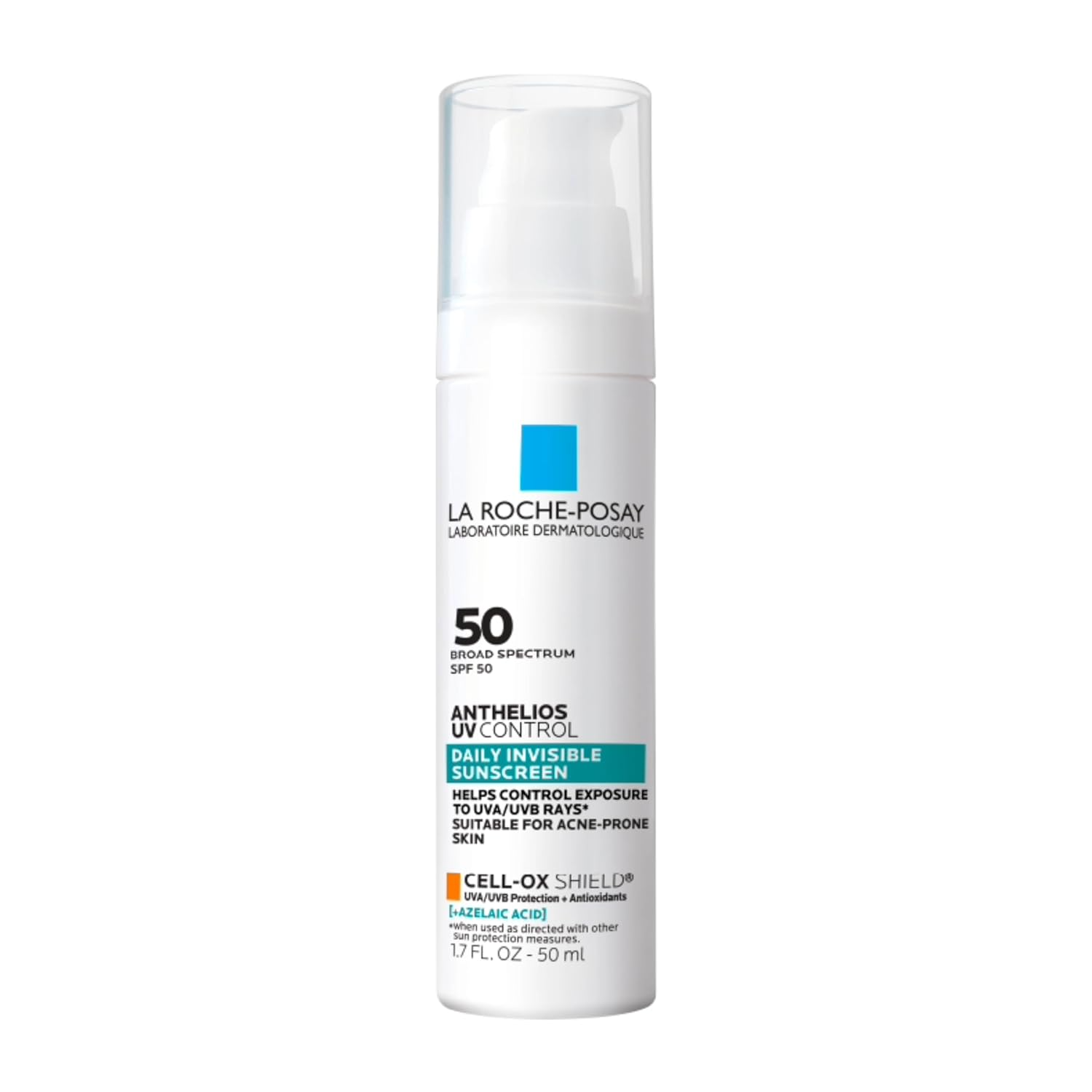
Price: $39.99
Azelaic acid sits in that JAAD dermatologist consensus for both acne and dark spots, and it's one of the few ingredients skincare experts recommend for red marks and brown marks alike — making this the smartest pick if your face has a mix of both. The barely-there texture was built specifically for breakout-prone and easily-flushed skin.
Fur and Silk Editor Review ★★★★½
For the face that has a red mark on one cheek and a brown one on the other, this ended the "which sunscreen today" debate entirely. It vanishes on and never clogs. Best for mixed post-acne marks that refuse to pick a single lane.
Best Sunscreens for Active Breakouts + Marks: Oil-Free, Non-Comedogenic Picks That Break the Cycle
Here's the cruelest math of post-acne marks: every new breakout is a future mark, so if you're still breaking out, prevention matters as much as fading. Dermatologists are unanimous that sunscreen for acne-prone skin must be oil-free and non-comedogenic — heavy, pore-clogging formulas can trigger the exact inflammation that creates the next round of marks. That's the whole brief for this category: SPFs that protect existing marks without ever starting new ones.
Every pick below layers on extra value for breakout-prone skin, from salicylic acid that treats while it protects to mattifying finishes that keep midday shine from joining the party. If breakouts themselves are still your bigger battle, our full guide to the best sunscreens for oily & acne-prone skin goes deeper on that side of the equation.
iS Clinical Eclipse SPF 50+
Best for: the reader who wants a weightless, waterproof matte that behaves through workouts and long days.
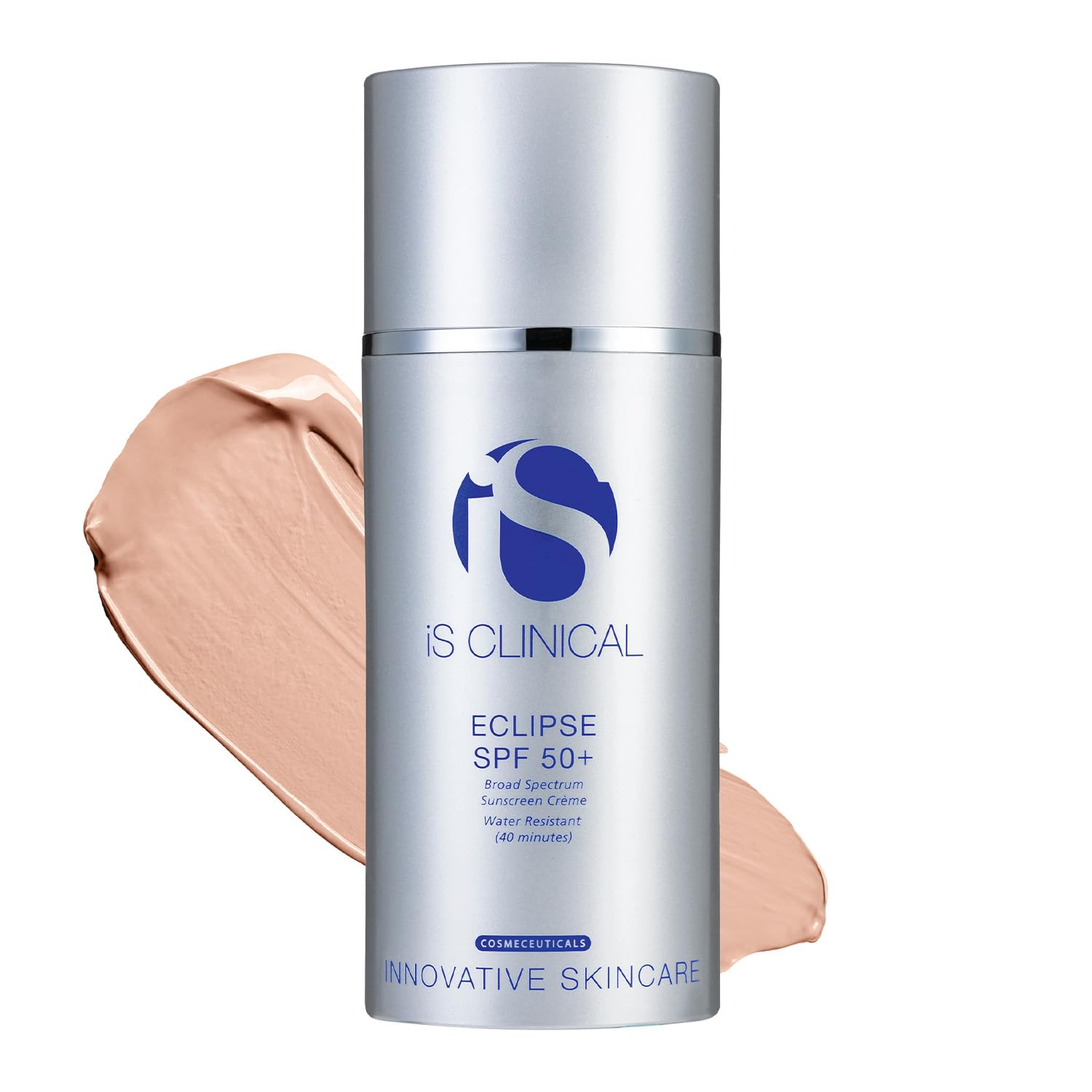
Price: $54.00
This is the clinical-grade pick that refuses to budge: waterproof, fast-absorbing, and genuinely weightless even in heat. The soft beige tint warms into skin rather than sitting on top, giving marks a subtle blur without a trace of makeup feel.
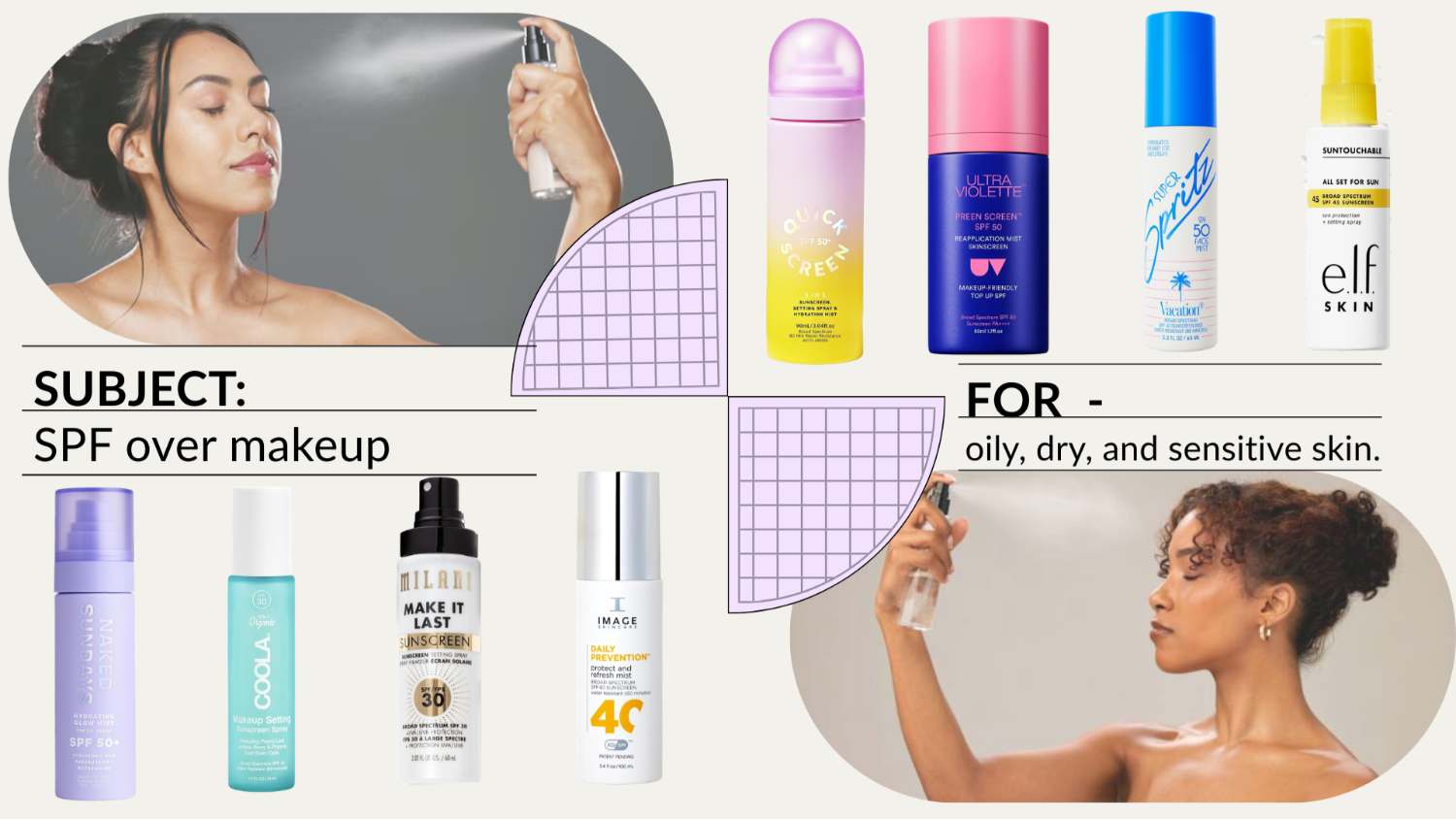
If you’re also looking for an SPF you can layer on during the day without disturbing your base, our guide to the best powder sunscreens walks through the touch-up formulas that actually work over makeup
Fur and Silk Editor Review ★★★★½
Through sweaty commutes and gym sessions, this stayed matte and put while lesser SPFs slid into every pore. Skin looked shine-free at 6 p.m., which almost never happens. Best for breakout-prone skin that needs its sunscreen to survive an active day.
EltaMD UV Physical Tinted Sunscreen SPF 41
Best for: oily, breakout-prone skin that wants 100% mineral protection with a hint of coverage.
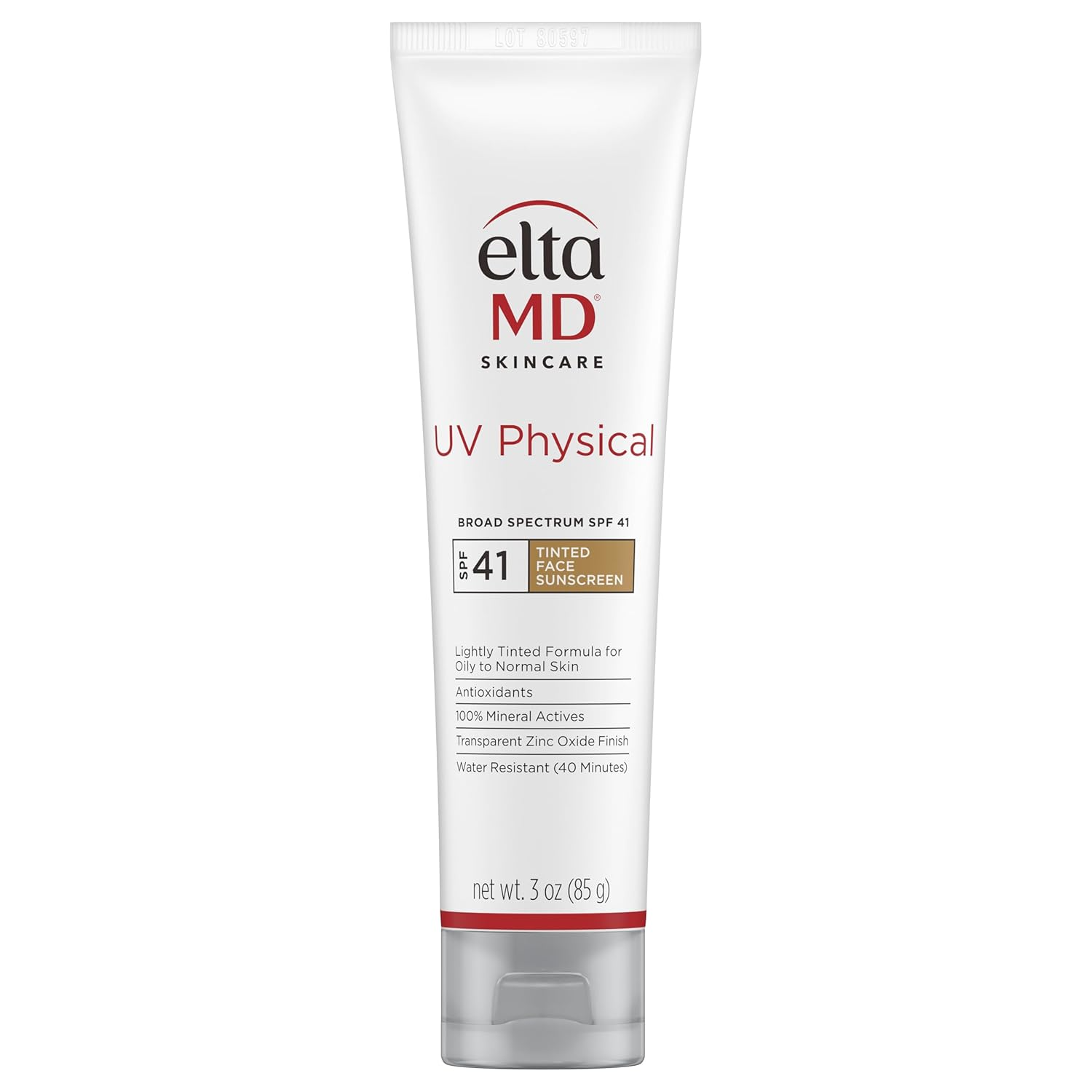
Price: $48.00
Zero absorbing filters, zero fragrance, zero dye — just a physical shield with a light tint that takes the edge off marks on fair-to-medium tones. The antioxidants inside fight the free-radical damage that keeps inflamed skin inflamed.
Fur and Silk Editor Review ★★★★½
Oily skin stayed matte and comfortable, and the light tint quietly evened things out enough to skip foundation on good days. It's the reliable, no-surprises pick. Best for oily skin with marks that wants mineral-only protection and a whisper of coverage.
Murad Superactive Mattifying Oil and Pore Control Moisturizer SPF 50
Best for: the reader who wants their SPF actively treating breakouts and texture at the same time.
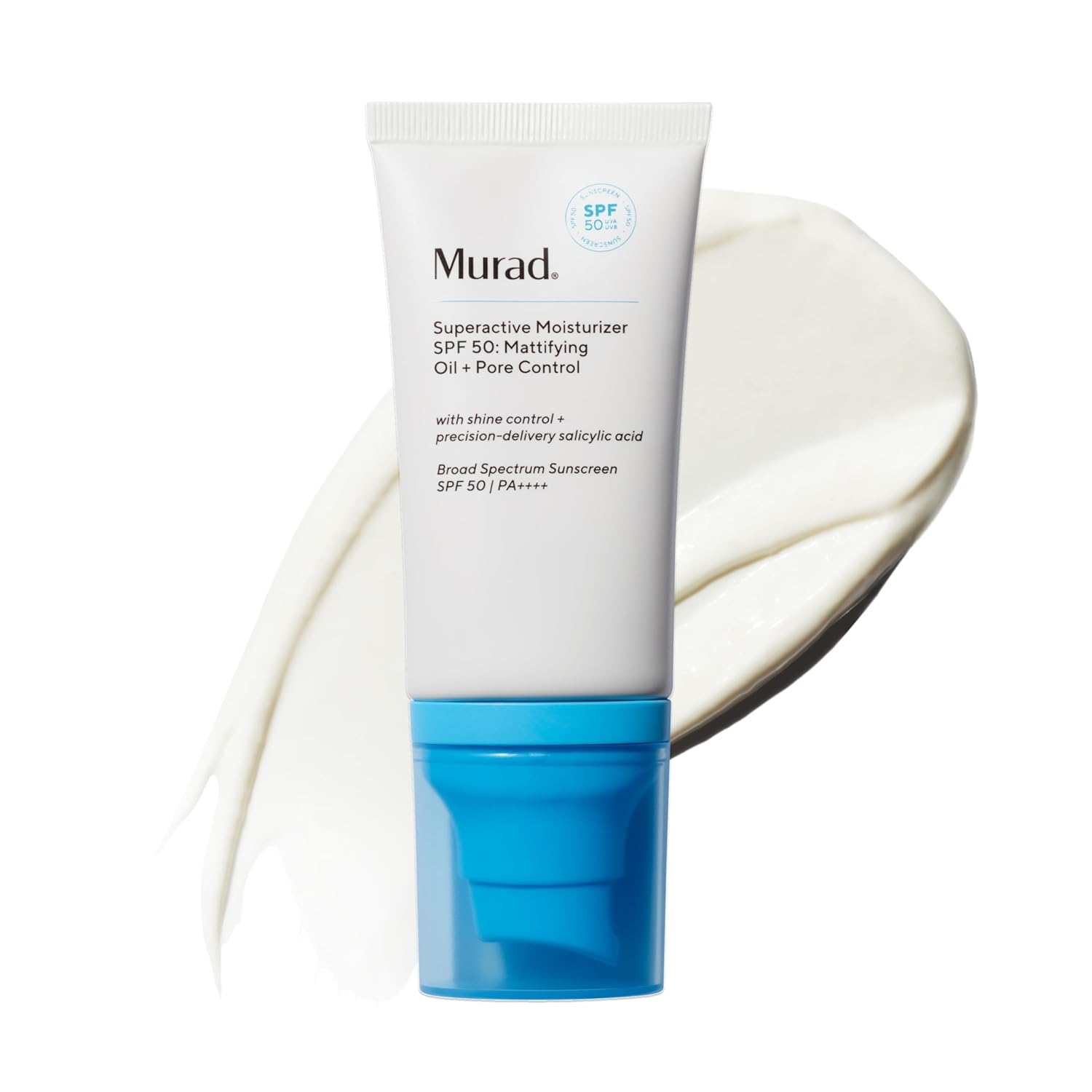
Price: $45.00
This is the category's multitasker: precision-delivery salicylic acid smooths texture and keeps pores clear while oil-trapping microspheres blot shine all day. It's the closest thing to a breakout treatment and a sunscreen sharing one tube.
Fur and Silk Editor Review ★★★★½
Pores looked tighter and the midday shine simply never showed up, which made us double-check we'd actually applied SPF. It works quietly while it protects. Best for skin still breaking out that wants every morning step pulling double duty.
Dermalogica Clear Start Clearing Defense SPF 30
Best for: younger or budget-minded breakout-prone skin that wants shine control plus a brightening bonus.
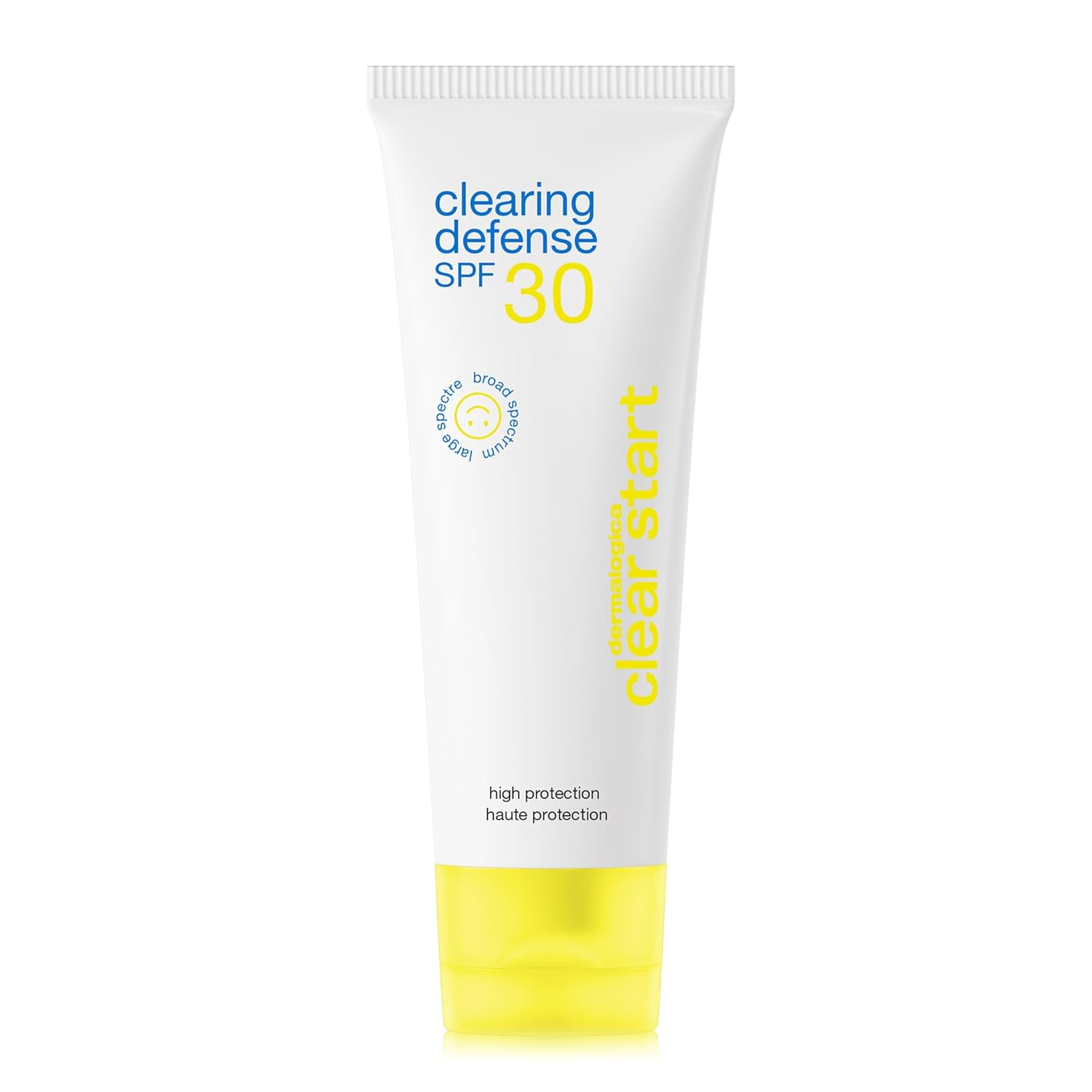
Price: $29.50
Built by Dermalogica's acne-focused Clear Start line, this lightweight moisturizer-SPF keeps shine down without ever feeling like a film. The vitamin C inside is the sleeper benefit, gently working on the marks your last breakout left behind.
Fur and Silk Editor Review ★★★★½
It wears like a skin tint without the tint — light, fresh, and completely forgettable in the best way. The price makes daily generosity with application painless. Best for breakout-prone skin that wants an easy, affordable everyday defense.
What to Look for in a Sunscreen for Post-Acne Marks
Before choosing, here's what separates a mark-fading sunscreen from one that just sits there:
- Broad-spectrum SPF 30–50 minimum, since UVA is the wavelength that keeps re-darkening marks — even through windows and on cloudy days
- Non-comedogenic, oil-free formulas so your sunscreen never triggers the breakout that creates the next mark
- Zinc oxide-forward mineral filters for red marks, since zinc carries anti-inflammatory properties and won't provoke healing skin
- Brightening actives like niacinamide, vitamin C, or azelaic acid that fade brown marks while the SPF protects them
- A tint with iron oxides if your marks are brown and stubborn, adding visible light defense that untinted formulas can't offer
- A texture you'll actually reapply, because dermatologists agree consistency beats any single ingredient
How to Choose the Right Sunscreen for Your Post-Acne Marks
By Mark Type
Red or Pink Marks (PIE): These are vascular, so choose soothing minerals like EltaMD UV Skin Recovery or PCA Skin Weightless Protection that calm while they protect. The glass test confirms it: if the mark briefly disappears under pressure, it's PIE.
Brown or Tan Marks (PIH): These are pigment, so choose brightening formulas like EltaMD UV Clear or Paula's Choice Vitamin C Sheer that interrupt melanin while blocking the UV that feeds it.
A Mix of Both: La Roche-Posay Anthelios UV Clear's azelaic acid is one of the only actives recommended for both mark types.
Still Breaking Out: Prevention is fading — Murad Superactive or iS Clinical Eclipse protect marks without clogging the pores that create new ones.
By Finish
Tinted Coverage: ALASTIN HydraTint, iS Clinical Eclipse, and EltaMD UV Physical blur marks on contact.
Invisible & Untinted: Tatcha, Paula's Choice, La Roche-Posay Anthelios UV Clear, and Clinique disappear completely under makeup.
Matte & Mattifying: Murad, iS Clinical, EltaMD UV Physical, and Dermalogica Clear Start keep oily skin shine-free.
By Budget
Under $40: La Roche-Posay Toleriane ($24.99), Dermalogica Clear Start ($29.50), Clinique Mineral Fluid ($38), La Roche-Posay Anthelios UV Clear ($39.99)
$40–$55: EltaMD UV Clear ($45), Paula's Choice Vitamin C ($45), Murad Superactive ($45), EltaMD UV Physical ($48), EltaMD UV Skin Recovery ($50), Tatcha ($50), PCA Skin ($52), iS Clinical Eclipse ($54)
$55+: ALASTIN HydraTint ($84)
Frequently Asked Questions About Sunscreens for Post-Acne Marks
What's the difference between PIE and PIH marks?
PIE (post-inflammatory erythema) shows up as red, pink, or purple marks caused by dilated blood vessels, while PIH (post-inflammatory hyperpigmentation) appears as brown, tan, or gray marks caused by excess melanin. The quickest way to tell: press a clear glass against the mark. If the color briefly disappears, it's PIE; if it stays, it's PIH. PIE is more common in lighter skin tones, PIH in medium to deep tones, and the two respond to different ingredients.
Does sunscreen actually fade post-acne marks, or just prevent new ones?
Both. Research published in the Journal of the American Academy of Dermatology found that consistent daily sunscreen use alone improved existing hyperpigmentation, even without additional brightening treatments. UV exposure continuously re-stimulates the melanin in brown marks and worsens the inflammation behind red marks, so blocking it gives your skin the conditions it needs to complete its natural fading process.
Is mineral or absorbing sunscreen better for post-acne marks?
Mineral formulas with zinc oxide are the usual first choice, especially for red marks and reactive skin, because zinc has natural anti-inflammatory properties and won't irritate healing skin. Absorbing formulas work well too if they're fragrance-free and well tolerated — but any sunscreen that stings or flushes your skin should be dropped immediately, since new irritation can create new marks.
Can a sunscreen with niacinamide or vitamin C really fade dark marks?
Yes, at the right concentrations. Niacinamide at 4–5% has been shown to reduce hyperpigmentation by blocking the transfer of melanin to skin cells, and a consensus of 62 cosmetic dermatologists named both niacinamide and vitamin C among the most useful ingredients for dark spots. A sunscreen carrying these actives treats marks and protects them in one step, which is why several picks in this guide build them in.
How long does it take for post-acne marks to fade?
With daily sun protection, most red marks (PIE) fade within 3 to 6 months, and brown marks (PIH) typically fade within 6 to 12 months — often faster when sunscreen is paired with brightening actives. Without protection, both types can linger for years, since every unprotected sun exposure essentially resets the clock. If a mark hasn't budged after 12 weeks of consistent care, a board-certified dermatologist can offer prescription-strength options.
Do I need to wear sunscreen indoors if I have post-acne marks?
If you sit near windows, yes. UVA rays pass through glass and are a top contributor to lingering pigmentation, and visible light can also keep brown marks stimulated, particularly on medium to deep skin tones. Dermatologists recommend applying every morning regardless of your plans and reapplying every two hours during real sun exposure.