Ray-Ban Size Chart: Every Model
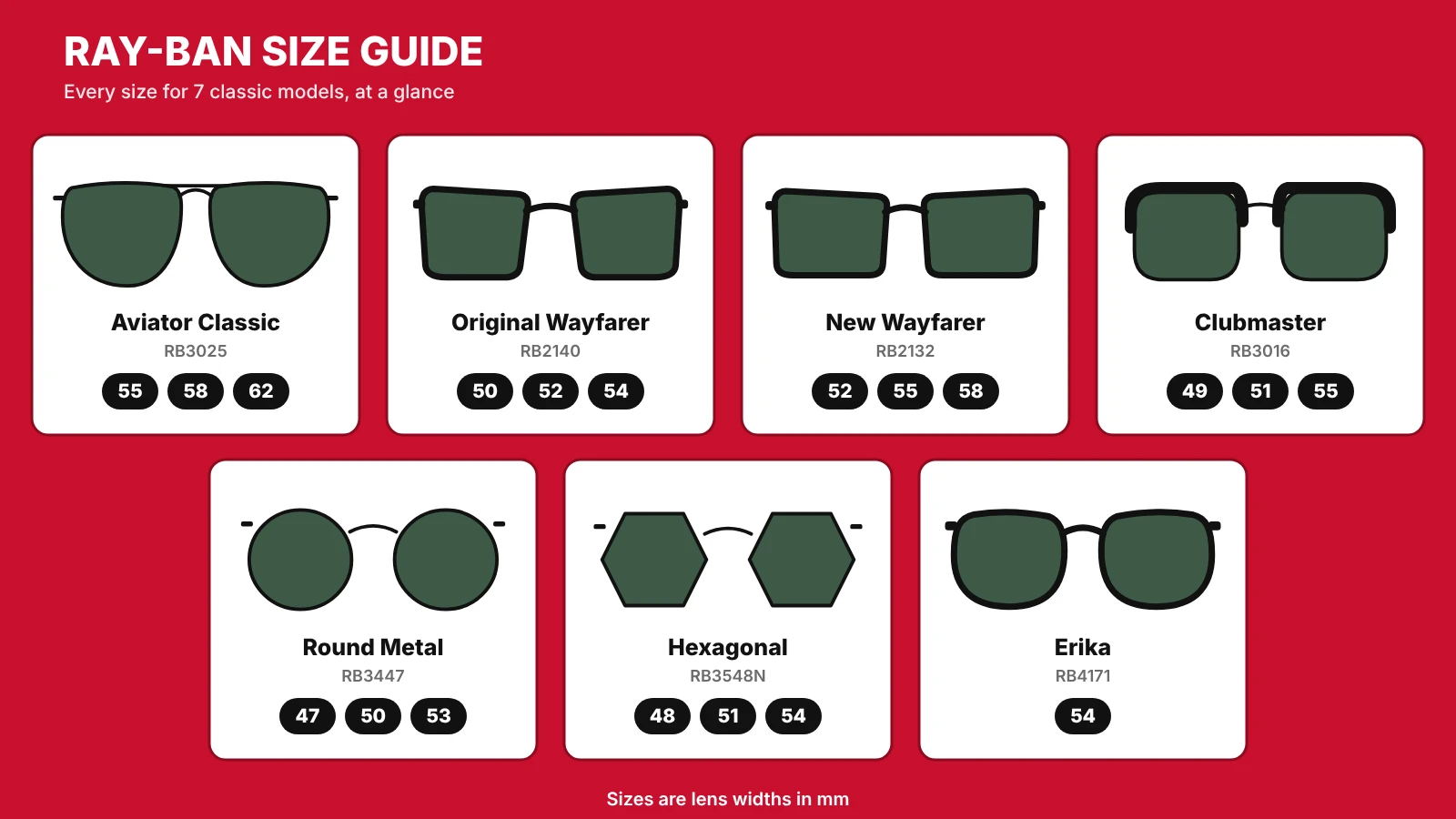
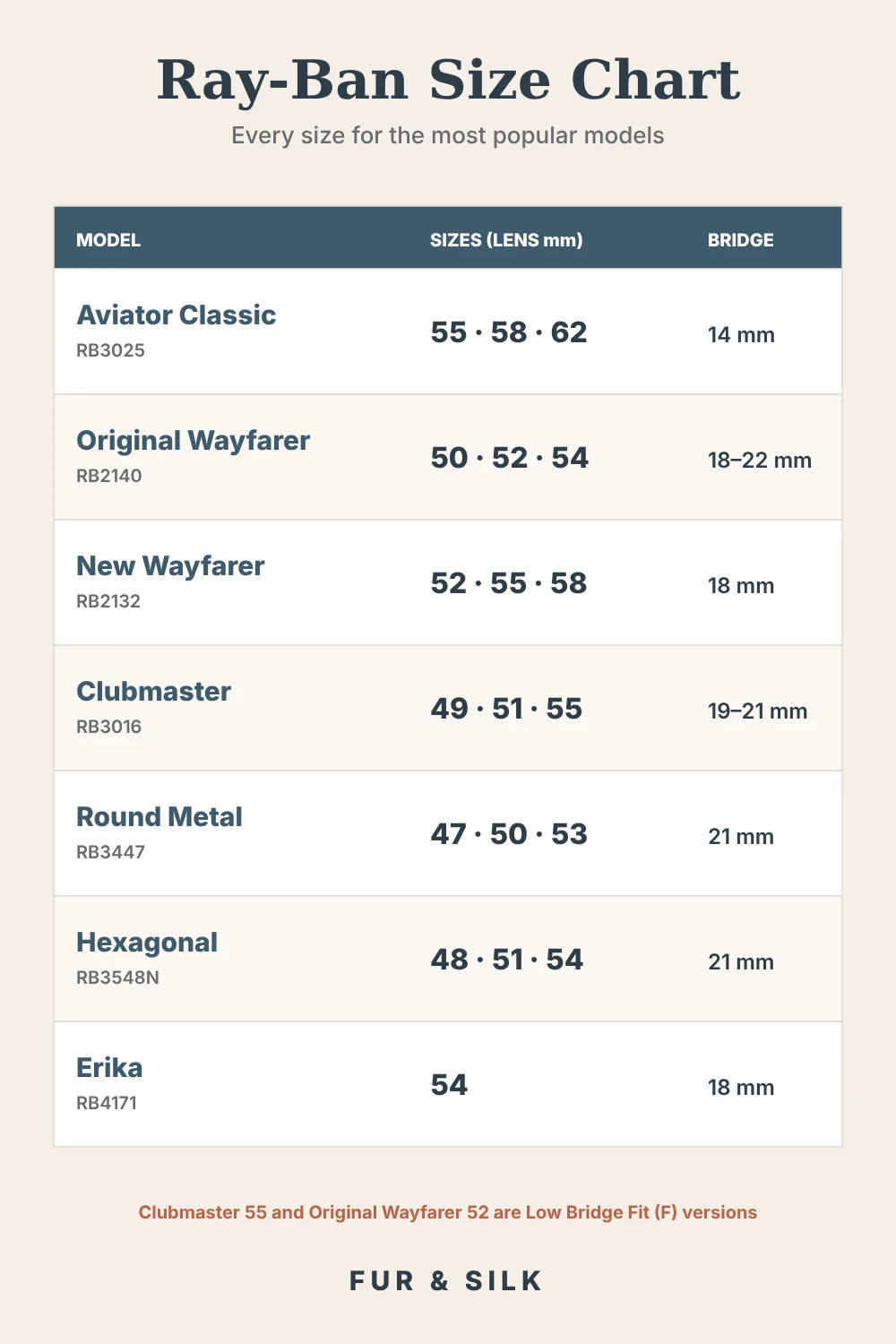
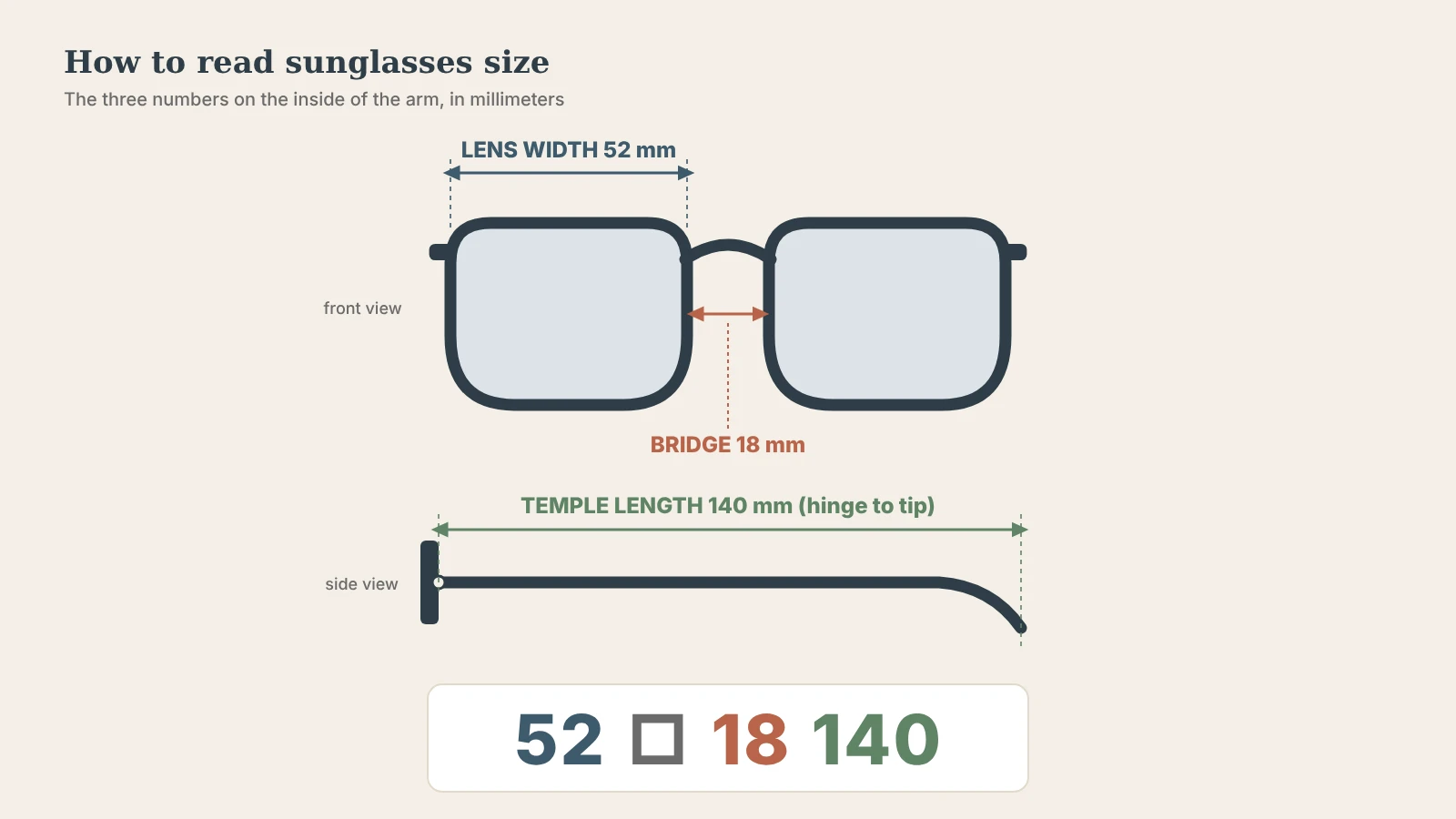
Each Ray-Ban size is printed as lens width, bridge width and temple length in millimeters. The chart lists every size for seven of the brand’s best-known frames, so you can compare models side by side before you buy.
Ray-Ban Aviator Sizes: 55 vs 58 vs 62
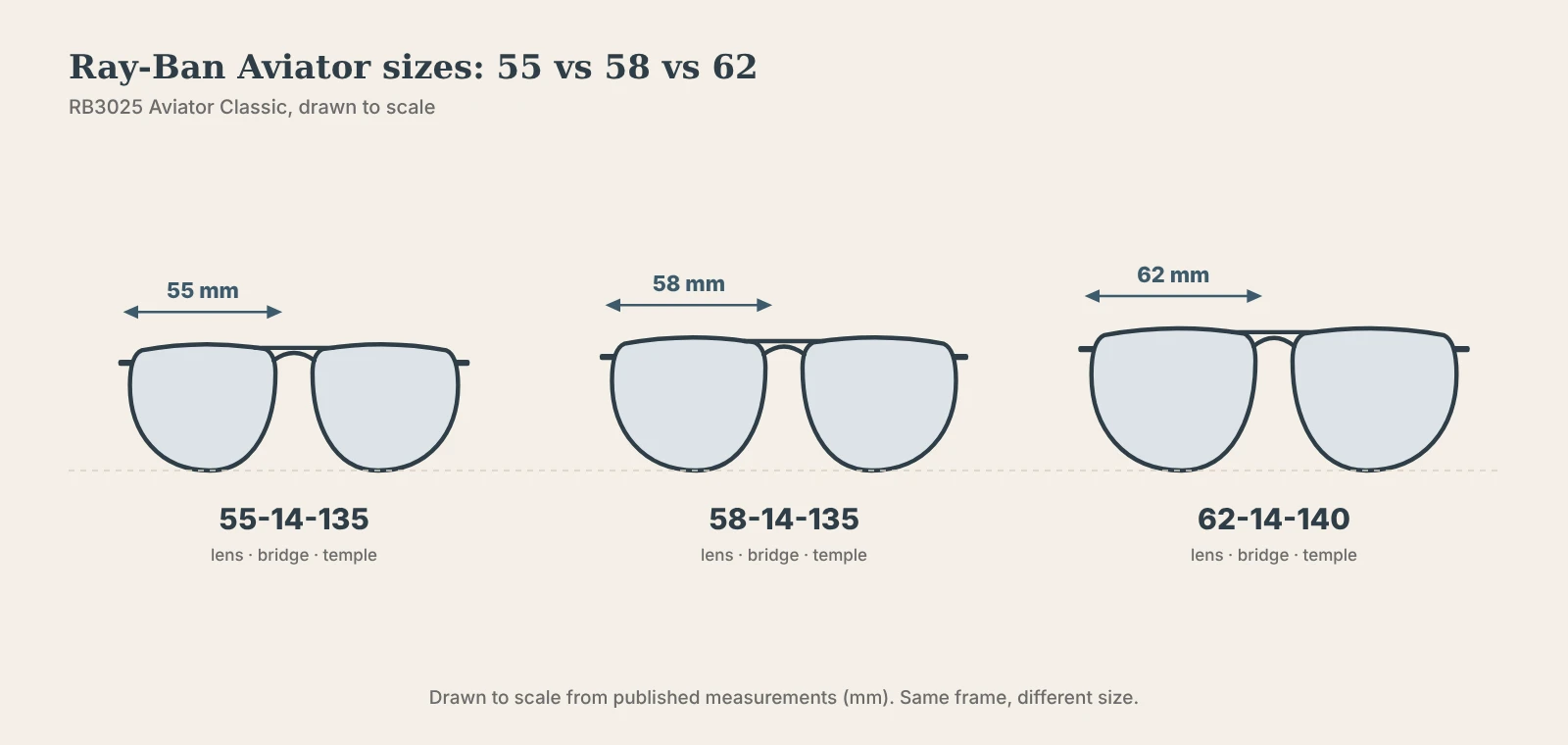
All three Aviator sizes share a 14mm bridge, so the nose fit stays the same and only the lens grows. The 62 also gets a longer 140mm temple. Retailers such as Fashion Eyewear describe the 58 as the most popular Aviator size, and it is the one to start with if you are unsure.


Ray-Ban Wayfarer Sizes
Original Wayfarer RB2140: 50 vs 54
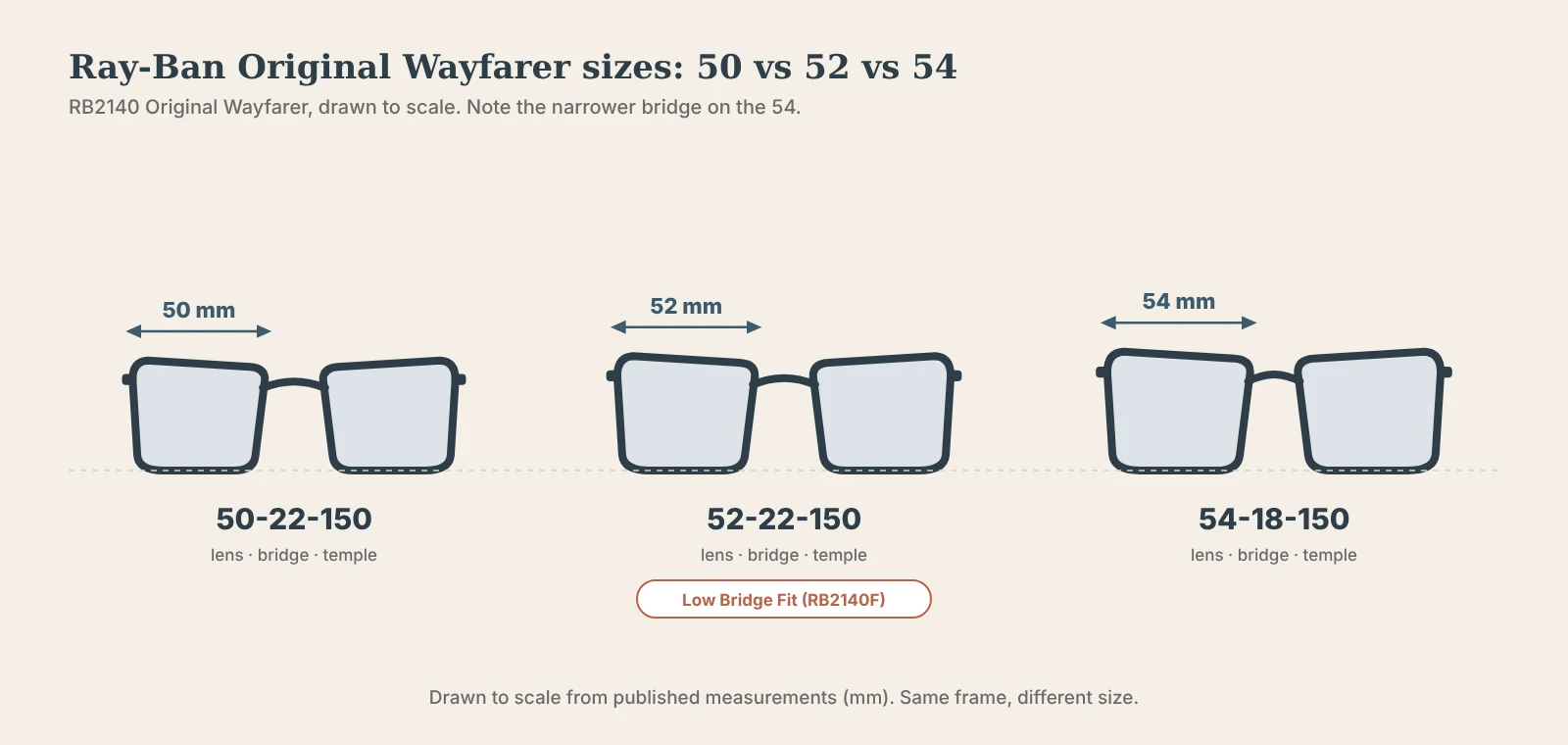
The 54 is wider in the lens but uses a narrower 18mm bridge than the 50, so it sits closer to the nose. That makes the 50 a better match for wider noses even on an average face. The 52 is sold as the Low Bridge Fit version.

New Wayfarer RB2132: 52 vs 55 vs 58
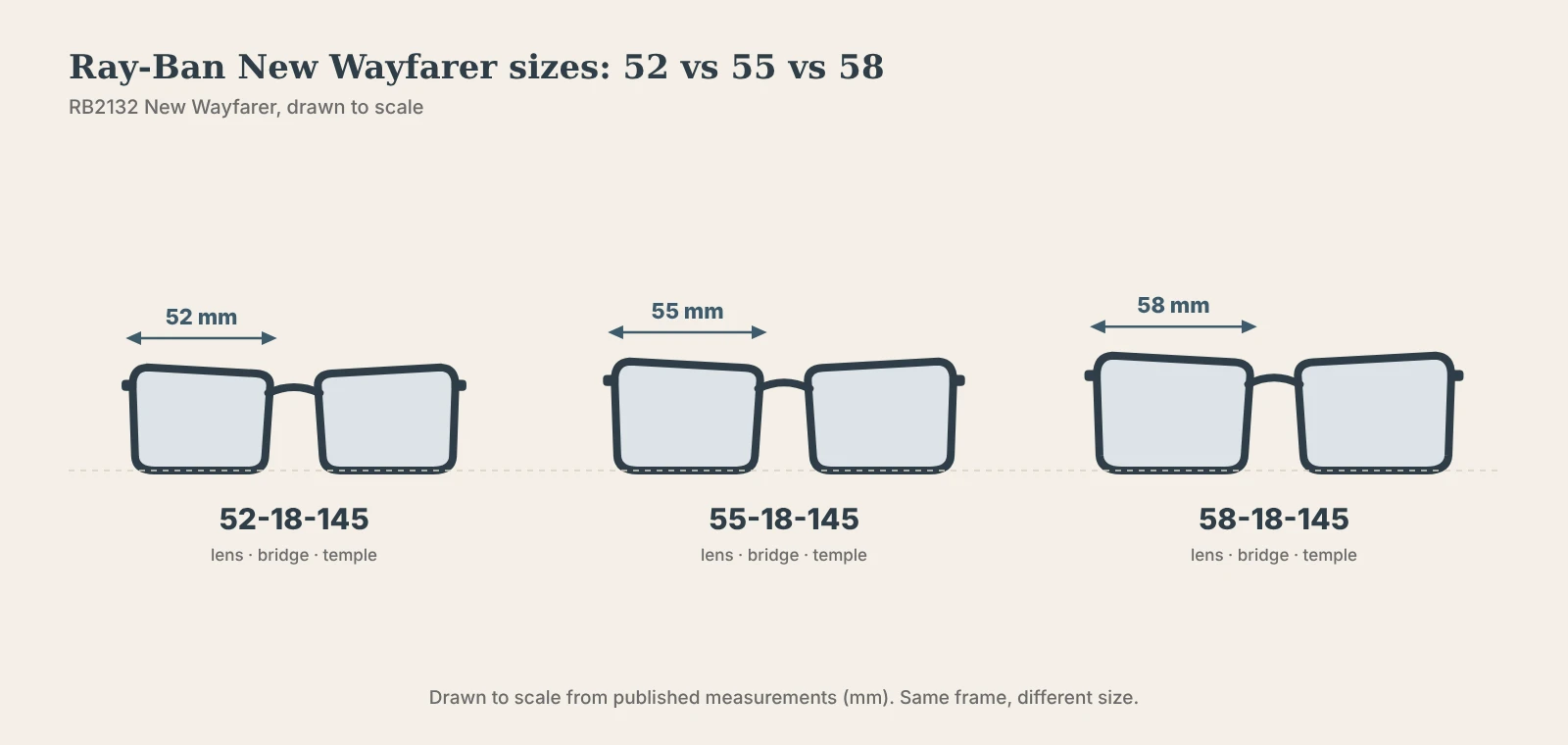
Every New Wayfarer size keeps the same 18mm bridge and 145mm temples. Going from 52 to 55 adds about 3mm to each lens and roughly 4mm of lens height, from about 36mm to 40mm, so the bigger size also covers more of the eye area. The New Wayfarer is a softer, flatter version of the Original.
Ray-Ban Clubmaster Sizes: 49 vs 51
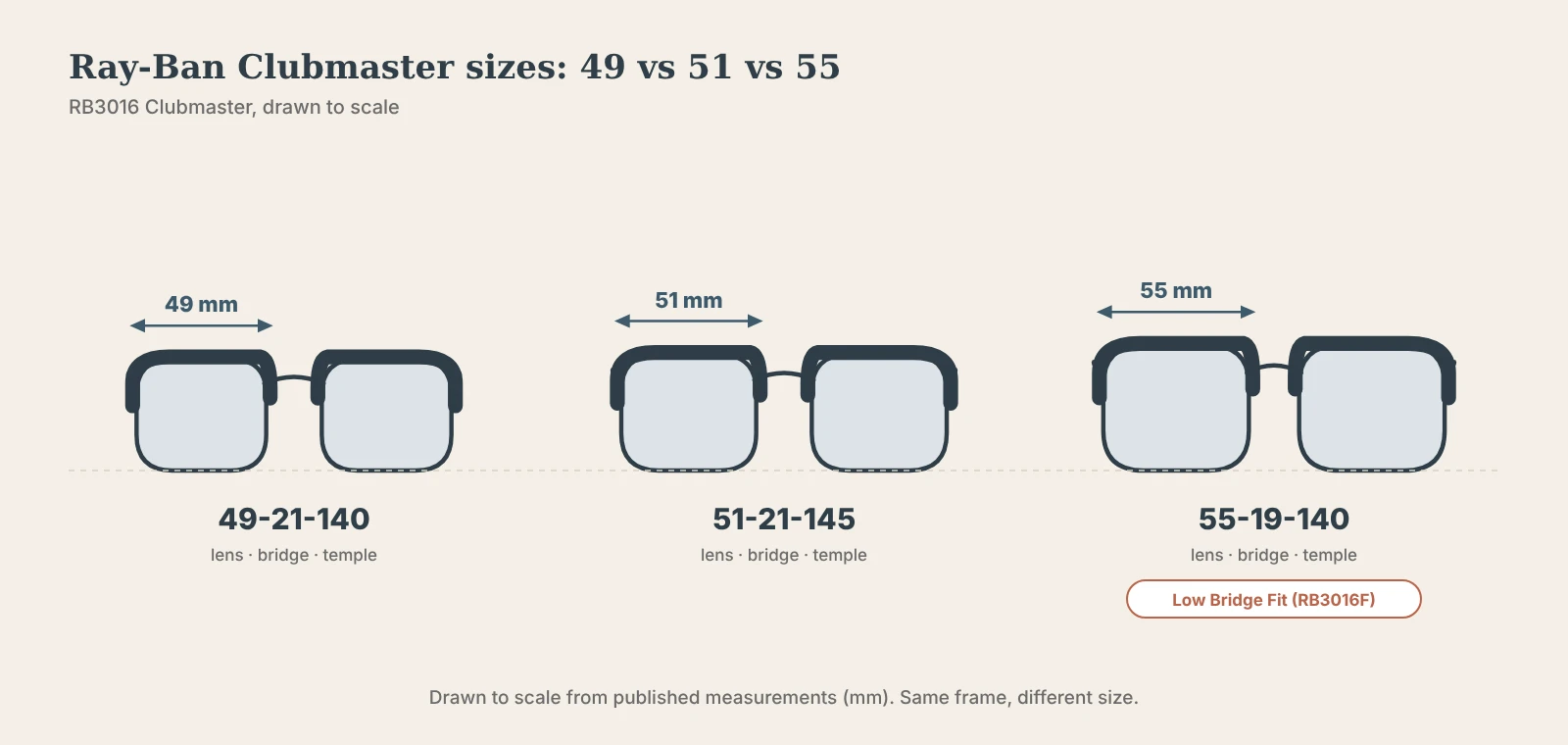
The Clubmaster comes in two standard sizes. The 51 is about 4mm wider overall than the 49 and has a longer 145mm temple, which suits larger heads. The 55 is the Low Bridge Fit version.
Ray-Ban Round, Hexagonal and Erika Sizes
Round Metal RB3447: 47 vs 50 vs 53
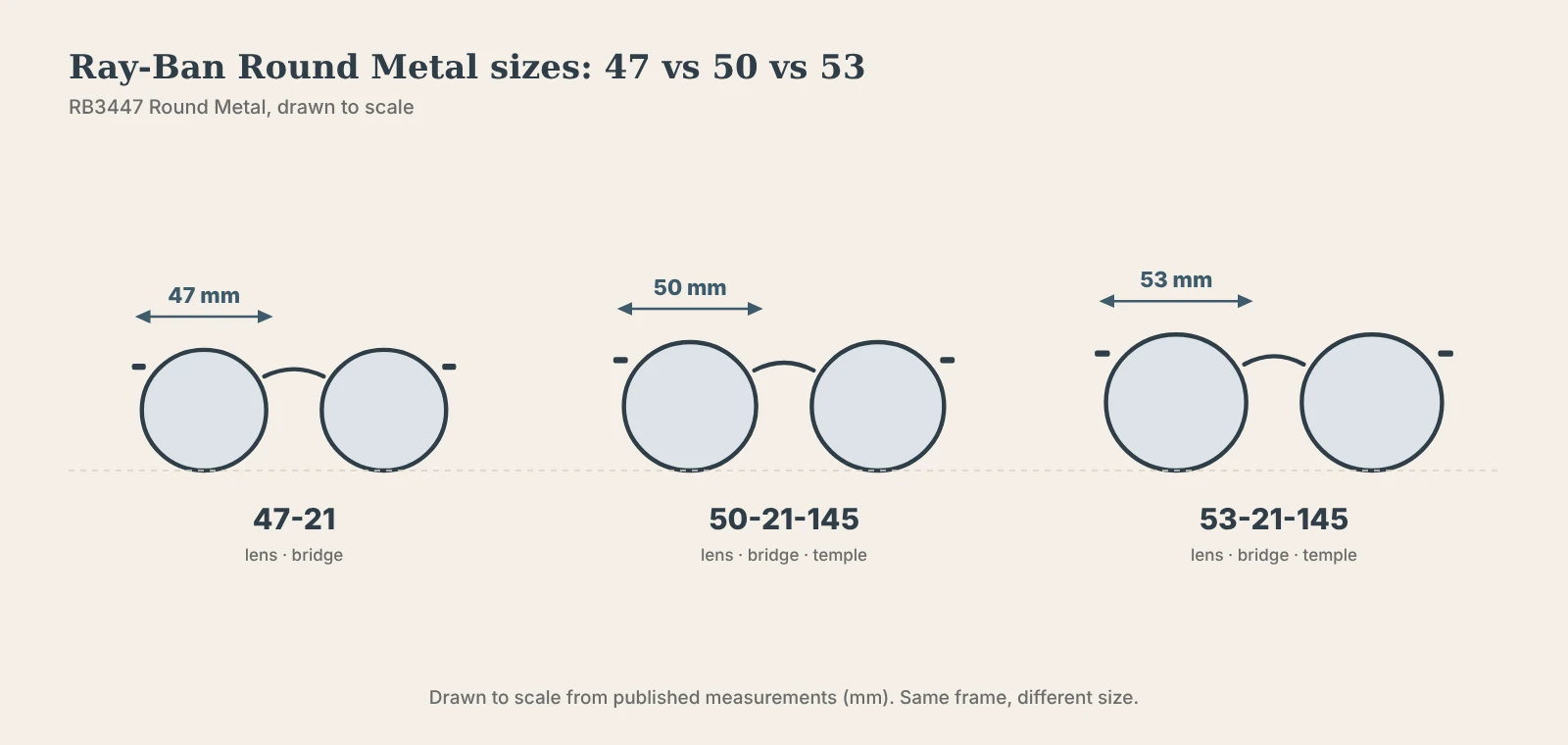
Round lenses are nearly as tall as they are wide, so each size step changes both width and height. The 50 suits most faces; the 47 is the petite option, and the 53 gives the fuller, 70s-style look.


Hexagonal RB3548N: 48 vs 51 vs 54
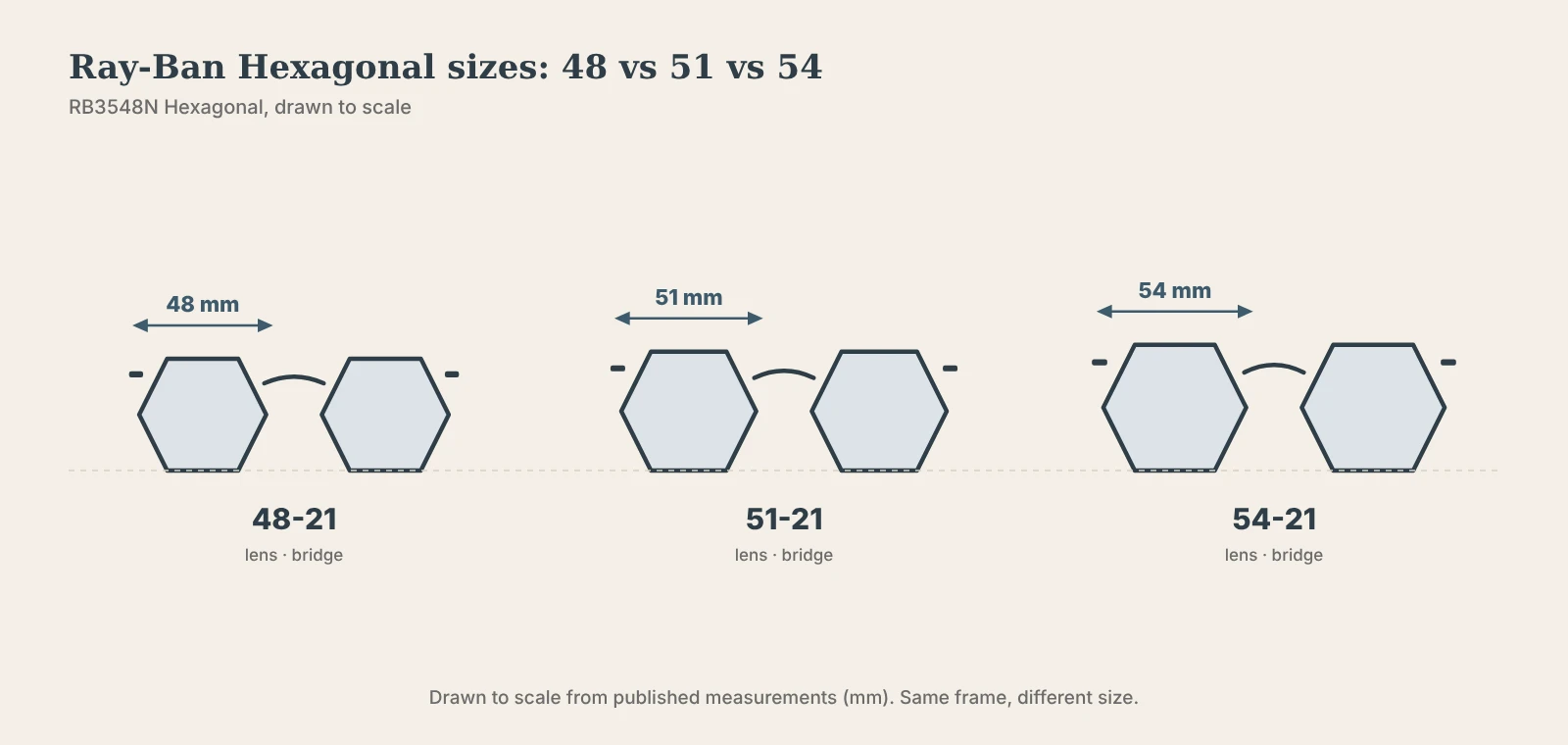
All three Hexagonal sizes use a 21mm bridge with flat lenses. The 51 is the middle option for most faces; the 48 suits narrow faces, and the 54 is the size to choose for a wider face.

Erika RB4171: 54
The Erika is sold mainly in one size, 54-18-145. Its rounded, slightly oversized lens and thin temples make that single size work for a broad range of faces, though very narrow faces may find it wide.
Standard vs Large Ray-Bans
Ray-Ban lists its sizes by number, while many retailers add labels such as small, standard or large. The table shows how those labels line up for the four most-searched models.
One common mix-up: Aviator Large Metal is the catalog name of the RB3025, not a size. An Aviator Large Metal can be a 55, 58 or 62, so always check the number inside the arm.
Ray-Ban Low Bridge Fit vs Standard Fit
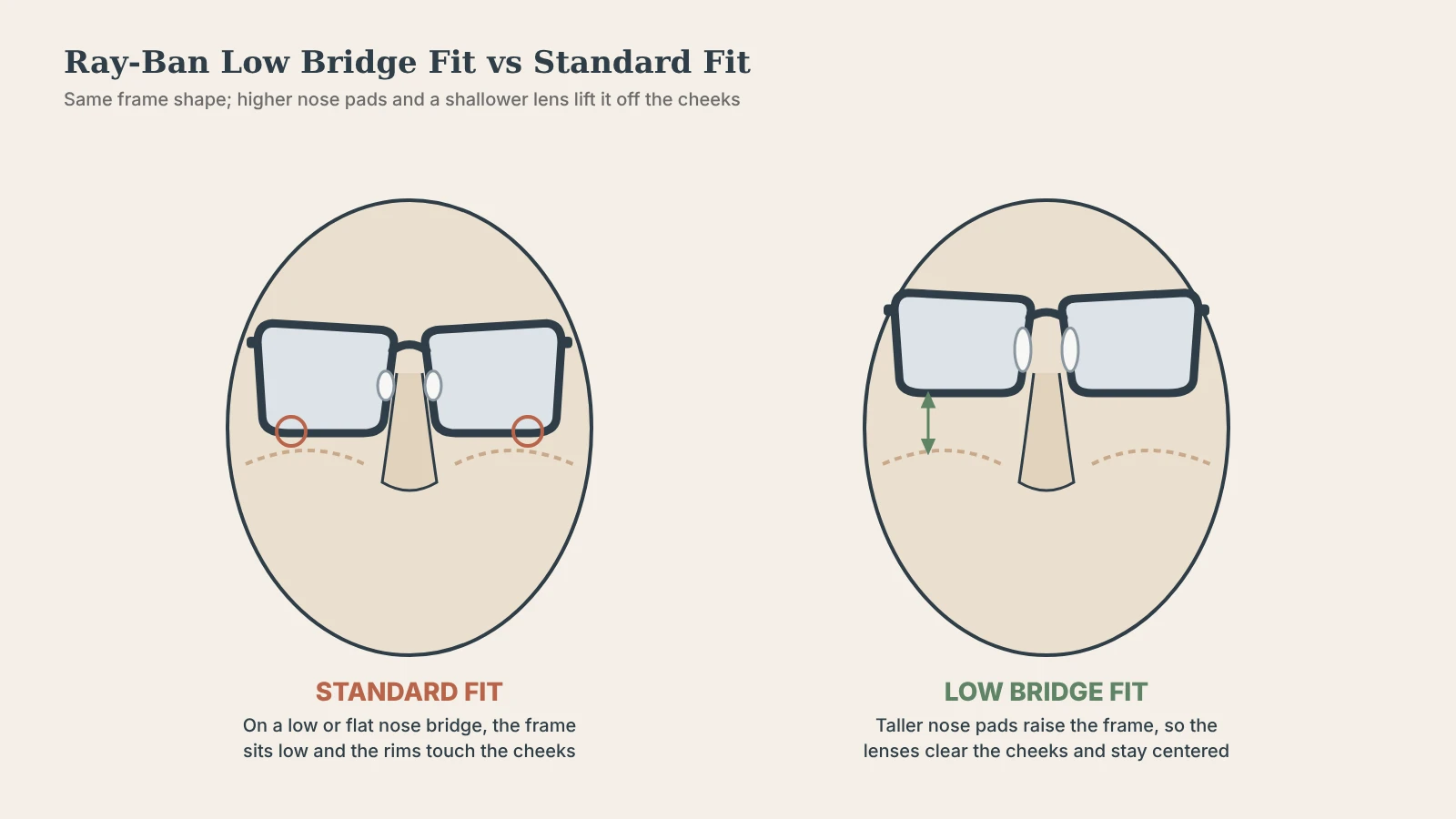
Ray-Ban describes Low Bridge Fit as designed to accommodate low nose bridges. In practice, these frames have more prominent nose pads and a shallower lens, so they sit higher on the face and clear the cheeks.
Signs you need it: sunglasses keep sliding down your nose, the bottom rims rest on your cheeks, or your lashes touch the lenses.
How to spot it: look for an F after the model number, such as RB2140F or RB3016F. Some retailers still call these versions Asian Fit.
Where to Find the Size on Your Ray-Bans
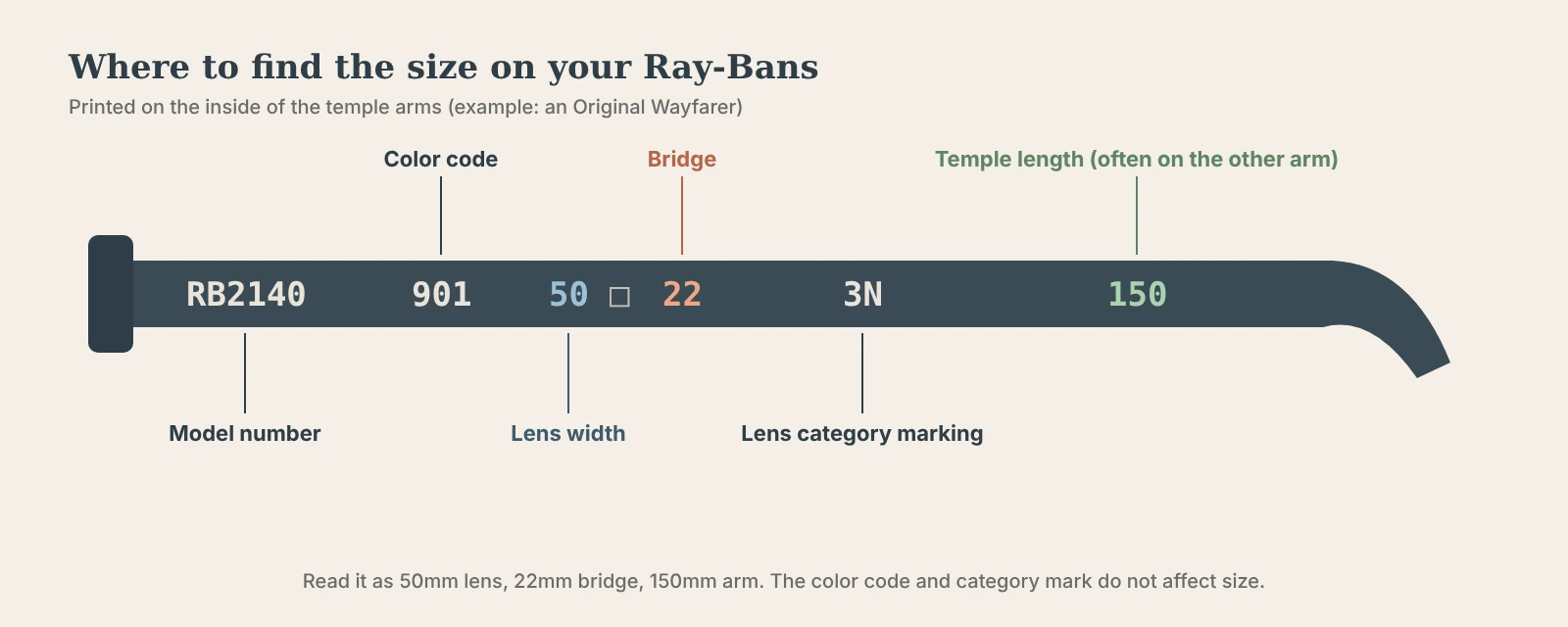
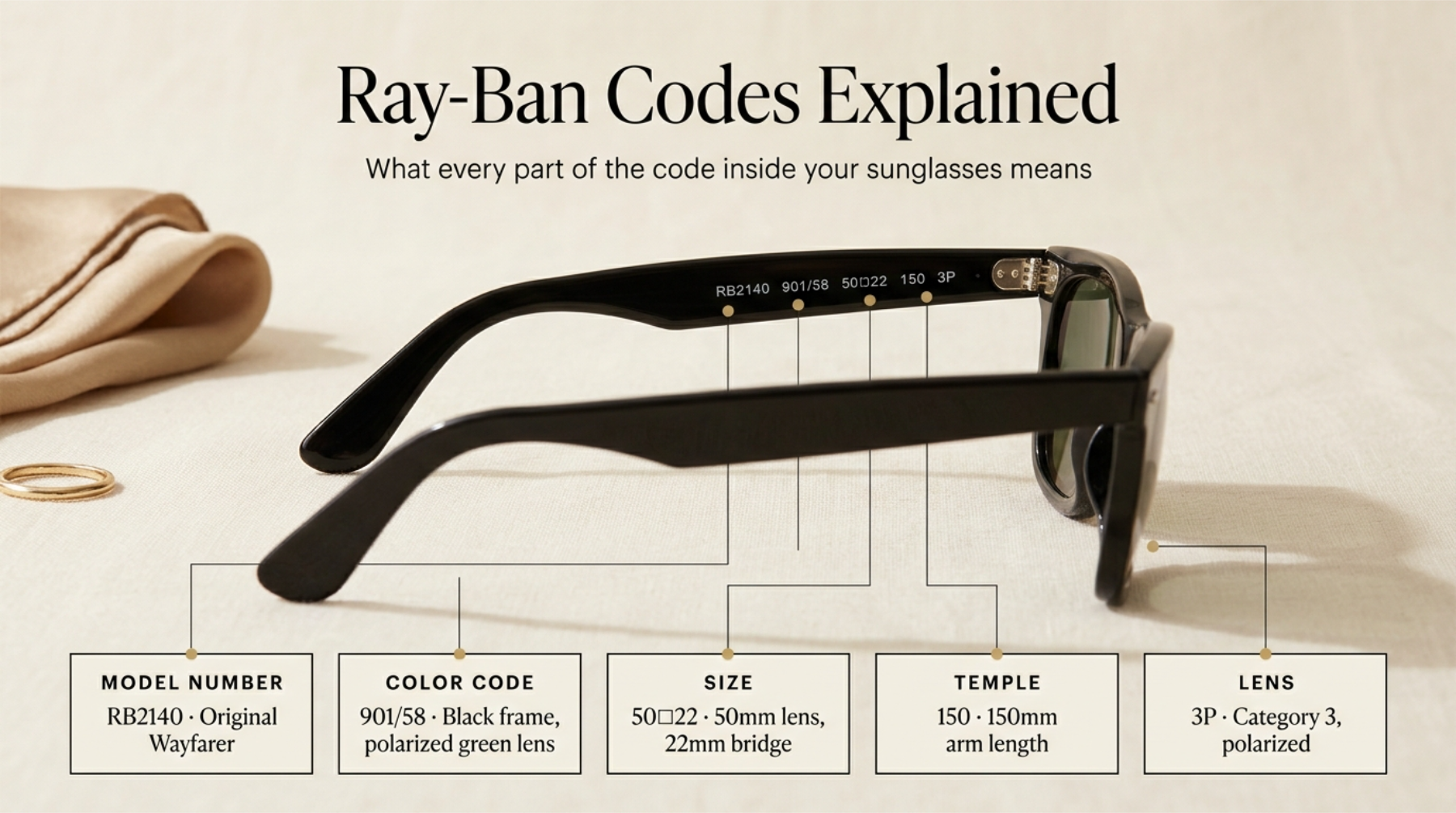
The size is printed on the inside of the temple arms. On most pairs, one arm shows the model number, color code and size (for example RB2140 901 50□22), and the other shows the temple length and markings. Only the two numbers around the small square describe the frame size.
Which Ray-Ban Size Fits Your Face
Measure your face from temple to temple, then use the row that matches. A frame within about 5mm of your face width usually sits level without pinching or sliding.
Small or narrow faces do best with the smallest size in each model and often with a Low Bridge Fit version. Bigger heads and wide faces should go straight to the largest size and look for the longer temples on the 62 Aviator and 51 Clubmaster.


Frequently Asked Questions About Ray-Ban Sizes
What size Ray-Bans should I get?
Pick the Ray-Ban size whose total frame width is close to your face width, measured temple to temple. For most adults that means a 58 Aviator, a 50 or 54 Original Wayfarer, a 52 or 55 New Wayfarer, or a 51 Clubmaster. Narrower faces size down one step; wider faces size up. If you already own a Ray-Ban pair that fits, copy the numbers printed inside its arm.
What is the standard Ray-Ban size?
Ray-Ban has no single standard size, because each model is made in its own range. The middle sizes, such as the 58 Aviator and the 50 Original Wayfarer, are the ones retailers usually present as the medium or standard fit. They suit most average adult faces, so they are the safest starting point. Retailers may label the middle size medium or standard, but the number inside the arm is what to compare.
Is a 58 Ray-Ban Aviator too big?
A 58mm Ray-Ban Aviator suits most average adult faces and is often called the most popular size. It can look too big on a narrow face, where the lenses reach past the temples or rest on the cheeks. In that case, the 55 is the better fit. Very wide faces may prefer the 62. All three Aviator sizes share the same 14mm bridge, so the nose fit stays similar as you size up or down.
What is the difference between Ray-Ban New Wayfarer 52 and 55?
The 55 New Wayfarer has lenses 3mm wider and a few millimeters taller than the 52, which adds about 6mm to the total frame width. Both use the same 18mm bridge and 145mm temples. The 52 suits narrower and average faces; the 55 suits average to wide faces. The 58 is the largest New Wayfarer size, for wide faces and bigger heads.
What does Low Bridge Fit mean on Ray-Bans?
Low Bridge Fit is a Ray-Ban version designed for people with low or flat nose bridges and higher cheekbones. These frames have more prominent nose pads and a shallower lens, so they sit higher and clear the cheeks. You can spot them by the F in the model number, such as RB2140F. Some retailers still list these versions as Asian Fit.
Does "Large Metal" mean a large Ray-Ban size?
No. Aviator Large Metal is the catalog name of the RB3025 Aviator, not a size. The RB3025 comes in 55, 58 and 62mm lens widths, so an Aviator Large Metal can be small, medium or large. Always check the number printed inside the arm to know the actual size. Ray-Ban now sells the same model as the Aviator Classic.
How do I measure my Ray-Ban lens size?
Look inside the temple arm first: the first number after the color code, such as 50 in 50□22, is the lens width in millimeters. If the print has worn off, measure straight across one lens at its widest point with a ruler, from the inside edge of the rim on one side to the other. Measure the bridge the same way, across the narrowest gap between the lenses.