Glass vs Polycarbonate Sunglass Lenses at a Glance
The table puts the two most common sunglass lens materials head to head. A green check marks the material that comes out ahead on each point. Weight and clarity are based on standard optical values: density shows how heavy a material is for its size, and the Abbe number measures how cleanly a lens handles color, with higher numbers meaning less color fringing at the edges of your view.
Which Lens Material Fits the Way You Wear Sunglasses?
The right lens depends less on which material is better and more on what your sunglasses have to put up with. Pick the activity that describes most of your days, and the picker suggests a material and explains why.
What Are Glass Sunglass Lenses?
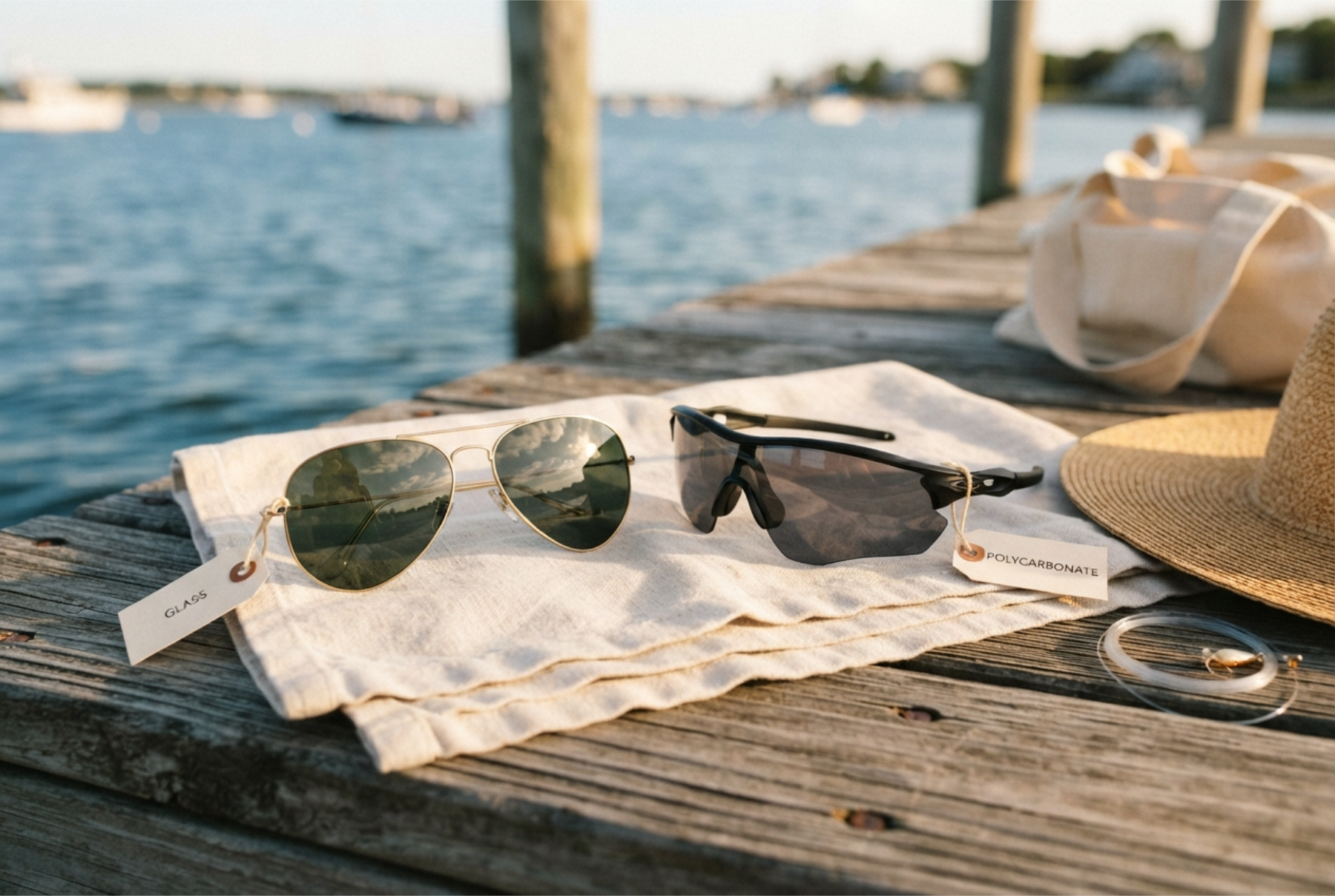
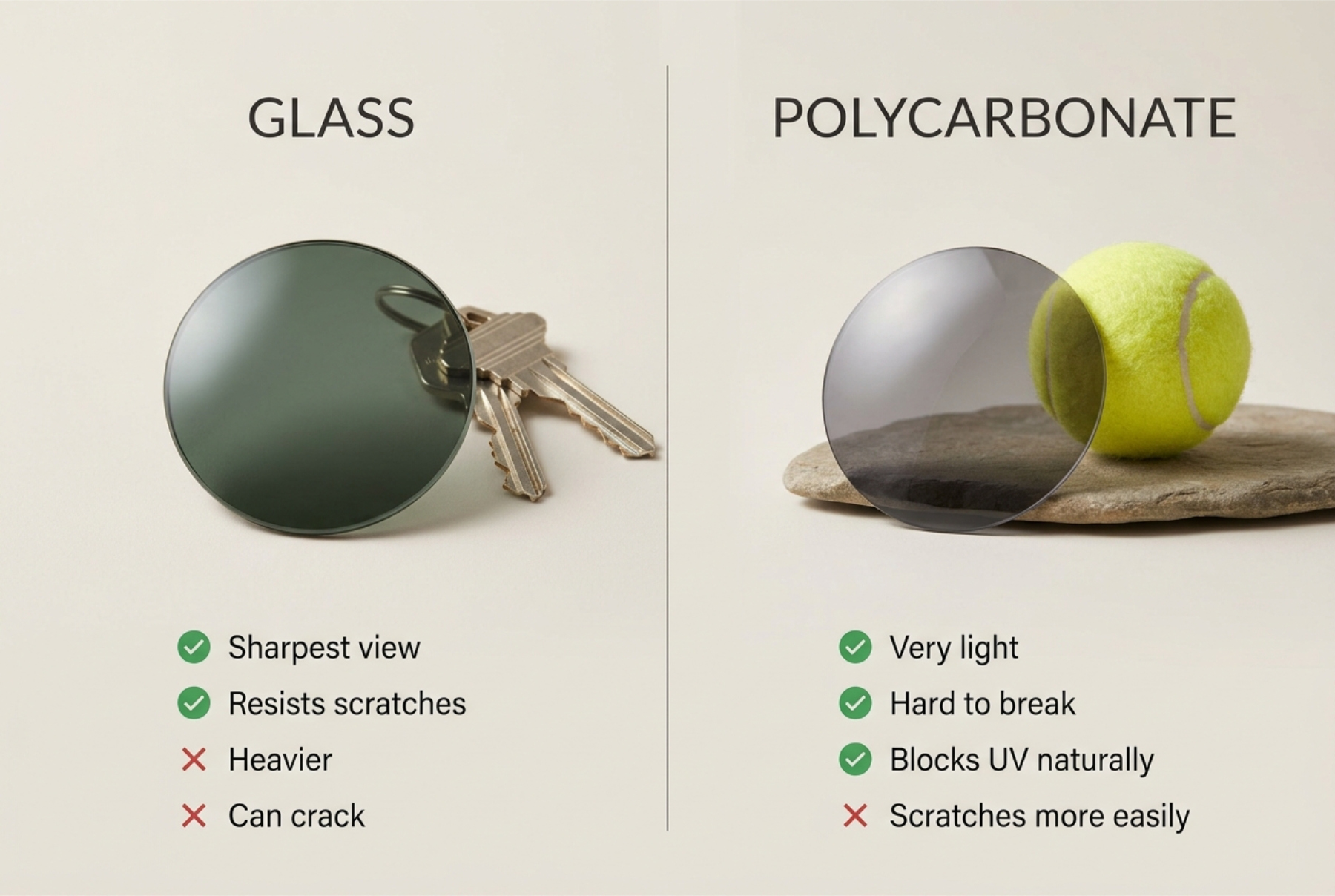
Glass sunglass lenses, sometimes sold as mineral glass, are the original sunglass material and are still used by many premium brands. Their main advantage is optical quality. Crown glass, the type used for lenses, has an Abbe number of about 59, among the highest of any lens material, so colors stay clean and lines stay straight all the way to the edges of the lens. Glass is also much harder than plastic, which is why a well-made glass lens can look new after years of daily use.
The trade-off is weight and fragility. Glass is roughly twice as dense as polycarbonate, so a pair of large glass lenses presses noticeably on your nose and can slide down when you sweat. Untreated glass would also break too easily for everyday use. Under the FDA’s impact-resistance rule for eyeglasses and sunglasses, every lens sold in the US must survive a 5/8-inch steel ball dropped from 50 inches, so glass lenses are hardened with heat or chemicals before they reach stores. They pass that test, but a harder hit, like a fall onto pavement or a ball to the face, can still crack them.
How Are Glass Polarized Sunglasses Made?
A glass polarized lens is a sandwich. Manufacturers grind and polish two thin glass layers, harden them, then glue a polarizing film between them with an optical adhesive cured under UV light. One US patent for this kind of sunglass lens laminate describes the same steps: glass front, polarizing film, glass back, then pressing and curing so no air or dust is trapped. Because the film is sealed inside, it cannot peel or scratch, and the outer glass protects it for the life of the lens.
Polarized polycarbonate lenses are made differently. The polarizing film is usually placed in a mold and the hot plastic is injected around it, so the filter becomes part of a single lens. Both methods block glare equally well. Glass gives you a slightly sharper, more scratch-resistant polarized lens, while polycarbonate gives you a lighter, tougher one.

What Are Polycarbonate Lenses?
Polycarbonate is a lightweight, impact-resistant plastic, the same family of material used in safety goggles, sports visors and riot shields. In eyewear, a polycarbonate lens, often shortened to a poly or PC lens, is made by injecting melted polycarbonate into a lens mold. You will see it in most sport sunglasses, kids’ frames and a large share of fashion sunglasses, and it is also one of the most common materials for prescription glasses, which is why “polycarbonate glasses” usually refers to eyeglasses with poly lenses rather than lenses made of glass.
Polycarbonate Lens Benefits and Disadvantages
For most people, the benefits win. The color fringing shows up mainly in strong prescriptions and is rarely noticeable in non-prescription sunglasses, and a factory hard coat solves most of the scratch problem. If you are deciding whether you need polycarbonate lenses, the answer is yes for kids, sports and rimless frames, and optional for everything else.
Are Polycarbonate Lenses Shatterproof?
Polycarbonate lenses are shatter-resistant rather than truly shatterproof. Under a hit that would crack glass or standard plastic, a polycarbonate lens usually stays in one piece or cracks without sending sharp fragments toward your eye. That is why it is the usual choice for sports eyewear and kids’ frames. A heavy enough impact can still break it, and the frame often fails first. For how impact standards fit with the other labels on a pair, see our guide on how to tell if sunglasses are good quality.
Do Polycarbonate Lenses Block UV?
Yes. Polycarbonate absorbs ultraviolet light by its nature, and the vision resource All About Vision notes that polycarbonate lenses block UV without any added treatment. Even a clear polycarbonate lens filters UV, which is not true of every material. Glass and CR-39 rely on tints, additives or coatings to reach full protection. The material is only part of the story, though: Cedars-Sinai’s guide to choosing sunglasses warns that a darker lens is no sign of stronger UV blocking and recommends buying only pairs labeled 100% UV protection or UV absorption up to 400 nm. Check for that label whatever the lens is made of.
Polycarbonate vs Plastic (CR-39) Lenses
“Plastic lenses” usually means CR-39, a hard resin that has been a standard lens material since the 1940s. It is also what most people mean when they compare glass vs plastic lenses in sunglasses. CR-39 is almost as clear as glass, with an Abbe number of about 58, and it takes tint beautifully, which makes it popular for fashion sunglasses in pinks, blues and gradients. Polycarbonate is lighter, thinner and far tougher, but less optically crisp. The table shows how standard plastic and polycarbonate compare.
When a product page just says “plastic lenses,” it can mean CR-39, polycarbonate or acrylic, the cheapest option. If the material matters to you, look for the exact name in the specs.
What Are Sunglass Lenses Made Of?
Glass and polycarbonate cover most sunglasses, but they are not the only options. Higher-end and sport brands also use Trivex and nylon, and each material balances clarity, weight and toughness differently. There is no single best sunglass lens material. The table shows what each one does well, so you can match it to your priorities.
A lens material sets the baseline, but the tint and coatings decide how the world looks through it. To see how gray, brown, green and other tints change your view, our sunglass lens color guide goes through each color.
Which Lens Material Is Right for You?
Start with how hard your sunglasses have to work. If they live on your face for school runs, workouts and weekends away, polycarbonate is the practical pick: light, nearly impossible to break and protective without any added treatment. If you treat them as a long-term pair for driving, the beach or the water, and you like a view that looks like high-definition, glass is worth the extra weight. CR-39 sits in between and gives you the most color options for fashion frames. Trivex costs more but combines polycarbonate’s toughness with better clarity and less weight.
- Driving: glass or Trivex for a distortion-free view of the road.
- Fishing and boating: polarized glass, or polarized polycarbonate if drops are likely.
- Running, cycling and tennis: polycarbonate or Trivex.
- Kids: polycarbonate, every time.
- Fashion and travel: polycarbonate or CR-39, kept in a case.

Costa Glass vs Plastic Lenses: 580G vs 580P
Costa is one of the few brands that sells the same lens technology in both materials, so the letters at the end of the lens code matter. All Costa 580 lenses are polarized; the G and P describe the material. According to SportRx’s breakdown of Costa’s 580 lens line, 580G lenses are glass and 580P lenses are polycarbonate, with some versions made from Trivex. The G lenses give the clearest view and the best scratch resistance, while the P lenses are lighter and the most durable lenses Costa makes.
A common mix-up: the P in 580P does not mean polarized, because the glass version is polarized too. If you fish from a boat and want to read the water, 580G is the usual choice. If you hike, paddle or wear your Costas all day, 580P is easier to live with.
Frequently Asked Questions About Glass vs Polycarbonate Lenses
Are glass lenses better than polycarbonate?
Glass lenses are better for optical clarity and scratch resistance, and polycarbonate is better for weight and impact protection. Neither wins outright. Glass suits driving, fishing and careful everyday wear, while polycarbonate suits sports, kids and anyone who drops their sunglasses. If you can only have one pair and you are active, polycarbonate is the safer all-rounder.
Are polycarbonate lenses polarized?
Not automatically. Polycarbonate is a lens material, while polarization is a filter added to the lens, so a polycarbonate lens can be polarized or not. Look for the word “polarized” on the label or product page. Our guide to polarized vs non-polarized sunglasses explains what the filter does and how to check for it at home.
Do polycarbonate lenses scratch easily?
Yes, uncoated polycarbonate scratches more easily than glass or CR-39 because its surface is relatively soft. Nearly all quality polycarbonate sunglasses come with a factory hard coat that greatly improves scratch resistance. Keep the lenses in a case, rinse off sand before wiping, and clean them with a microfiber cloth instead of paper towels or clothing.
Are polycarbonate lenses thinner than glass?
Yes. Polycarbonate bends light more strongly than glass or CR-39, so a lens of the same strength can be made thinner. It is also strong enough to stay safe at a thin profile. In non-prescription sunglasses the difference is small, but in prescription sunglasses polycarbonate lenses are noticeably slimmer and lighter than glass.
Are Ray-Ban lenses glass or plastic?
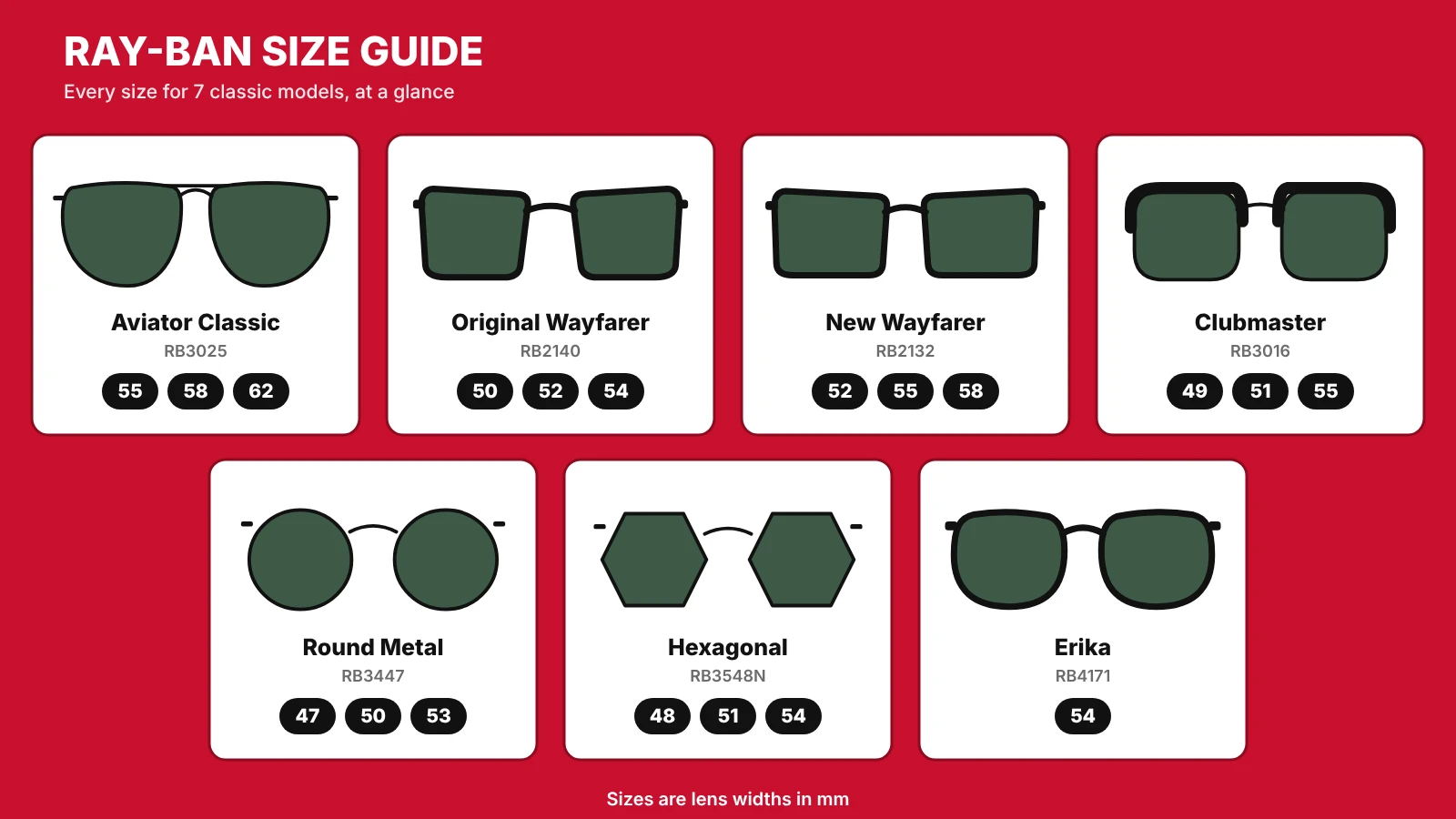
Ray-Ban makes both. Its glass lenses carry the name Crystal and appear on many classic Aviators and Wayfarers, while most sport, Chromance and newer styles use plastic such as polycarbonate. Check the lens description on the product page or box. Our breakdown of which Ray-Ban lenses are glass covers each lens type.
Do I need polycarbonate lenses?
You need polycarbonate or Trivex lenses for children, contact and ball sports, and rimless or drill-mount frames, where a cracked lens is a real risk. For relaxed everyday wear, driving or fishing, you can choose any material that suits you, including glass. Whatever you pick, check that the label promises full UV400 protection.