Ray-Ban Lens Types at a Glance
The chart lines up every current Ray-Ban lens type side by side. The color square shows the tint; a split square marks a mirror finish over a darker base, and a fading square marks a lens that changes with the light. Use the last column to identify the lens in a pair you already own, then jump to its section below for the details.
Which Ray-Ban Lens Should You Get?
If you are still choosing, tap the way you will wear them most and the picker suggests a lens, explains why, and tells you what to look for on the product page.
What Is Ray-Ban Chromance?
Chromance is Ray-Ban’s premium lens line, and the name alone drives more searches than any other Ray-Ban lens. On its lens technology page, Ray-Ban describes Chromance as a polarized lens paired with contrast-enhancing technology, built to make colors brighter and the view clearer. In practice it works in two steps: the polarizing filter blocks the flat glare that bounces off water, roads and car hoods, then the lens filters narrow bands of light where colors overlap, so reds, greens and blues separate more cleanly.
Most Chromance pairs also carry an anti-reflective coating on the inside of the lens and a water- and oil-repellent layer on the outside, which keeps them easier to clean. They are usually sold with a mirror finish in blue, purple, silver, red or green, though some come in a plain dark grey or green. Whatever the mirror color, the view through the lens stays fairly natural, just punchier.
Chromance vs Polarized Ray-Ban Lenses
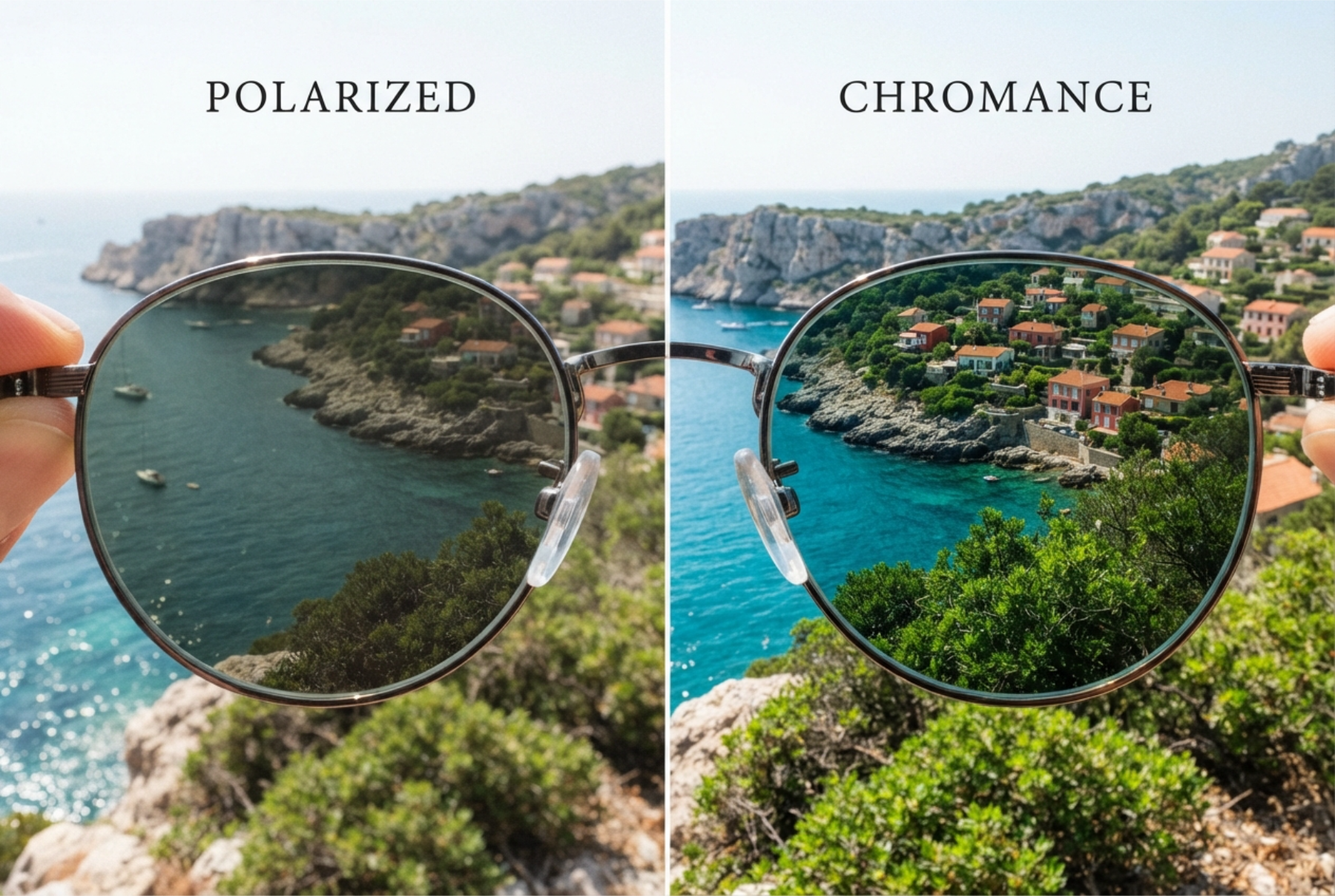
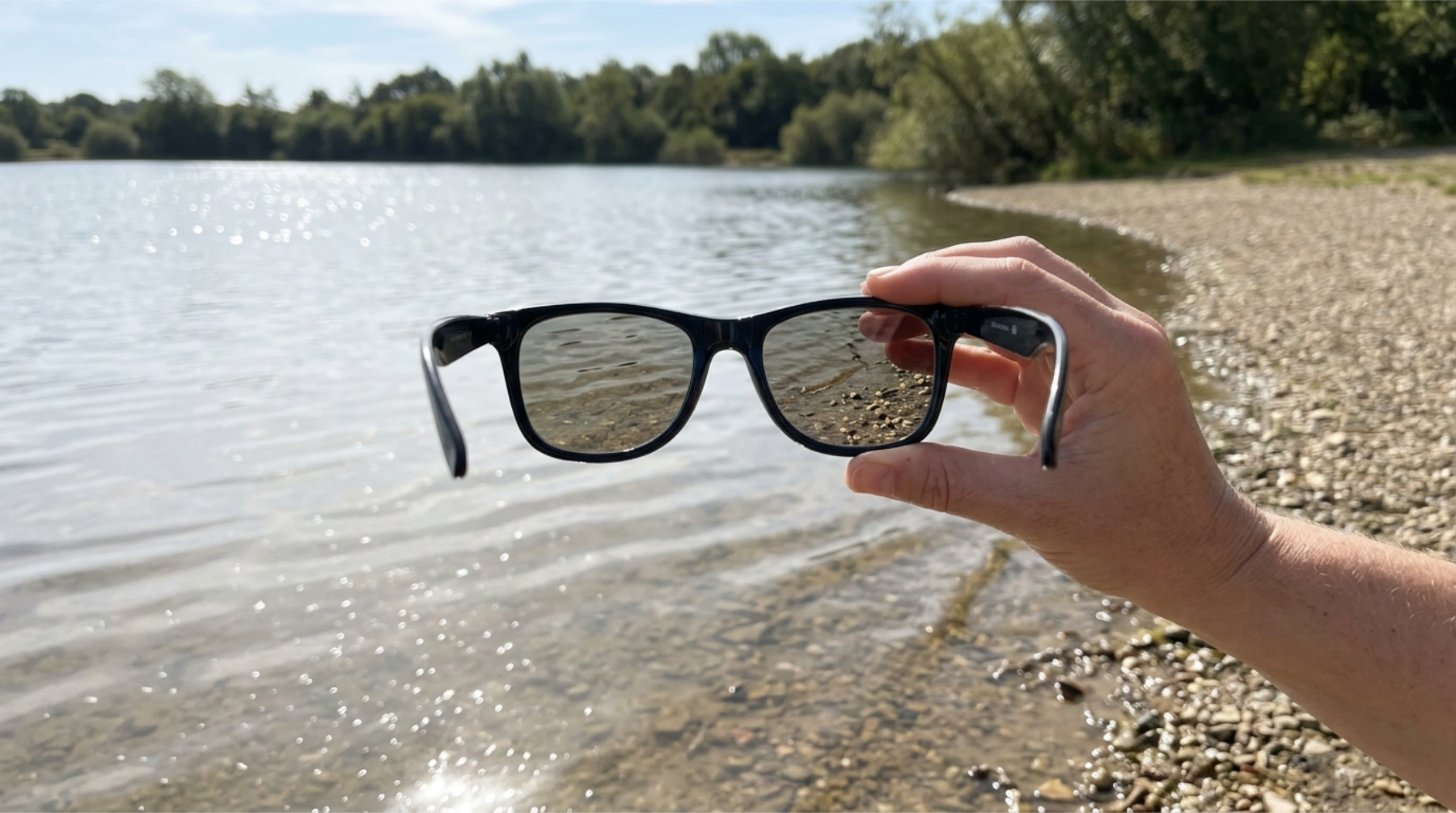
Every Chromance lens is polarized, but most polarized Ray-Bans are not Chromance. A standard polarized G-15 or grey lens cuts the same glare while keeping colors close to how they look without sunglasses. Chromance adds the color boost on top, which makes a real difference on the water, in the mountains or on a golf course, and less of one on a gray city afternoon. For a refresher on how polarized lenses cut glare, our separate guide walks through the filter itself.
How to Tell If Your Ray-Bans Have Chromance Lenses
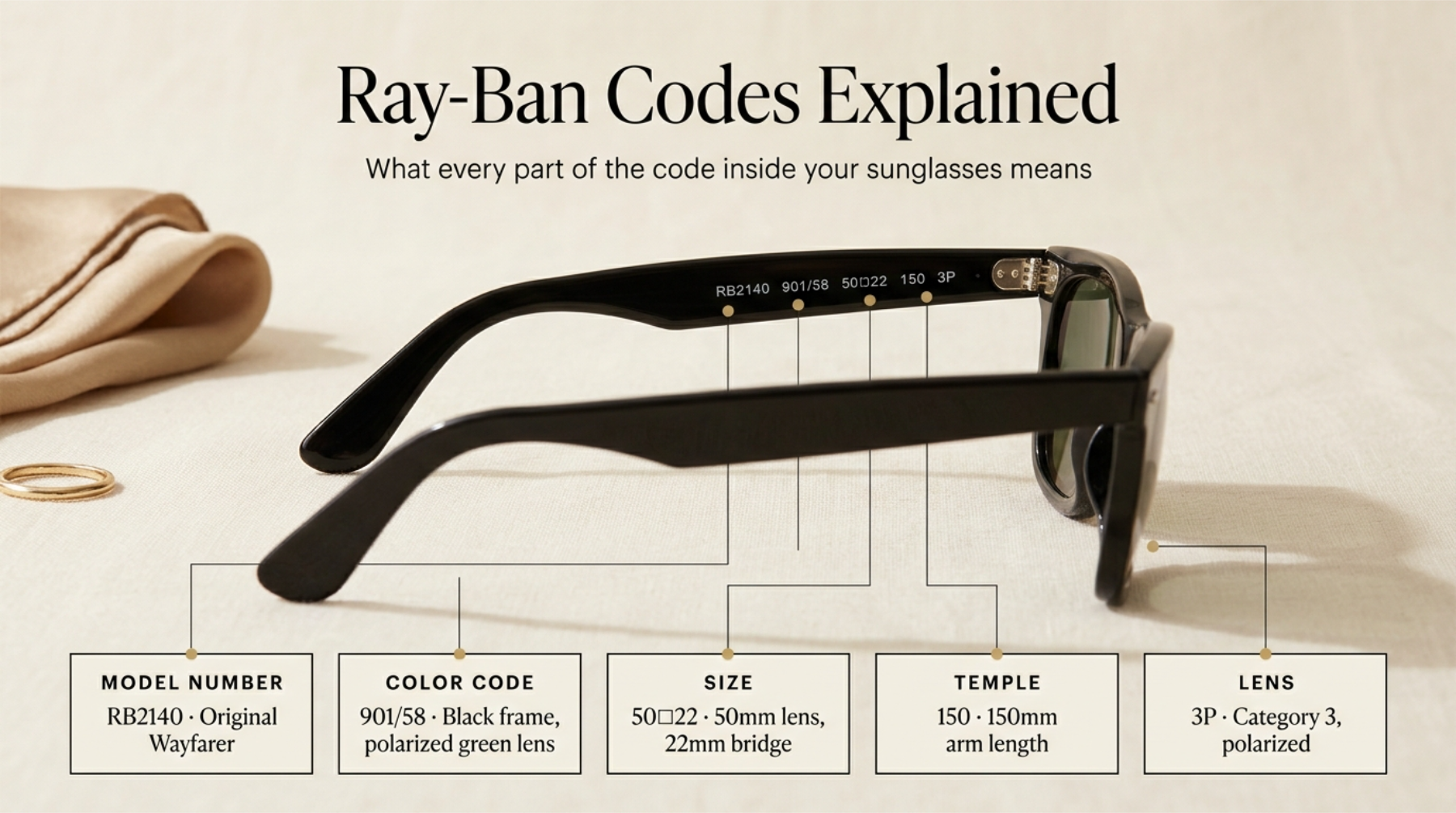
Check the model number first. Many Chromance styles add CH after it, such as RB3721CH or RB4336CH, which marks the Chromance edition of a frame. Some models skip the CH and name Chromance only in the lens description on the box label or the product page, so check there if the arm code looks ordinary. Like other polarized Ray-Bans, Chromance lenses carry a small etched P next to the logo.
What Is a G-15 Lens?
G-15 is the green-gray lens most people picture when they think of Ray-Ban. Bausch & Lomb developed it in the 1930s for military pilots who needed relief from high-altitude glare without losing accurate color. The 15 refers to light transmission: a G-15 lens lets through about 15% of visible light and blocks roughly 85%, which puts it at the dark end of everyday sunglasses. The faint green cast keeps colors true while softening the harshest light, and it is still the standard lens on the Aviator Classic and the Original Wayfarer.
G-15 vs Grey Lenses
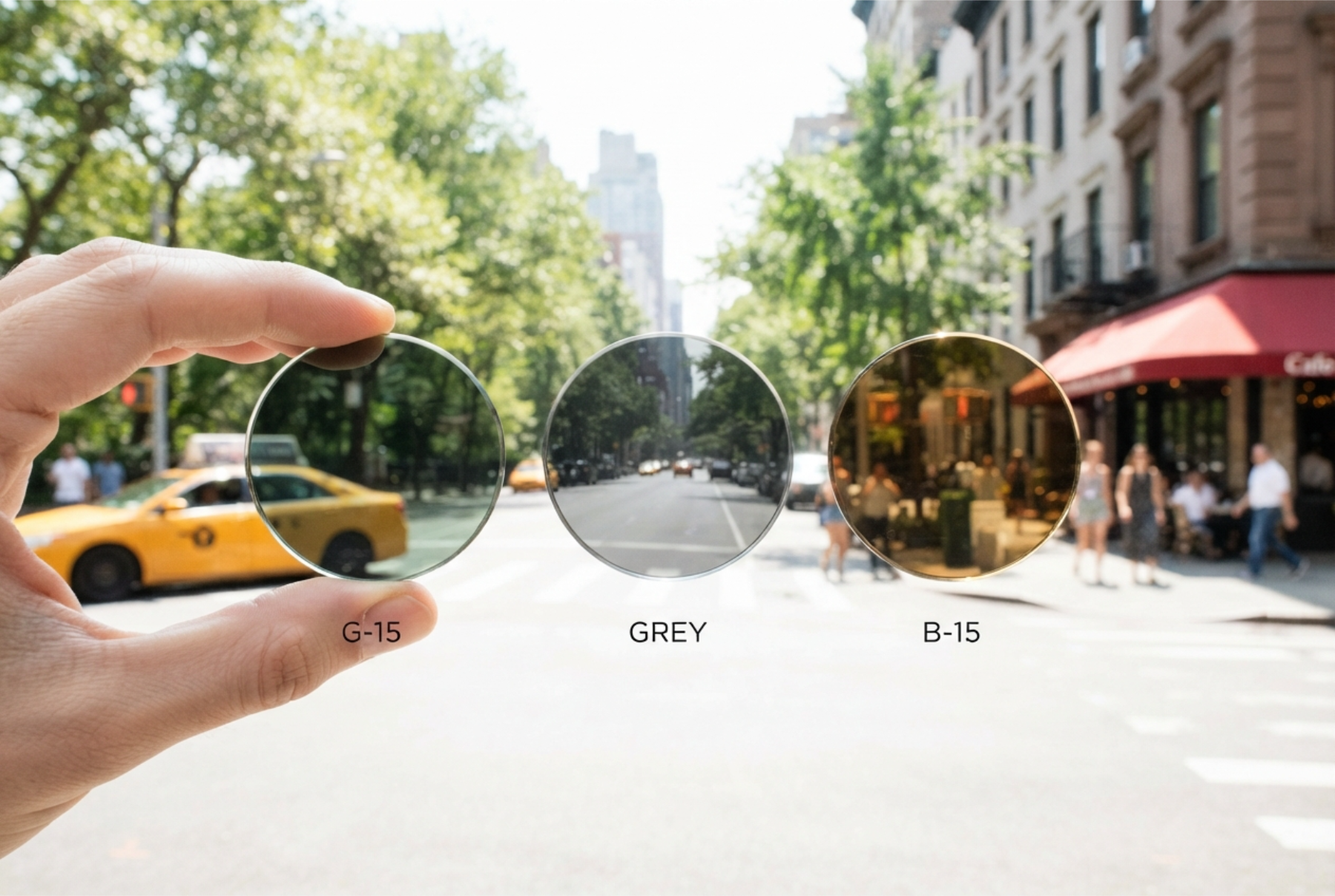
Both are dark, everyday lenses, and the difference shows mostly in color. A grey lens is completely neutral, dimming every shade by the same amount. G-15 leans slightly green, which lifts contrast a touch and makes foliage and grass look richer without pushing other colors off. Pick grey if you want the view to look exactly as it does without sunglasses, and G-15 if you like the classic Ray-Ban look and a slightly crisper picture.
Are G-15 Lenses Polarized?
The original G-15 is not polarized, but Ray-Ban makes the same tint in a polarized version, usually sold as “Green Classic G-15 Polarized.” Many pilots still choose the plain version on purpose: the Federal Aviation Administration’s sunglasses guidance for pilots explains that polarized lenses can hide readings on cockpit displays and the flash of sunlight off other aircraft. For driving, beach days and water, the polarized G-15 is the more comfortable choice.
G-15 vs Gradient Lenses
G-15 is a solid tint, the same darkness from top to bottom. A gradient lens shades from a deep top edge to a pale lower edge, so it blocks your eyes from overhead sun while leaving a clearer strip for reading a phone, a menu or the dashboard. Choose G-15 for full, even protection in strong sun, and a gradient when your days are more city than beach.
B-15 and Ray-Ban’s Other Classic Tints
Beyond G-15, Ray-Ban keeps a small set of classic tints that come back season after season. B-15 is the brown counterpart to G-15, with similar darkness, while the others trade some darkness or color accuracy for a different look. For the general rules on what brown, gray and green tints do to your vision, our lens color guide covers every shade; the table below sticks to the Ray-Ban versions.

Ray-Ban Polarized Lenses
Almost every classic Ray-Ban tint comes in a polarized version: G-15, grey, brown, blue, several gradients and the whole Chromance line. Polarized Ray-Bans block the same UV as their non-polarized twins, and the difference is glare. The filter removes the bright, flat reflections off water, wet streets and car hoods, which makes long days outside noticeably easier on the eyes. The trade-offs are a higher price and screens that can look dark at certain angles.
Not sure whether the pair you own is polarized? Ray-Ban marks it in two places, and our guide to the P and the 3P code on the arm shows exactly where to look.

Gradient, Mirror and Transitions Ray-Ban Lenses
These three are finishes rather than colors. Each one can sit on top of a tint you already know, and some can be combined with polarization.
Ray-Ban Gradient Lenses
A gradient lens is darkest along the top edge and gets lighter toward the bottom. The darker band handles overhead sun, while the lighter lower part keeps the dashboard, your phone and the person across the table easy to see. Ray-Ban offers gradients mostly in grey, brown and blue, in both standard and polarized versions. They suit driving, city days and lower light better than a day on open water, where reflected glare comes from below.

Ray-Ban Mirror and Reflective Lenses
A mirror lens has a thin reflective coating on the front that bounces part of the light away before it reaches the tint. The mirror color, whether blue, silver, gold or green, is what other people see. What you see comes from the base lens underneath, usually grey, G-15 or brown. Mirrors suit very bright places like the beach, the water and snow. The coating shows scratches more than a plain lens, so keep these pairs in their case.
Ray-Ban Transitions and Evolve Lenses
Transitions lenses are photochromic: they darken when UV light hits them and fade back toward clear indoors. Ray-Ban sold its earlier light-adapting range as Evolve, and both names refer to the same idea. They make sense if you move in and out all day and do not want to swap glasses. Two limits to know: they take a minute or two to change, and they darken less inside a car, because most windshields block much of the UV that triggers them.
Are Ray-Ban Lenses Glass?
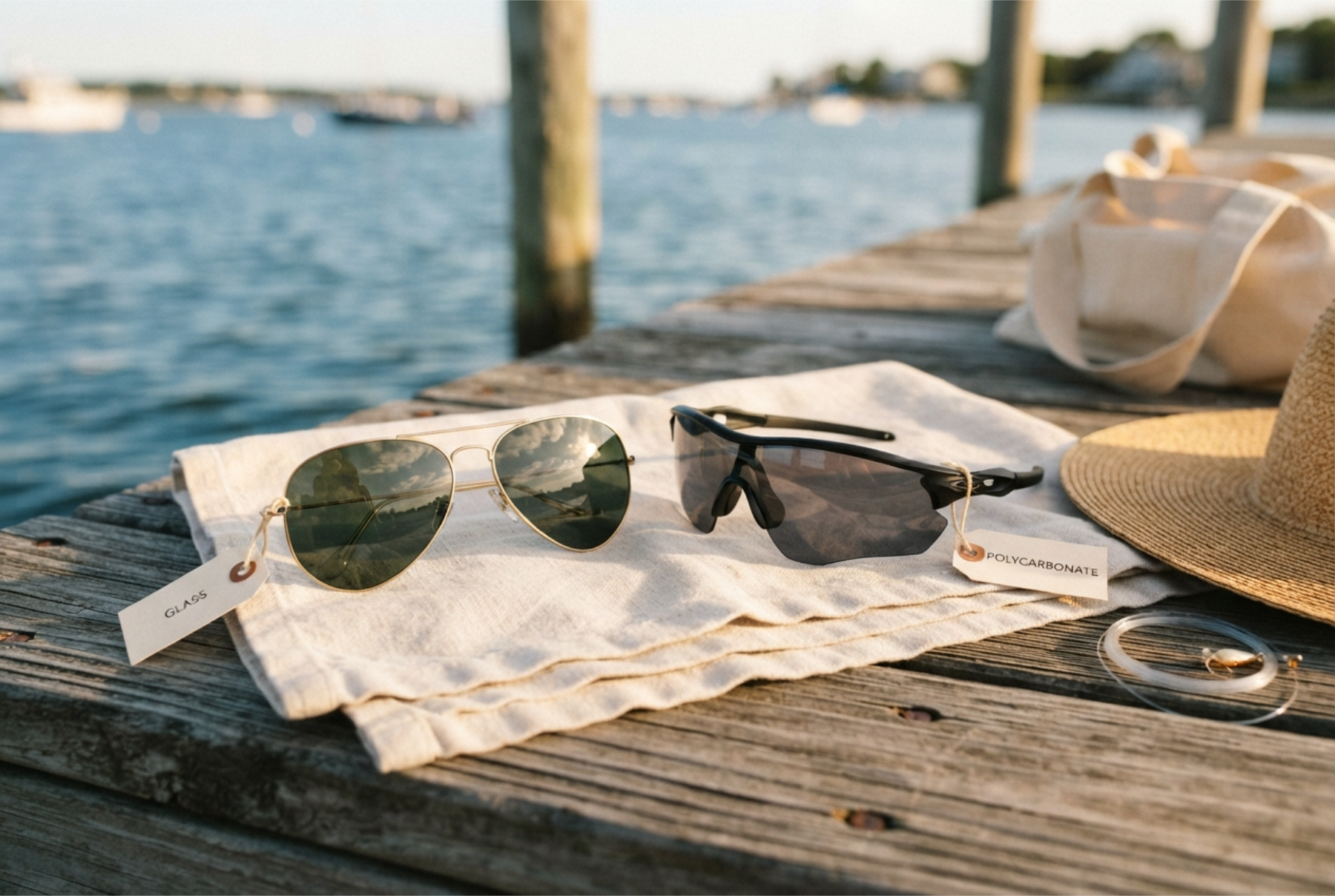
Some are, most are not. Ray-Ban calls its glass lenses Crystal, and you will see the word in lens names such as “Crystal Green” or “Crystal Brown.” Classic G-15 and B-15 lenses on long-running models such as the Aviator Classic have often come in glass, while most newer, sportier and Chromance lenses are made from lighter plastics such as polycarbonate. The product page or box label lists the lens material, so check there if it matters to you.
Glass lenses resist scratches better, so they suit people who toss sunglasses into a bag. Plastic lenses are lighter and tougher, which is why Ray-Ban uses them for sport and most modern styles. Either way, a case and a microfiber cloth do more for scratch-free lenses than the material does. The same trade-offs apply beyond Ray-Ban, and our side-by-side look at glass vs polycarbonate sunglass lenses covers clarity, weight and impact for every brand.
Do All Ray-Bans Have UV Protection?
Genuine Ray-Ban sunglasses are sold with full UVA and UVB protection, regardless of tint, darkness or price. That matters more than the color of the lens: the American Academy of Ophthalmology advises choosing lenses rated to stop 99 to 100 percent of UVA and UVB and points out that a darker lens does not mean more UV protection. Counterfeit Ray-Bans are the real risk, because a convincing copy can have a dark lens with little or no UV filter. Buy from Ray-Ban or an authorized retailer, and if you are unsure about a pair, here is how to check a UV400 label and other quality markers.
What Are the Darkest Ray-Ban Lenses?
Almost all Ray-Ban sunglasses lenses are category 3, the dark tint made for bright sun, and the code inside the arm confirms it with 3N or 3P. Category 3 lets through 8 to 18 percent of visible light, and within it the darkest-looking Ray-Ban options are dark grey, black polarized and G-15. A mirror coating on top cuts the light a little further. Gradient, Blue Classic and Transitions lenses are lighter by design. If you need a category 4 lens for glaciers or high-altitude climbing, look at specialist mountain sunglasses instead, since those lenses are too dark for driving and are rare in Ray-Ban’s range.
Frequently Asked Questions About Ray-Ban Lenses
What are the best Ray-Ban lenses?
The best Ray-Ban lens depends on how you use your sunglasses. G-15 is the best all-rounder for bright sun and accurate color. Polarized lenses are best for water, driving and glare. Chromance is the strongest performer for vivid color and outdoor sport. When the light keeps shifting, brown B-15 or a light-adapting Transitions lens handles it better. Most people are happiest with polarized G-15 as a single do-everything pair.
Are Ray-Ban Chromance lenses worth it?
Chromance lenses are worth it if you spend a lot of time near water, in the mountains or on the course, where the color boost and glare control make a visible difference. For city wear and driving, a standard polarized G-15 does most of the same job for less. Chromance usually sits at the top of the price range for each frame, so it pays off most for people who wear their sunglasses outdoors for hours.
Which Ray-Ban lens is best for driving?
G-15 is the safest Ray-Ban lens for driving because it keeps traffic lights, brake lights and signs true to color. A polarized G-15 or polarized grey lens also removes glare from wet roads and the hood. Gradient lenses are a good second choice, since the lighter lower half keeps the dashboard easy to read. Before a long trip, check that your car’s screens and head-up display stay visible through polarized lenses.
Do Ray-Ban lenses have an anti-glare coating?
Some do. Ray-Ban adds an anti-reflective coating as standard on certain lenses, including most Chromance lenses, and offers it as an option on some classic styles. This coating stops light from bouncing off the back of the lens into your eyes. It is different from polarization, which blocks glare reflected off surfaces in front of you. The two work best together, which is why Chromance combines them.
Can you replace Ray-Ban lenses?
Yes. Ray-Ban sells replacement lenses for many popular frames, and authorized opticians can fit new lenses, including polarized and prescription versions. To order the right ones, you need the model number and your lens size, which is the first of the size numbers printed inside the arm. Our guide to finding your Ray-Ban lens size shows where to read it and how sizes differ by model.
Serengeti vs Ray-Ban: which lenses are better?
Neither brand is better across the board; they solve different problems. Serengeti focuses on photochromic lenses that adjust to the light, often in glass, which suits drivers who face changing conditions. Ray-Ban offers a wider range of tints, polarized options and the Chromance color-enhancing line, plus many more frame styles. Choose Serengeti if one lens should handle every light level, and Ray-Ban if you want a specific tint or look.
Are Ray-Ban lenses scratch-resistant?
Ray-Ban lenses resist scratches reasonably well, and the glass Crystal lenses resist them best. Plastic lenses rely on a hard coating, and mirror coatings show marks more easily than plain tints. No sunglass lens is scratch-proof, so the biggest difference comes from habits: store your pair in its case, clean it with the microfiber cloth rather than a shirt, and never put the lenses face down on a table.