Polarized vs Non-Polarized Sunglasses at a Glance
The difference between polarized and non-polarized sunglasses comes down to glare, not darkness or eye protection. Both lens types can be equally dark, and both can block 100% of UV rays. Where they part ways is in how they handle reflected light and how they behave around screens. Use this comparison as a quick reference before reading the details.
What Does Polarized Mean?
Polarized means the lens contains a filter that lets light through in only one orientation. Ordinary sunlight travels in every direction at once. When it strikes a flat, shiny surface such as a lake, a wet street or the hood of a car, much of the reflected light lines up horizontally, and that concentrated band is what your eyes register as glare. A polarized lens is built specifically to stop that band.
How Polarized Lenses Work
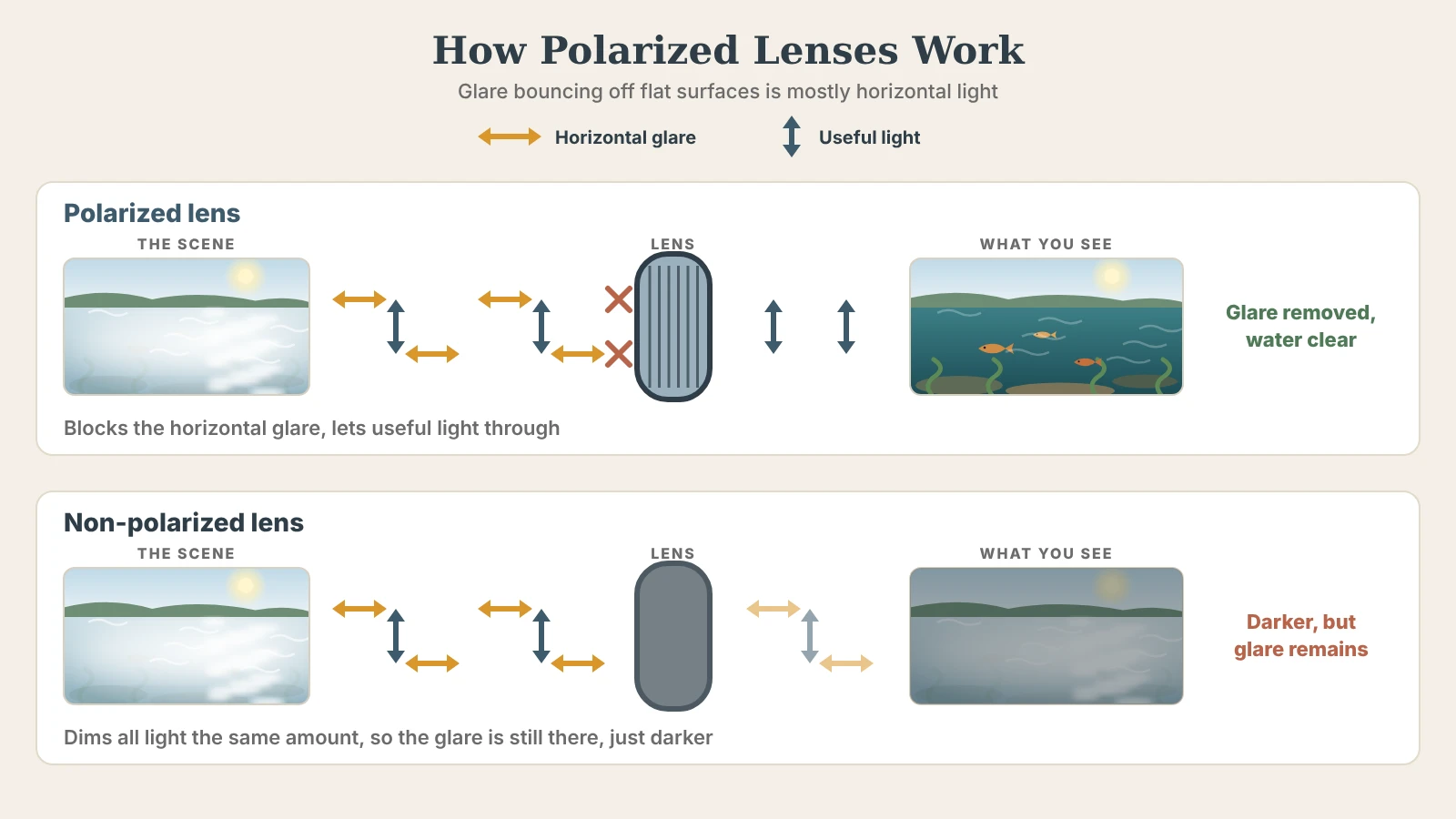
During manufacturing, a polarizing film is laminated into the lens or applied to it. Think of the film as a grid of extremely fine vertical slots: light from the scene still reaches your eyes, while the flat, horizontal glare is stopped at the lens. You get more contrast, less squinting, and colors that are no longer washed out by reflections.
What Non-Polarized Sunglasses Do
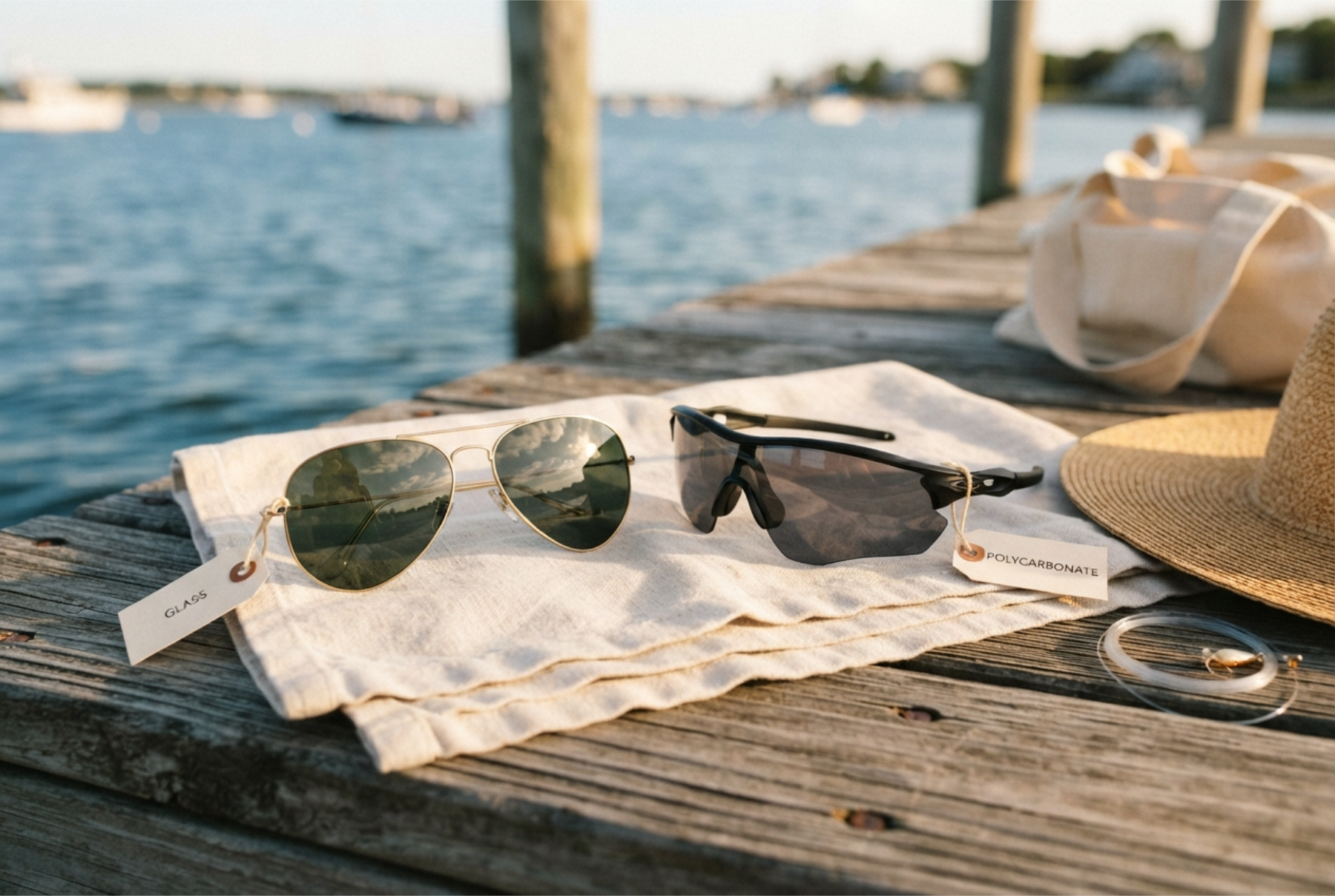
Non-polarized sunglasses rely on tint alone. A gray, brown or green lens absorbs part of all incoming light, so a bright scene becomes dimmer across the board. Glare is reduced by the same proportion as everything else, which means it remains the brightest thing in view. The tint color still shapes contrast and color balance, so a non-polarized lens is not a lesser lens, just a simpler one. How that film is added depends on the lens: it is sealed between two layers in glass and molded into the lens in plastic; our lens material guide shows how glass and polycarbonate polarized lenses are made.
What You See Through Each Lens
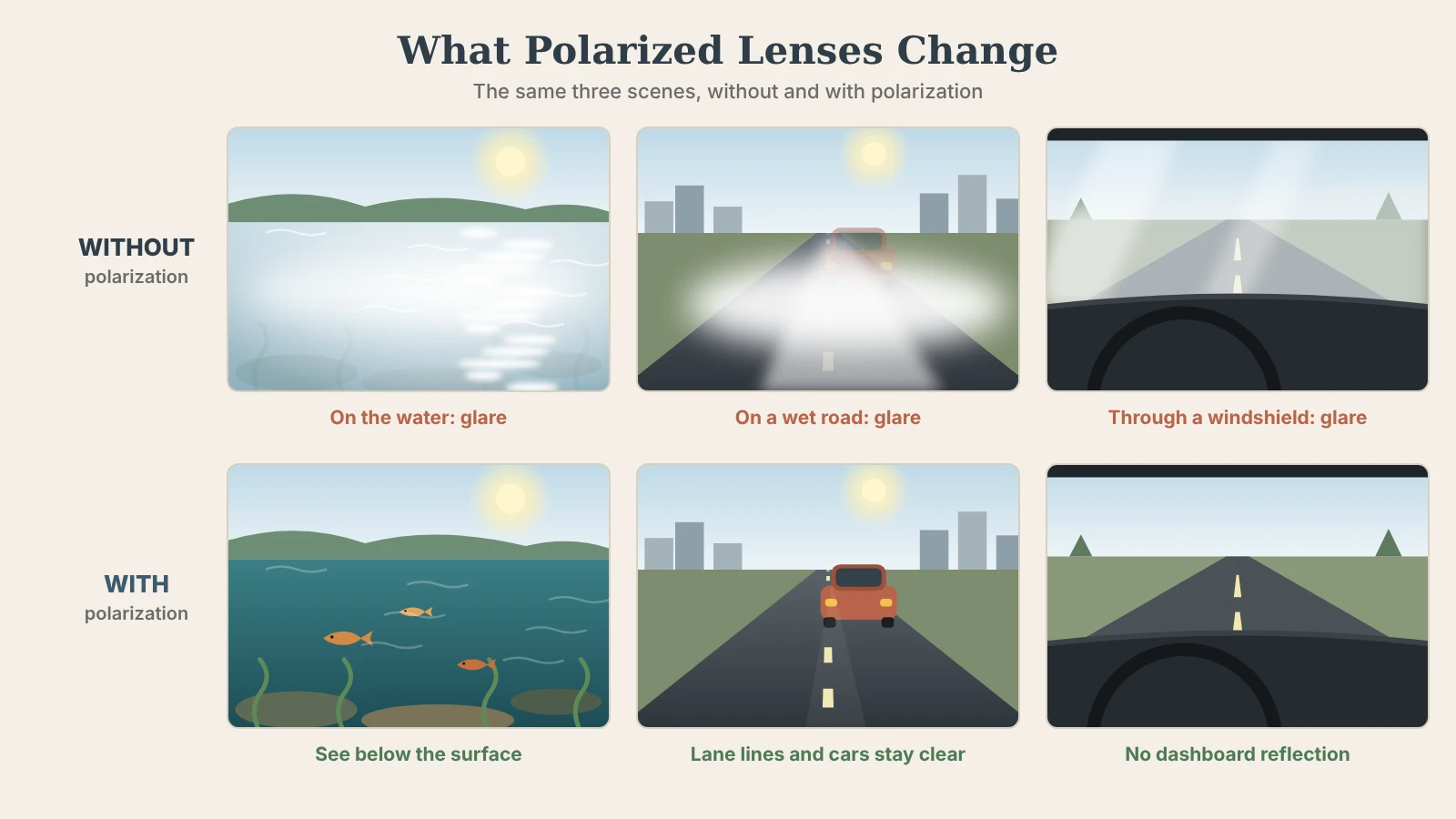
On open water, polarization lifts the white sheen off the surface so rocks and fish become visible, which is why anglers treat it as essential. On a wet road, the bright streak ahead of the car fades and the lane lines return. Inside a car, polarized lenses also cut the reflection of the dashboard on the windshield, one of the most tiring kinds of glare on a long drive.
Are Polarized Sunglasses Worth It?
Polarized sunglasses are worth it if you spend time near water, drive often in daylight, or live where the sun is strong. The payoff is comfort as much as clarity, since less glare means less squinting over a long day outside. Cleveland Clinic calls polarized lenses an optimal choice for people who drive often, while noting that they usually cost more. What polarization does not do is protect your eyes from UV, so it never replaces a UV400 label. If your days are mostly urban, screen-heavy or spent on the slopes, a good non-polarized pair can serve you just as well.

When Non-Polarized Sunglasses Are the Better Choice
The filter that removes glare can also remove information you need. Some reflections are warnings, and some screens depend on polarized light to show anything at all. In the four situations below, a non-polarized pair is the safer or more practical option.
Phone, ATM and Gas Pump Screens
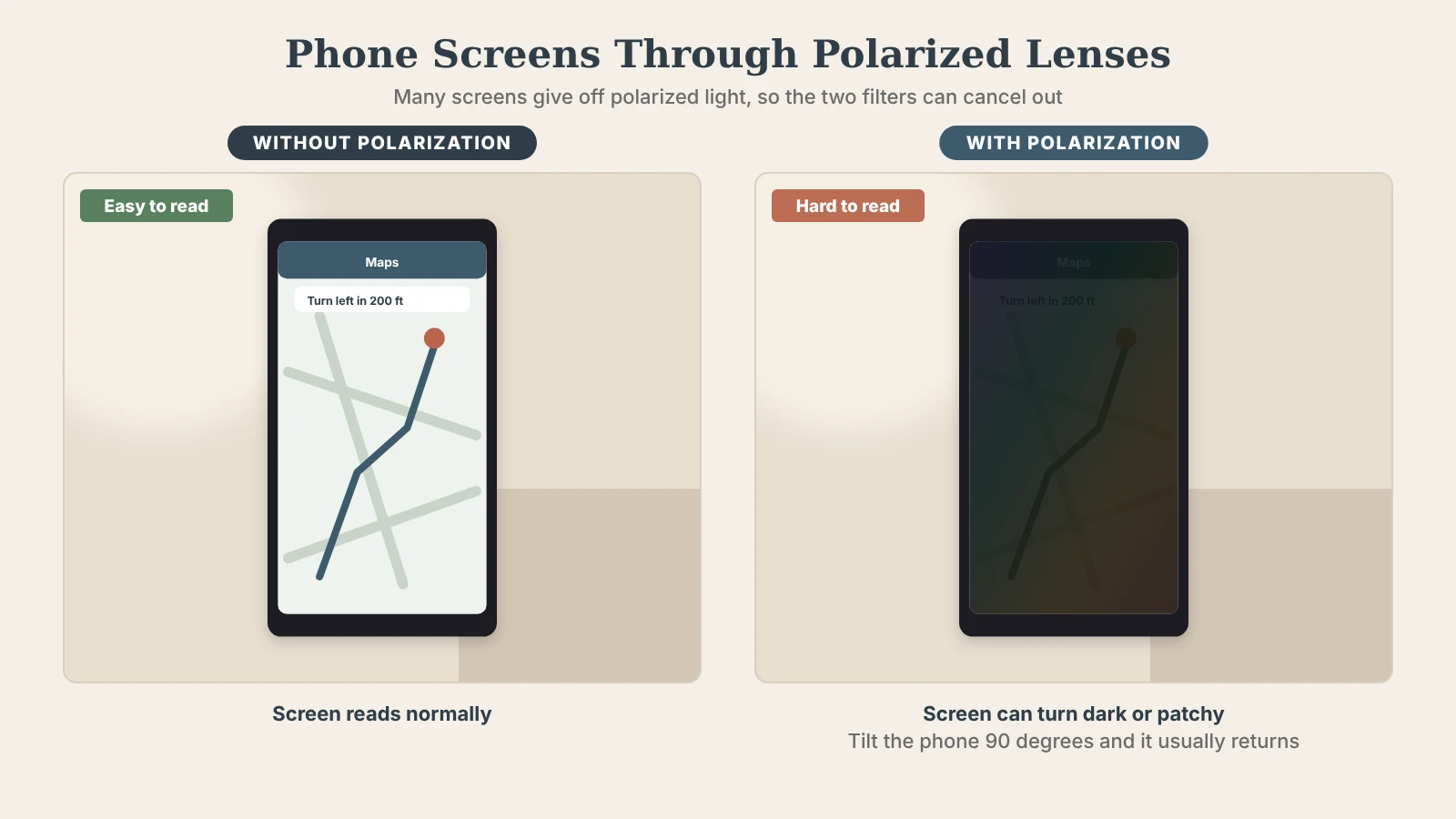
Many LCD screens give off polarized light of their own. When the screen’s filter and the lens filter sit at right angles, the two can cancel each other out and the display turns dark or completely black, as All About Vision explains. Rotating a phone 90 degrees usually brings the picture back, but an ATM or gas pump screen cannot be turned, so the quickest fix is to lift your sunglasses for a moment.
Car Dashboards and Head-Up Displays
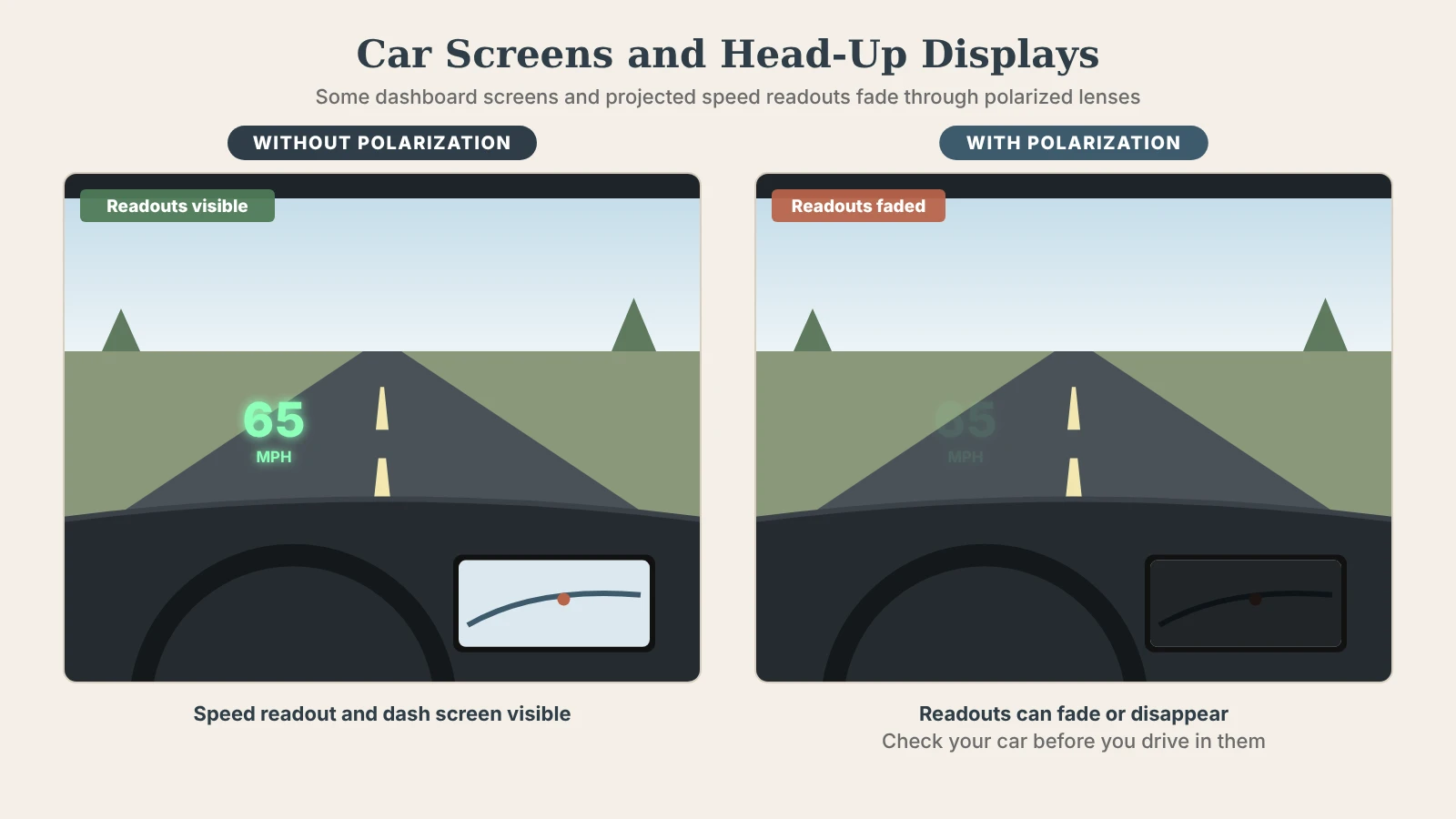
Some in-car screens and head-up displays, which project your speed onto the windshield, fade through polarized lenses. Whether it happens depends on the car, so sit in your own driver’s seat with a polarized pair before relying on it for a road trip. If the readouts disappear, a non-polarized lens in a gray or brown tint is the better driving companion.

Spotting Ice on Ski Slopes
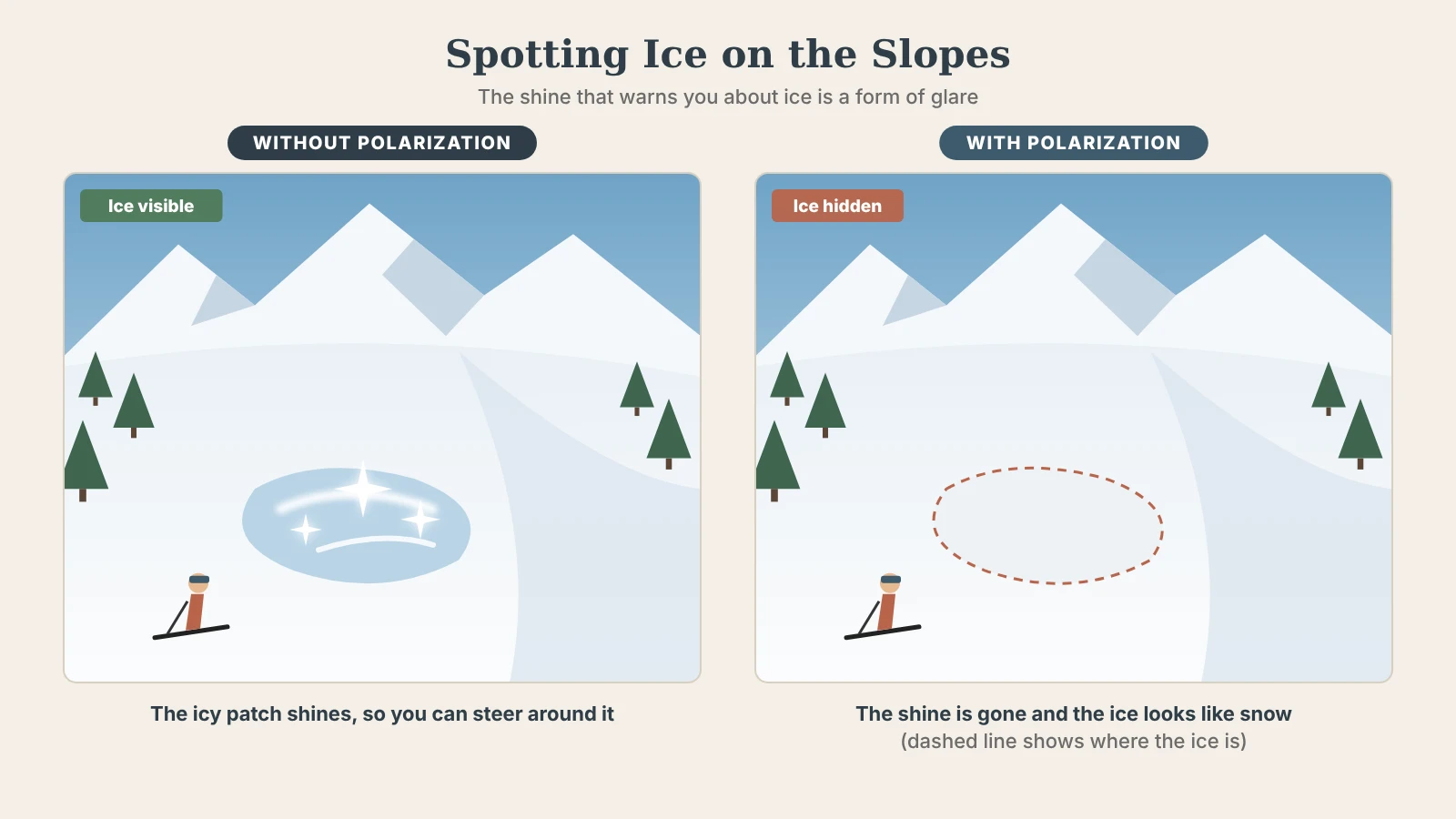
On a ski run, the shine of a hard, icy patch is a useful warning, and a polarized lens can erase it so the ice blends into the snow around it. Polarization does soften the bright bounce-back from snow, so some skiers still choose it; if you do, ski shaded and hard-packed runs with extra care.
Flying a Plane
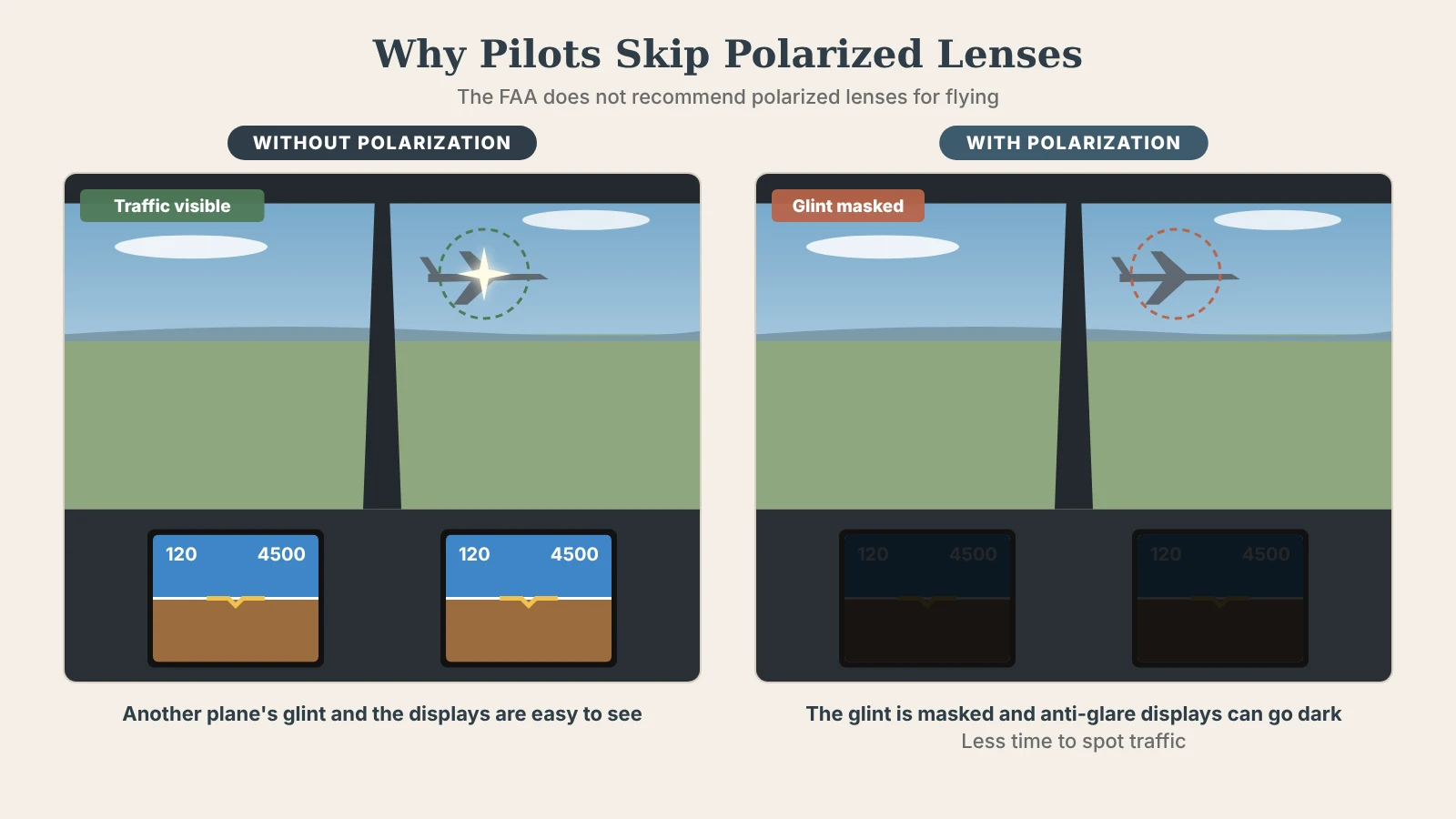
Pilots have the clearest rule of all. The FAA’s guidance explains that polarization can reduce or eliminate the visibility of instruments with anti-glare filters, interfere with the view through the windscreen, and mask the flash of sunlight off another aircraft’s wing, which shortens the time a pilot has to react. Cleveland Clinic gives the same advice to people who operate heavy machinery.
Polarized vs Non-Polarized by Activity
Most people do not need to choose one type forever; they need the right lens for what they are doing that day. The table matches common activities with the lens that suits them and the reason behind each call.

Polarized vs Other Lens Labels
Sunglass tags list several features that sound alike, and polarization is only one of them. A lens can be polarized and mirrored, or polarized and photochromic, while a gradient or “HD” lens may have no polarizing filter at all. The table separates what each label does, whether it cuts glare, and whether it says anything about UV protection.
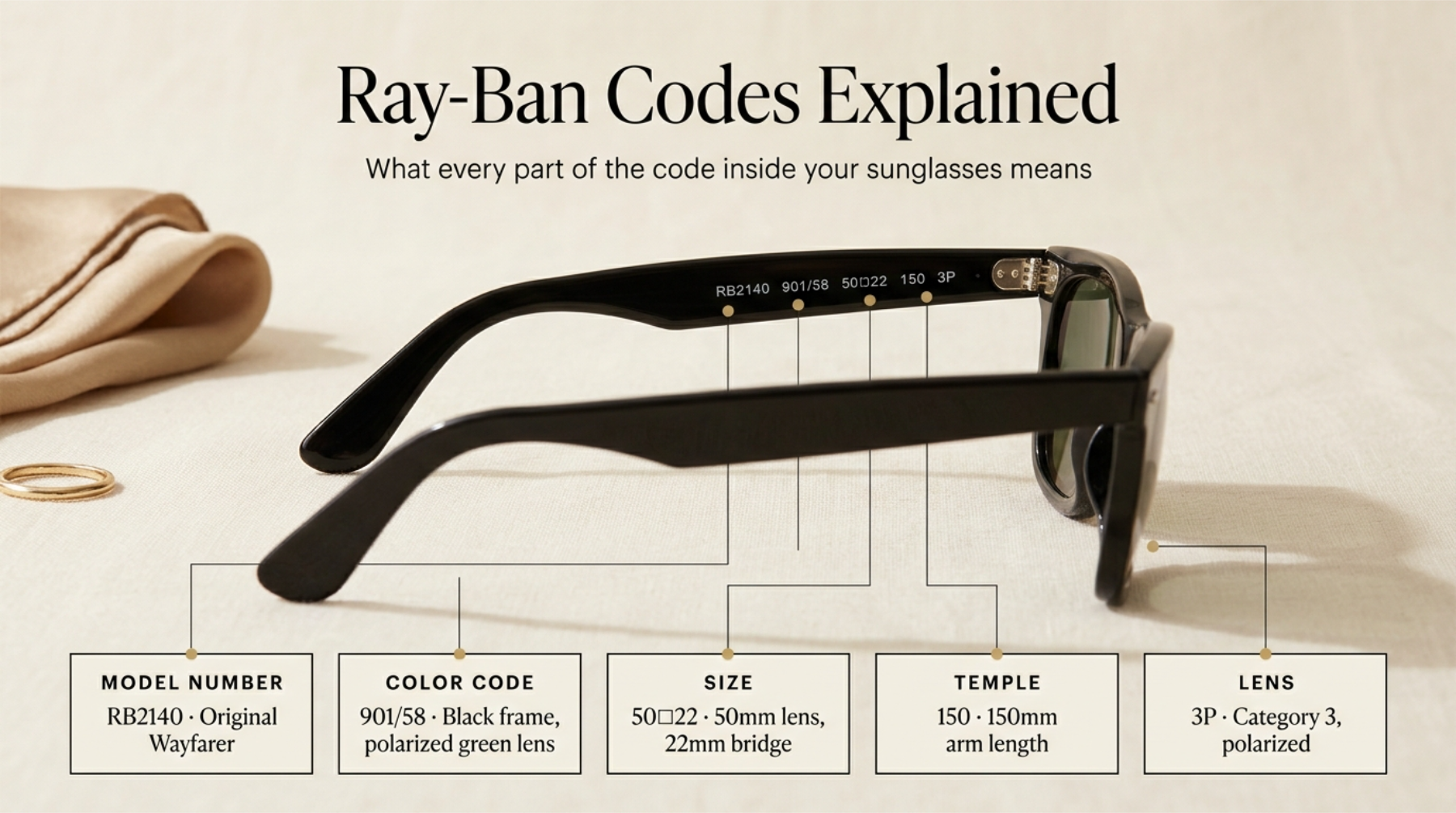
Still deciding between G-15, Chromance and polarized? Our guide to Ray-Ban lenses compares every option side by side and helps you choose the right one.
How to Tell If Your Sunglasses Are Polarized
Look at a phone or laptop screen through one lens, then tilt your head or the sunglasses about 90 degrees. If the screen darkens sharply, the lens is polarized; if nothing changes, it is not. For a full rundown of labels and at-home checks, see the two guides below.
Frequently Asked Questions About Polarized and Non-Polarized Sunglasses
What does non-polarized mean on sunglasses?
Non-polarized means the lens has no polarizing filter, so it reduces light only through its tint. A non-polarized lens makes everything darker by the same amount, including glare. Most fashion sunglasses are non-polarized, and they can still give complete eye protection when the label lists UV400 or 100% UVA/UVB. Tint color still matters for contrast, so the shade you choose changes how sharp the world looks even without polarization.
Are non-polarized sunglasses bad for your eyes?
No. Non-polarized sunglasses protect your eyes as well as polarized ones, as long as they block 100% of UVA and UVB rays. Polarization improves comfort and clarity by cutting glare, but it adds no UV protection by itself. The label that matters for eye health is UV400 or 100% UV, not polarized. Where non-polarized pairs fall short is comfort in strong reflected light, such as a day on the water, where you may squint more.
Should I get polarized sunglasses for everyday wear?
Get polarized sunglasses for everyday wear if your days include driving in sun, time near water, or bright, open spaces. For mostly urban days, frequent phone use outdoors, or a small budget, non-polarized sunglasses with full UV protection are a perfectly sound choice. Many people own one pair of each. If you only buy one pair and spend weekends outdoors, polarized usually earns its higher price over a season.
Are all sunglasses polarized?
No. Many sunglasses, especially fashion and budget pairs, are not polarized. Brands that include a polarizing filter say so on the tag, the product page, or a small mark on the lens or temple arm. If a pair does not mention polarization anywhere, assume it is non-polarized. You can confirm it in seconds by looking at a phone screen through the lens and tilting your head about 90 degrees. A polarized lens makes the screen darken sharply.
Can you make regular sunglasses polarized?
You cannot add polarization to a finished pair at home, because the filter is built into the lens during manufacturing. Your options are replacement polarized lenses made for your frame, polarized clip-ons that sit over your current glasses, or new lenses ordered from an optical shop. Prescription lenses can also be made polarized, which suits people who need vision correction and want to cut glare in one pair.
Are all polarized sunglasses the same?
No. All polarized lenses use the same principle, but they differ in lens material, tint color, coatings and optical clarity. Those details affect how sharp the view looks, how well the lens resists scratches, and how long the pair lasts. The word polarized on a tag tells you the filter is there, not how good the lens is. Look for UV400, a lens color that suits your activity, and a reputable maker when you compare polarized pairs.