
When Can Babies Wear Sunscreen?
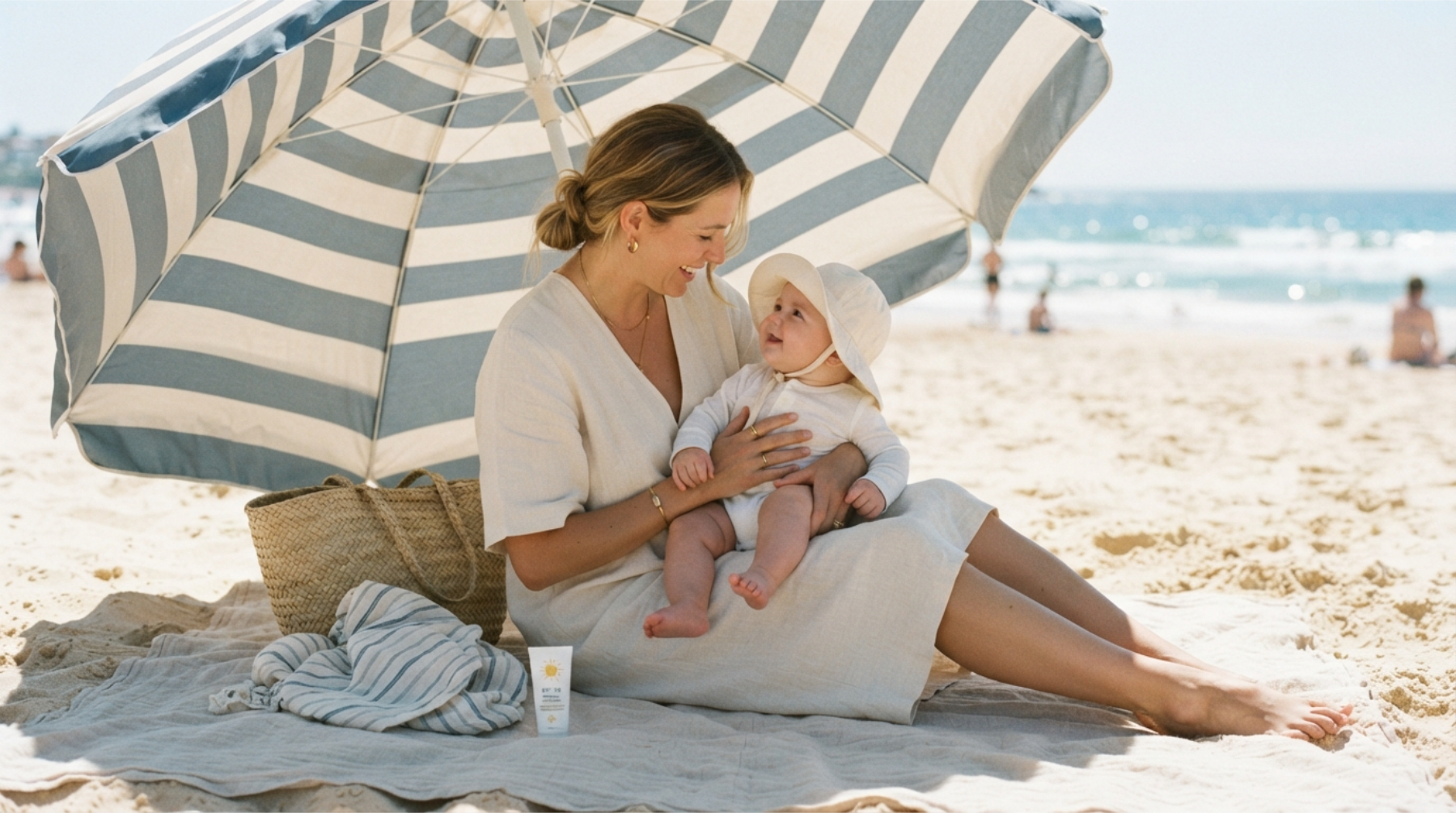
Most babies can start using sunscreen at 6 months old. That is the age printed on nearly every baby sunscreen label, and the directions on those same tubes tell parents of younger babies to ask a doctor first. Until then, keeping a baby out of direct sun is the main plan, not a lotion.
Baby Sun Protection by Age
0 to 6 months
Avoid direct sun
- Shade, canopy or umbrella
- Long sleeves, pants, brimmed hat
- Sunscreen only on tiny exposed spots if no shade
6 to 12 months
First sunscreen
- Mineral, fragrance-free lotion
- SPF 30 to 50, broad spectrum
- Patch test on the wrist first
1 year and up
Full routine
- Sunscreen on all exposed skin
- Reapply every 2 hours and after water
- Hat and sunglasses on bright days
The shift at 6 months is not a switch from shade to sunscreen. It is the point where sunscreen is added to everything else. Shade, a hat and covered arms and legs still do most of the work for a crawling 8-month-old at the park.
Why No Sunscreen Before 6 Months?
Side effects are the main concern. According to the FDA, young infants are more prone than older children and adults to sunscreen side effects such as rashes, so its first advice for newborns is shade, with any sunscreen use cleared by a pediatrician. Newborn skin and behavior add a few more reasons to wait.
Why Newborn Skin Gets Extra Caution
Four reasons the 6-month line exists.
None of this means sunscreen is dangerous for a 3-month-old. It means shade is the safer, simpler first line of defense, and sunscreen is the backup.
How to Protect a Newborn From the Sun
Without sunscreen, your newborn's sun protection comes from where you go, what your baby wears and what time you head out. The Skin Cancer Foundation recommends keeping babies out of direct sun especially between 10 a.m. and 4 p.m., using the stroller's sun shield, and dressing them in a brimmed hat with light long sleeves and pants.
Your Newborn Sun Protection Toolkit
Everything that protects a baby before sunscreen is an option.
Not sure if an outfit blocks enough sun? Nemours KidsHealth suggests a quick test: hold the fabric up and put your hand inside it. If you can see your hand through it, the weave is too loose to offer much protection.
Stroller Shade Do's and Don'ts
Do
- Use the built-in canopy or a clip-on UV shade with mesh sides
- Check your baby often for flushed cheeks and damp hair
- Bring a breathable muslin to shade from the side
- Offer breast milk or formula on warm outings
Don't
- Drape a blanket over the whole stroller; it traps heat and blocks airflow
- Leave the canopy pointing the wrong way on a long walk
- Rely on cloudy skies; UV still gets through
- Park the stroller in sun while you sit in shade
Can You Put Sunscreen on a 2, 3, 4 or 5 Month Old?
Only in small amounts, and only when shade is not possible. The American Academy of Pediatrics says that if shade and protective clothing are not available, a small amount of sunscreen can go on small areas such as the face. The guidance does not change month by month before 6 months, so the chart below works whether your baby is 2 months old or nearly 6.
| Age | Sunscreen? | If there is no shade | Main protection |
|---|---|---|---|
| Newborn to 2 months | Avoid | Ask your pediatrician first | Shade, canopy, covered skin |
| 2 to 3 months | Not routinely | Tiny amount of mineral SPF on face and backs of hands | Shade, long sleeves, brimmed hat |
| 4 to 5 months | Not routinely | Tiny amount of mineral SPF on exposed spots only | Shade, UPF clothing, brimmed hat |
| 6 months and up | Yes | Mineral SPF 30 to 50 on all exposed skin | Sunscreen plus shade and a hat |
If You Do Need Sunscreen Before 6 Months
The Small-Area Method
For the rare times shade is not an option.
Is Sunlight Good for Newborns? How Long Can They Be in the Sun?
There is no safe number of minutes of direct sun for a newborn, so the honest answer is as little as possible. Fresh air and bright, indirect light are fine, and a walk in the shade or time near a window counts. What young babies do not need is direct sun on their skin, for either of the two reasons parents usually give.
Two Common Reasons Parents Seek Sun
And what actually helps instead.
The CDC advises 400 IU of vitamin D a day for babies who get breast milk, starting shortly after birth, while babies drinking at least 32 ounces of infant formula a day usually get enough from the formula. For jaundice, Mayo Clinic describes phototherapy under a blue-green lamp as the treatment, so if your baby's skin or eyes look yellow, call your pediatrician rather than heading outside.
Should Babies Wear Sunglasses?
Yes, if they will be in bright sun and will keep them on. A baby's eyes are more sensitive to bright light than an adult's, and there is no minimum age for baby sunglasses. The American Academy of Ophthalmology suggests shading infants with hats, umbrellas or sunglasses, and says any sunglasses should block 99% of UVA and UVB rays and fit well enough to cover both eyes.
Baby Sunglasses Checklist
If your baby pulls them off every time, a wide-brimmed hat and shade still protect their eyes well. Most babies accept sunglasses better when they get used to them indoors first.
Sunburn in Infants: Signs and What to Do
A baby's skin can turn pink after a surprisingly short time outside, and the burn often looks worse a few hours later. Seattle Children's Hospital notes that infant skin is thinner than an older child's, so it burns more quickly, and that ibuprofen is not approved for babies under 6 months without a doctor's advice. Use the guide below to decide what to do.
Home care
Mild pink skin, baby is calm and feeding well
- Move indoors and out of the sun
- Cool, damp washcloths for 10 minutes
- Extra breast milk or formula
- Ask your pediatrician before giving any medicine
Call your pediatrician today
Blisters, swelling or a fussy baby
- Any blisters, especially on the face
- Blisters larger than half an inch
- Pain that keeps your baby from sleeping or feeding
- A burn that looks infected
Get care now
Signs of heat illness or a very sick baby
- Fever, especially over 104°F
- Vomiting, chills or fewer wet diapers
- Unusual sleepiness or hard to wake
- Fainting or limpness: call 911
Skip ointments and petroleum jelly on fresh sunburn, since they can hold heat in the skin. Do not pop blisters, and keep your baby completely out of the sun until the skin has healed. If you are ever unsure, calling your pediatrician's after-hours line is always the right move for a baby this young.
Your Baby's First Sunscreen at 6 Months
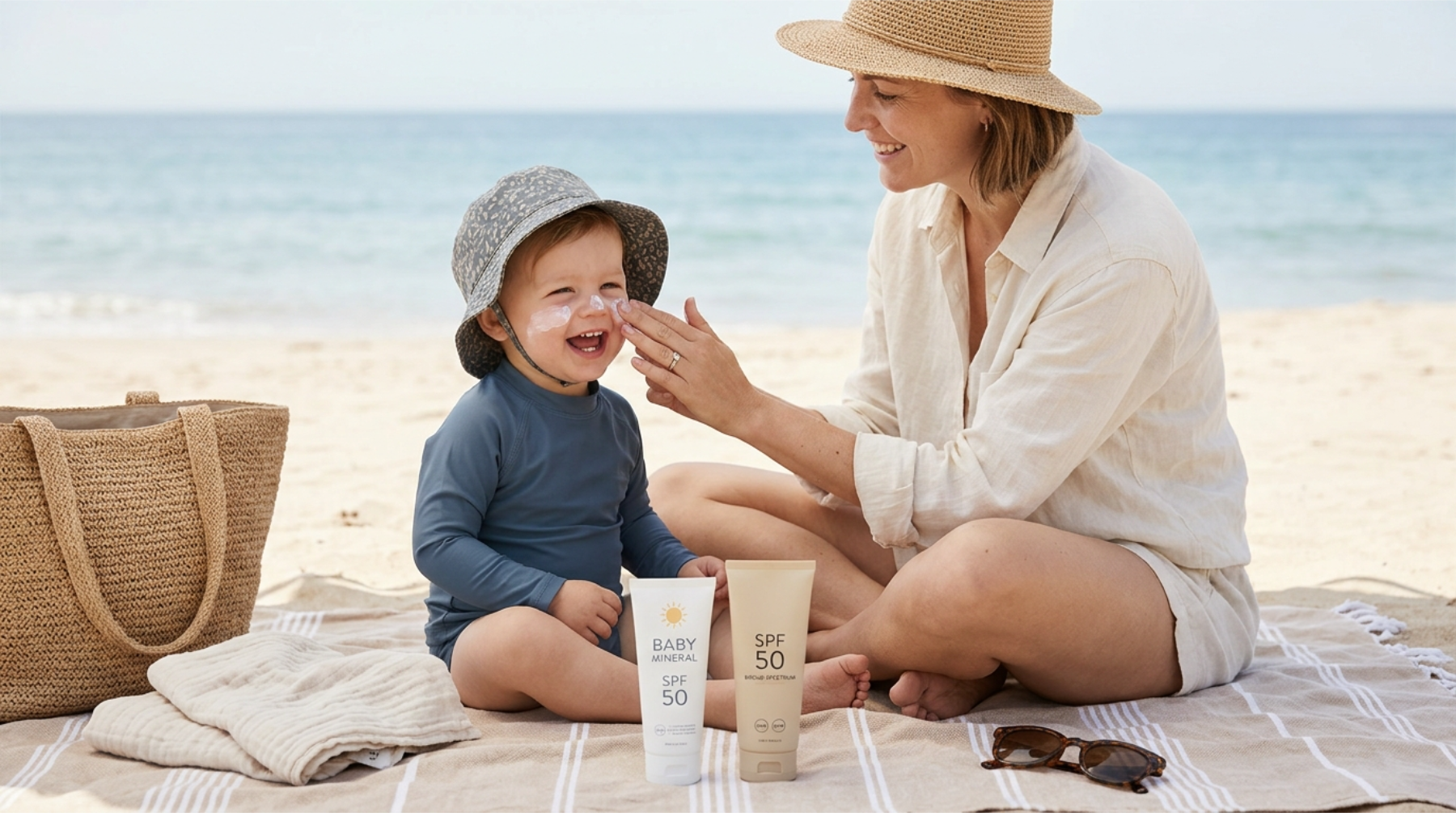
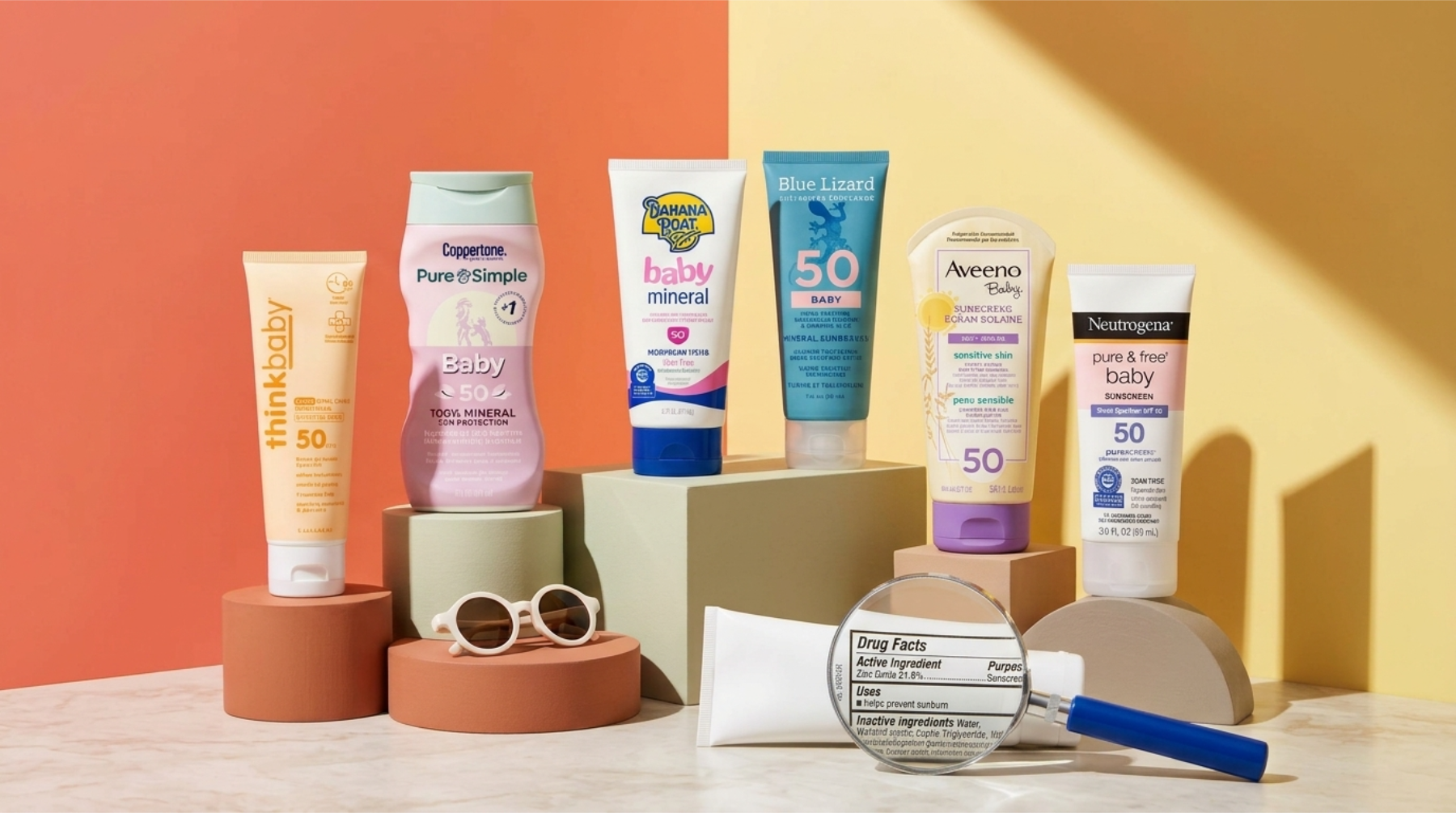
Once your baby reaches 6 months, look for a broad-spectrum mineral sunscreen with zinc oxide, titanium dioxide or both, SPF 30 to 50, no fragrance and a lotion or stick format. Mineral filters sit on the skin and are the least likely to sting or irritate, and our guide to zinc oxide in sunscreen explains why it is the gentlest filter for new skin.
On the label, look for
- Zinc oxide or titanium dioxide as the only actives
- “Broad spectrum” and SPF 30 to 50
- Fragrance-free
- “Water resistant (80 minutes)” for pool days
Leave on the shelf
- Sprays and powders near a baby's face
- Added fragrance or essential oils
- Oxybenzone in the active ingredients
- Combined sunscreen and bug spray
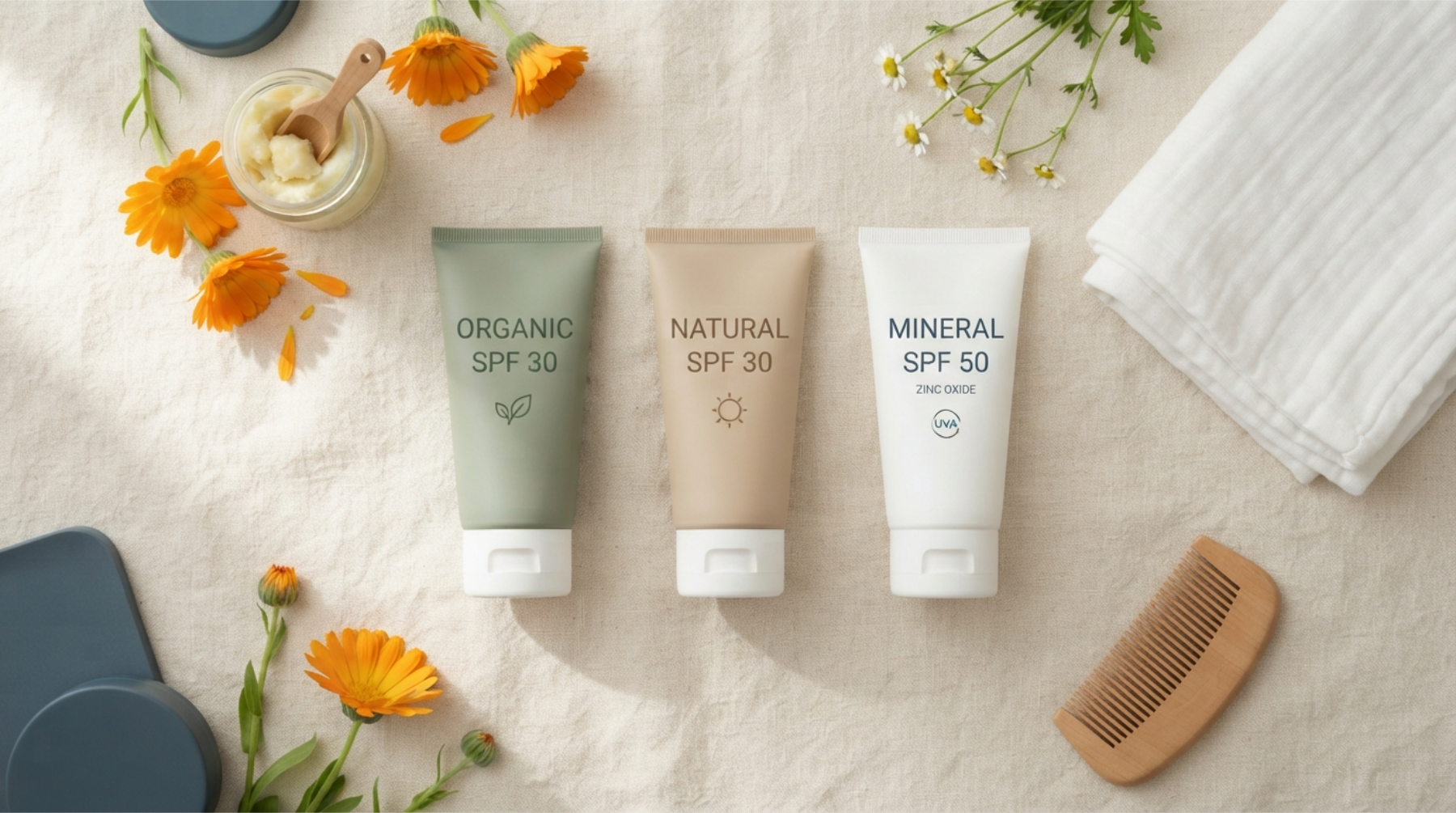
Shopping for that first tube? Organic and natural claims on the front don't guarantee a mineral filter, so it helps to know what organic and natural really mean on baby sunscreen labels before you buy.
Wondering whether that first tube really needs a baby label? Our side-by-side of baby sunscreen vs regular sunscreen shows when a family bottle does the same job.
Frequently Asked Questions
What happens if you accidentally put sunscreen on a baby under 6 months?
A single use is very unlikely to cause harm. Wash the sunscreen off with water and a soft cloth, then watch the area for redness, bumps or a rash over the next day. If your baby develops a rash, swelling or seems uncomfortable, call your pediatrician. Next time, choose shade and covered skin first and keep any sunscreen to tiny areas.
Do babies need sun protection in the car?
Yes, on longer drives. Front windshields block most UV rays, but side and rear windows usually let much of the UVA through, and a rear-facing car seat often sits right beside one. A removable window shade, a light blanket over the legs or long sleeves keeps your baby covered. Avoid sunscreen under 6 months and rely on the shade instead.
Is it safe to take a newborn outside in summer?
Yes. Newborns can go outside in summer as long as they stay in the shade, wear light clothing that covers their skin and do not get too hot. Plan outings for early morning or evening, keep trips short in a heat wave, and offer feeds often. Watch for flushed skin, fussiness or fewer wet diapers, which can mean your baby is overheating.
What SPF should a baby under 6 months use if there is no shade?
Use a mineral sunscreen with at least SPF 15, and SPF 30 is a common choice. The number matters less than the type and the amount: pick zinc oxide or titanium dioxide, fragrance-free, and apply only a thin layer to small exposed spots like the face and backs of the hands. Check with your pediatrician before the first use.
Can babies get sunburned on cloudy days?
Yes. Most UV rays pass through light cloud cover, so a baby can burn on an overcast day without anyone noticing the heat. Sand, water and concrete also reflect UV back up under a canopy or umbrella. Keep the same shade, hat and clothing routine on gray days, especially near water or at higher altitudes.
Can you put sunscreen on a baby's hands?
Yes, in a small amount. For babies under 6 months, the back of the hands is one of the few spots where a thin layer of mineral sunscreen is acceptable when shade and clothing are not enough. Because babies put their hands in their mouths, choose a fragrance-free zinc oxide formula and wipe their hands clean before feeding.
At what age can a baby wear sunglasses?
There is no minimum age for baby sunglasses. Infants can wear them whenever they are in bright light, as long as the lenses block 99 to 100% of UVA and UVB and the frame fits snugly. Pick a pair with a soft elastic strap and flexible frame. If your baby will not keep them on, a wide-brimmed hat and shade protect the eyes too.
Sources We Checked
Every health claim in this guide traces back to one of these medical organizations. Last reviewed: November 5, 2026.
- U.S. Food and Drug Administration, Should You Put Sunscreen on Infants? Not Usually
- The Skin Cancer Foundation, Sun-Safe Babies
- Nemours KidsHealth, Sun Safety
- American Academy of Pediatrics, HealthyChildren.org, Sun Safety: Information for Parents About Sunburn and Sunscreen
- Centers for Disease Control and Prevention, Vitamin D (Infant and Toddler Nutrition)
- Mayo Clinic, Infant Jaundice: Diagnosis and Treatment
- American Academy of Ophthalmology, Should Infants Wear Sunglasses?
- Seattle Children's Hospital, Sunburn
This article is for general information and does not replace advice from your pediatrician. If your baby is under 6 months, sunburned or unwell, contact your doctor.