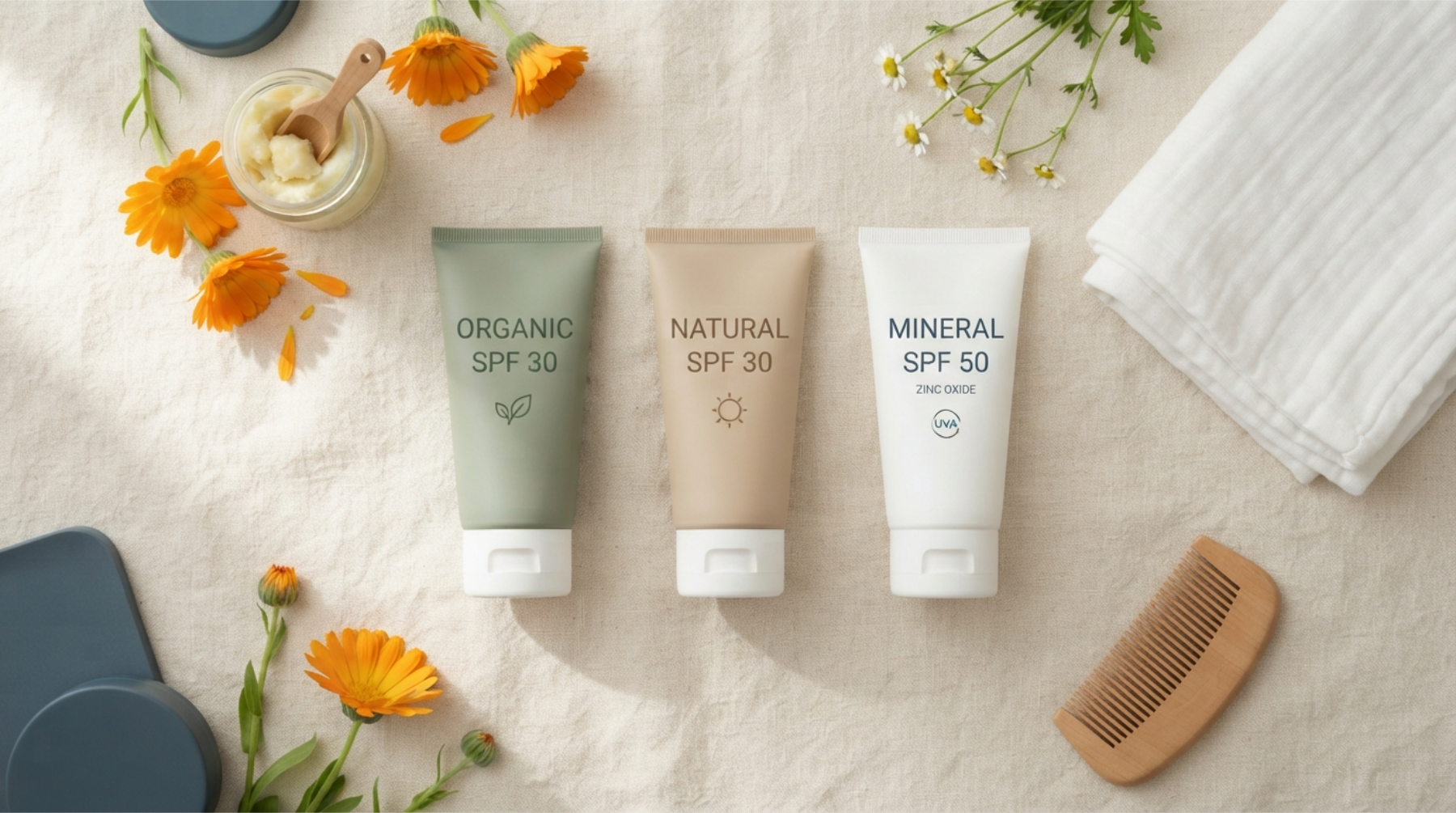

What Is Organic Baby Sunscreen?
Organic baby sunscreen is a sunscreen whose plant-based ingredients, such as sunflower oil, shea butter or calendula, were grown and processed under the USDA's organic rules. The USDA National Organic Program explains that personal care products made from agricultural ingredients can be certified, and that how much of the formula is organic decides which words the brand may print on the front.
Why the Sunscreen Part Can't Be Organic
Here is the detail most labels leave out. Zinc oxide and titanium dioxide, the minerals that actually block UV rays in a baby sunscreen, are not farmed, so they can never be certified organic. On a typical organic kids sunscreen, the plant oils and butters carry the organic claim while the zinc oxide sits on its own line under Active Ingredients. Some brands advertise a high organic percentage, so always look at what the sun protection itself is made of.
The “Organic Filter” Twist
To make it more confusing, scientists use organic in a completely different way. In chemistry, organic simply means a compound built on carbon. The Skin Cancer Foundation notes that the two families of sunscreen filters are often called chemical and mineral, but the more accurate scientific terms are organic and inorganic. So in a lab, the organic filters are the ones parents often try to avoid.
When a baby sunscreen says organic on the front, it almost always means certified organic plant ingredients, not organic filters. Checking the Active Ingredients line settles it in a second.
What Does Natural Baby Sunscreen Mean?
Natural baby sunscreen usually means a formula built on mineral filters with plant oils, butters and botanical extracts, and without synthetic fragrance or dyes. But natural is not a regulated term on skincare, so a brand decides for itself what it means. Two tubes labeled natural can have very different ingredient lists.
The FDA makes the key point plainly: where an ingredient comes from does not decide whether it is safe, and many plants, organic or not, can be toxic or trigger allergies. Natural and gentle are not the same thing.
Organic vs Natural vs Mineral Baby Sunscreen: Side by Side
The three labels are not competitors. The ideal baby sunscreen for many parents is all three at once: mineral filters for gentle protection, organic plant oils if that matters to you, and no fragrance. Mineral is the only one of the three that changes how the sunscreen protects, and our explainer on chemical vs mineral sunscreen covers that split in depth.
Is Organic Sunscreen Better for Babies?
Not automatically. An organic baby sunscreen protects exactly as well as its SPF, broad-spectrum claim and water-resistance rating say it does, and those depend on the mineral filters, not on how the oils were farmed. Organic ingredients mean fewer pesticide residues in the base, which some families care about, but they do not make a sunscreen gentler on their own.
Fragrance deserves extra attention, because natural and organic formulas often use essential oils for scent. The American Academy of Dermatology advises choosing fragrance-free rather than unscented products for children prone to eczema, since unscented items can still contain masking fragrance. If your baby has reacted to a sunscreen before, our guide to sunscreen allergy symptoms and causes explains how to find the ingredient behind it.
If you're weighing a pricier baby tube against the family bottle you already own, our breakdown of baby sunscreen vs regular sunscreen shows where the two really differ.
Chemical-Free, Non-Toxic and Reef-Safe: Baby Sunscreen Label Words Decoded
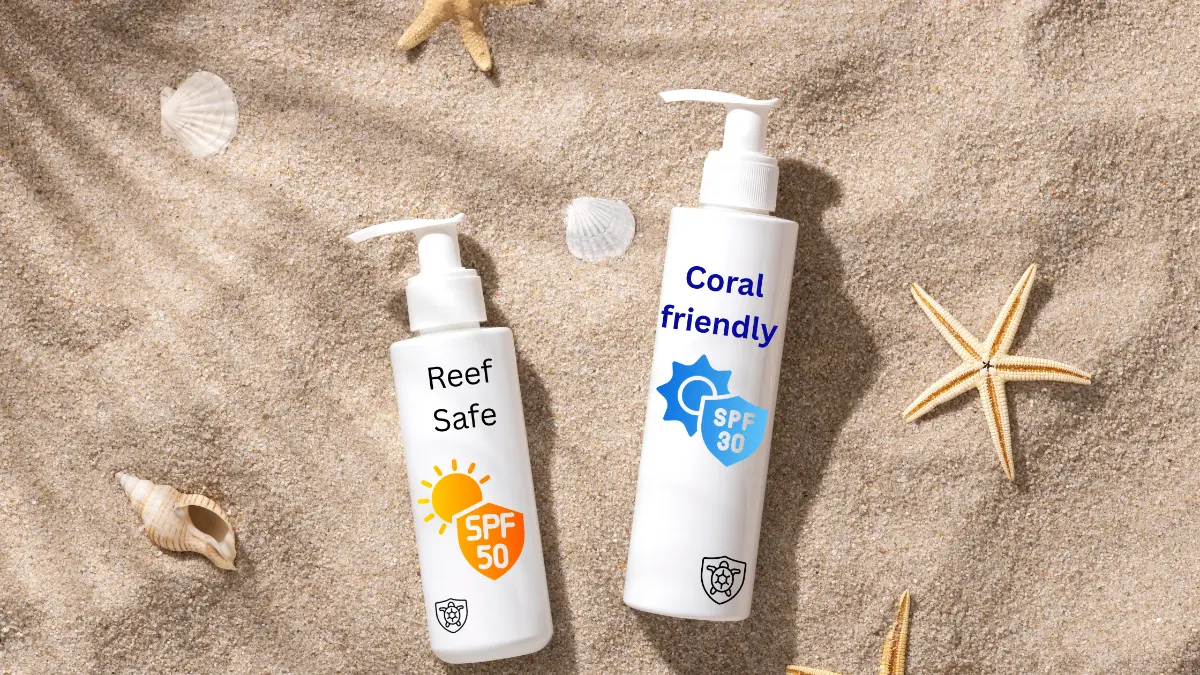
Organic and natural are not the only feel-good words on baby sunscreen. Here is what the other common claims mean in practice.
The reef-safe idea grew out of research on oxybenzone. A NOAA study found oxybenzone in Hawaii's Hanauma Bay at levels that can threaten its coral and seagrass, the same year the state's ban on oxybenzone and octinoxate sunscreens took effect. If you want the full story on that filter, see our breakdown of what oxybenzone does in sunscreen.
How to Read a Baby Sunscreen Label in 30 Seconds
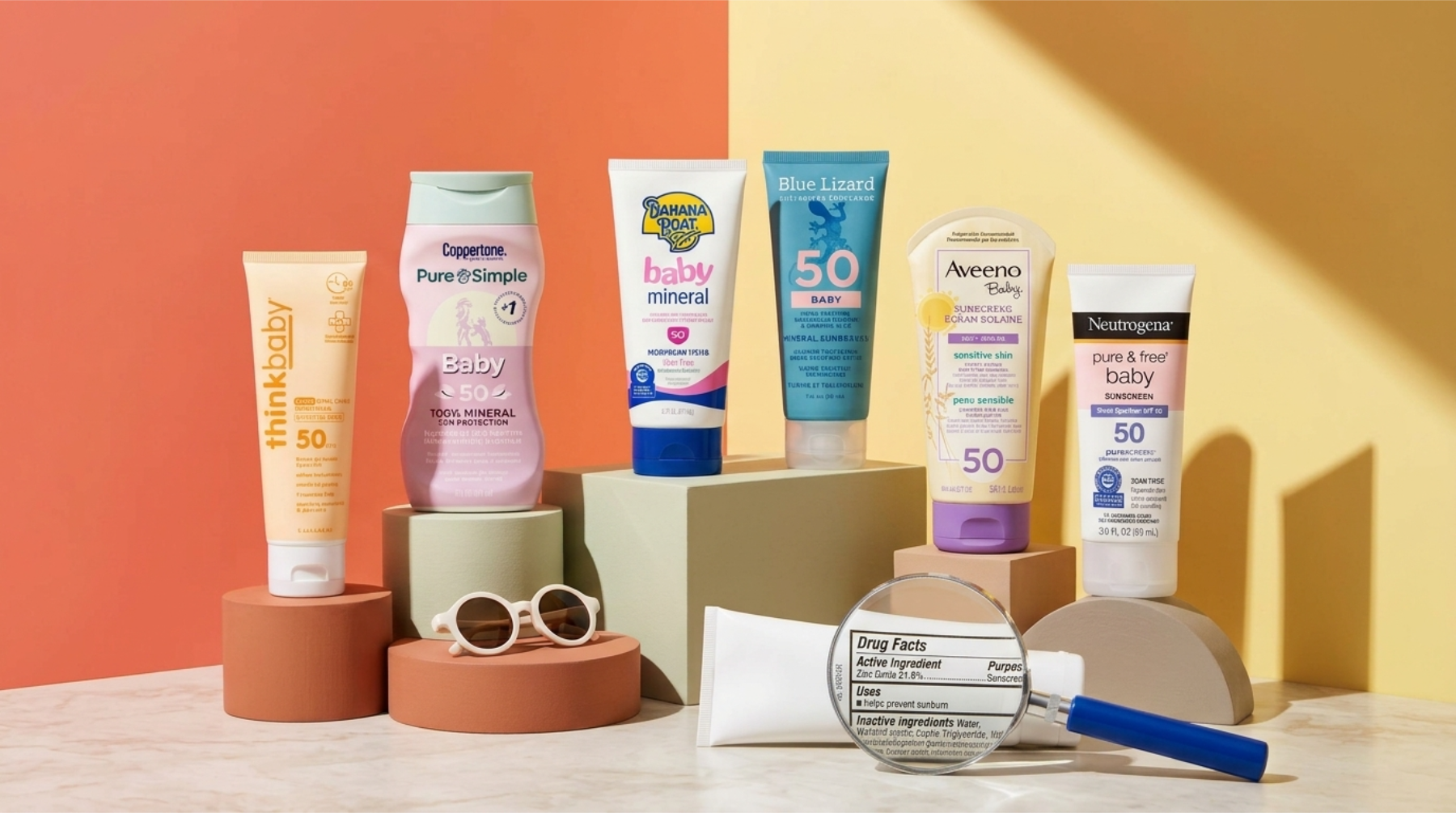
Skip the front of the tube and turn it around. The Drug Facts panel on the back tells you almost everything the front labels try to summarize.
Organic, Natural or Mineral: Which Should You Choose?
Start with mineral, because that is the part that protects. Then layer on organic or natural if they match what your family values.
Shopping for a newborn? Babies younger than 6 months need shade more than any formula, and our guide on when babies can start wearing sunscreen explains the 6-month rule. For ready-to-buy mineral picks sorted by age, the baby sunscreen roundup at the top of this page has 15 options, many of them organic or plant-based.

Frequently Asked Questions
Is organic sunscreen safe for babies?
Organic sunscreen is safe for babies 6 months and older when it uses mineral filters, carries a broad-spectrum SPF 30 to 50 and contains no added fragrance. The organic label itself covers only the plant ingredients, so it adds no extra safety on its own. Patch test any new formula on the inner arm and watch for redness over the next day.
Does natural sunscreen work as well as regular sunscreen?
Yes, if it carries the same lab-measured SPF and broad-spectrum claim. Every sunscreen sold in the US goes through the same SPF testing, so a natural mineral SPF 50 blocks as much UVB as any other SPF 50. What differs is texture: mineral formulas can feel thicker and leave a white cast, so rub them in well and reapply every two hours.
Can a sunscreen be 100% organic?
Not if it contains zinc oxide or titanium dioxide, which is nearly every baby sunscreen. Those minerals are not farmed, so they cannot be certified organic, and a formula built on them cannot carry a 100% organic label. Look instead for a USDA seal on the organic version, or the phrase made with organic ingredients, which means at least 70%.
Are essential oils safe in baby sunscreen?
Skip essential oils in baby sunscreen when you can. Oils like lavender, tea tree and citrus add scent and can irritate or sensitize young skin, especially if your baby has eczema. Natural and organic formulas use them more often than standard ones, so check the inactive ingredients and choose a product labeled fragrance-free rather than one that simply says unscented.
Is homemade natural sunscreen safe for babies?
No. Homemade sunscreens made with coconut oil, shea butter or zinc powder have no measured SPF, and the zinc rarely spreads evenly enough to protect. Your baby can burn under a layer you believe is working. Stick with a store-bought mineral sunscreen that lists broad-spectrum SPF 30 or higher, which has been lab-checked to meet that number.
Is mineral sunscreen the same as natural sunscreen?
Not quite. Mineral sunscreen means the UV filter is zinc oxide or titanium dioxide, which you can confirm on the Drug Facts label. Natural is a broader marketing word that usually includes mineral filters but can mean anything the brand chooses. A mineral sunscreen does not have to be natural, and a natural one should still be checked for mineral actives.
Is organic sunscreen better for kids with eczema?
Not by itself. For eczema-prone kids, the most important features are mineral filters and no fragrance or essential oils, whether or not the base is organic. Some organic formulas are rich in botanical extracts that can trigger a flare. A short-ingredient, fragrance-free mineral lotion is usually the safest place to start, ideally one your pediatrician or dermatologist recommends.