What Is Oxybenzone?
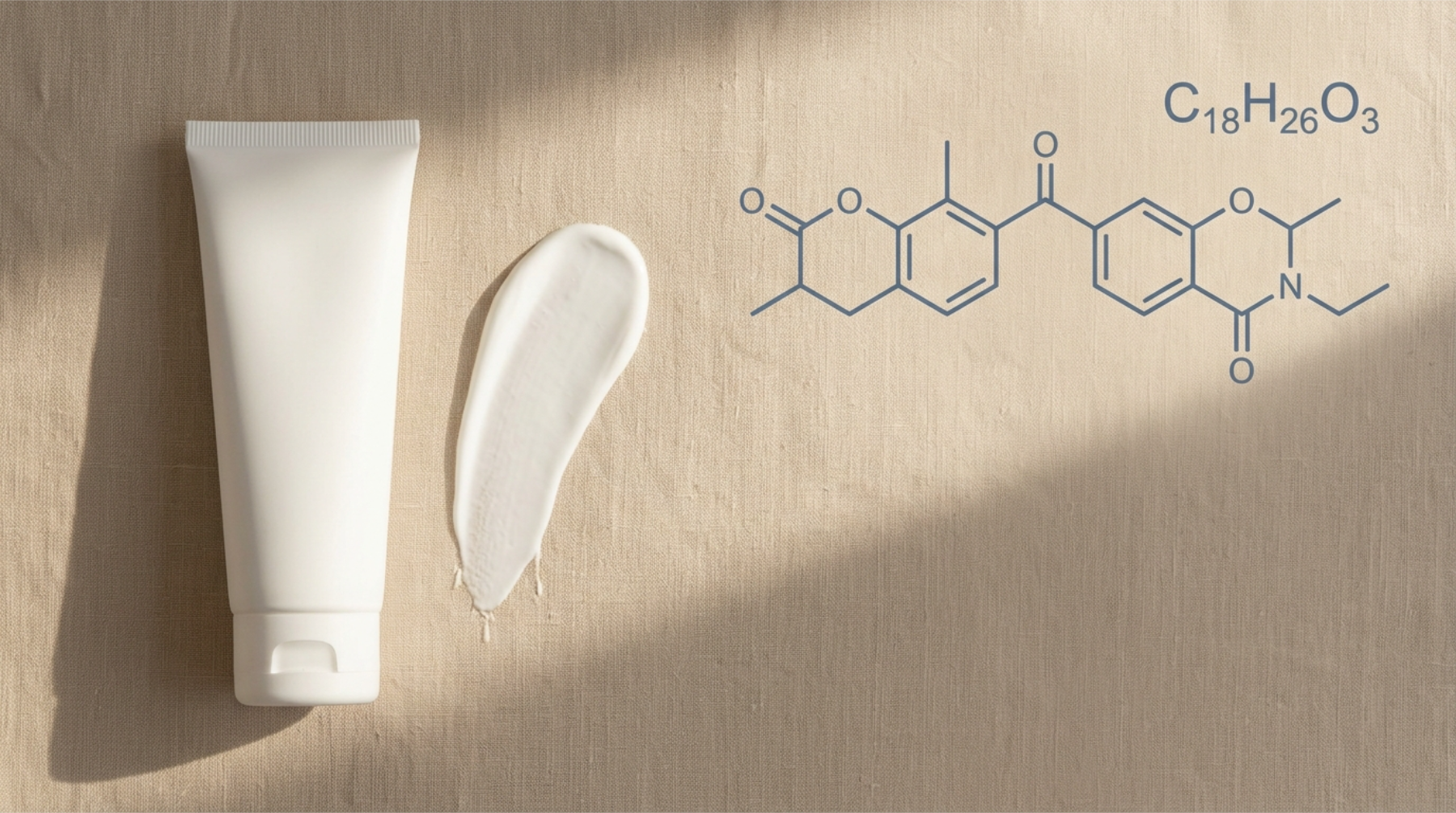
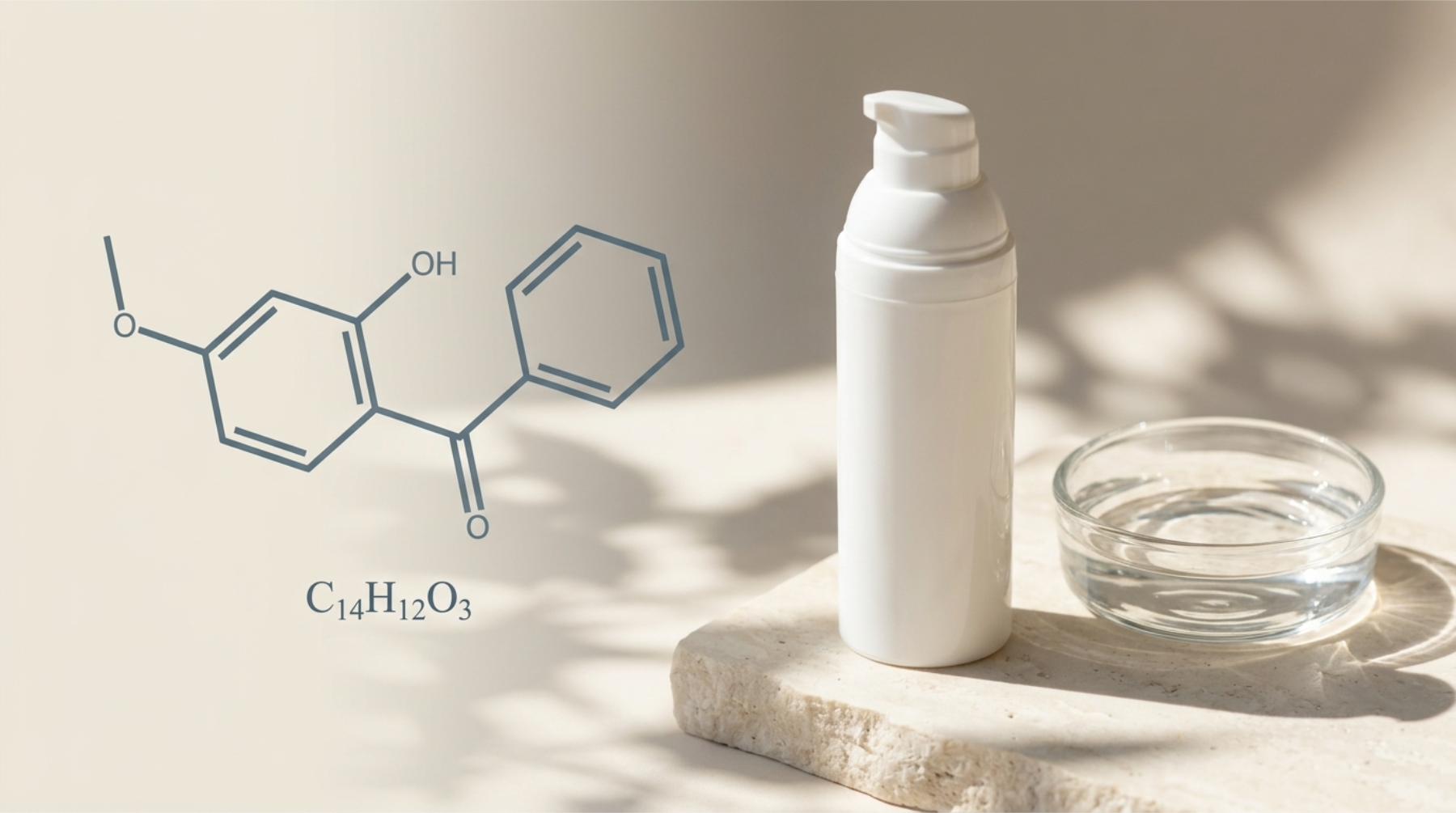
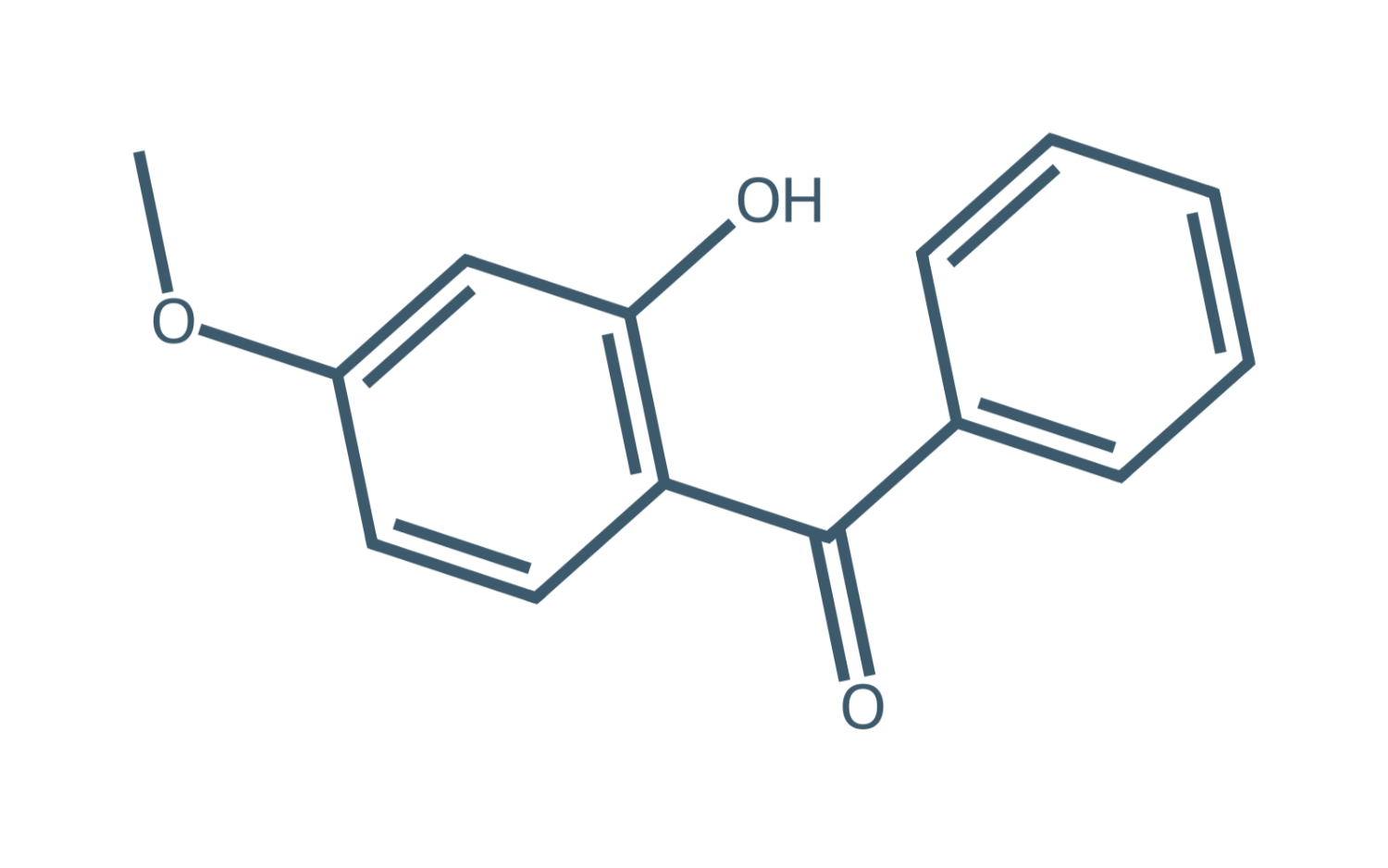
Oxybenzone belongs to the benzophenones, a family of compounds built around two carbon rings joined by a short bridge. That structure is what makes it useful: the rings and the bridge between them soak up ultraviolet energy and release it as a small amount of heat instead of letting it reach your skin cells.
Because it absorbs light rather than reflecting it, oxybenzone is a chemical filter, not a mineral one. On imported or European labels you'll often see it listed under its other name, benzophenone-3, and our sunscreen ingredients chart shows where it ranks among every filter sold in the US.
Why Is Oxybenzone in Plastics, Too?
The same trick that shields skin also shields products. Sunlight breaks down plastics, dyes and finishes over time, so manufacturers add oxybenzone to absorb UV before it reaches them. California's state biomonitoring program lists it in plastic packaging for some foods and household goods, added to "protect the products from sun damage".
Between sunscreen, cosmetics and packaging, exposure is close to universal. When CDC researchers analyzed urine samples from 2,517 Americans aged 6 and older, they found oxybenzone in 96.8% of them.
Europe is the only one of the three to set hard new limits. Under Regulation (EU) 2022/1176, products sold there since January 2023 must stay under the caps above and carry a warning label. In the US, oxybenzone is still sold at up to 6% while the FDA's review remains open.
EWG's Skin Deep entry sounds the mildest of the three, but the consumer advocacy group still won't allow oxybenzone in any product carrying its EWG Verified seal. Its scores are reviewed over time, so check the live page if you're comparing products.
Is Oxybenzone Safe? What the Research Says
Most of the worry about oxybenzone traces back to five research findings. The cards show how firm each one is; the sections below explain what it means for you.
How Much Oxybenzone Gets Into Your Body?
More than any other filter measured so far. In the FDA's 2020 study in JAMA, 48 adults applied sunscreen repeatedly over four days, and oxybenzone from a lotion reached an average peak of 258.1 ng/mL in the blood.
For comparison, octinoxate peaked at 7.9 ng/mL in the same study, roughly a thirtieth of oxybenzone's level, and dropped back below the threshold within about a week.
Does Oxybenzone Disrupt Hormones?
It can act like a weak estrogen in the lab, and that's the root of most "oxybenzone dangers" headlines. Health Canada notes that studies in lab animals and some human populations link it to skin allergy, effects on birth weight, and hormone disruption.
None of that proves normal sunscreen use harms people, but it's why oxybenzone is commonly the first filter dermatologists suggest skipping during pregnancy and for young children. In Europe, products containing it must now say so on the label.
Oxybenzone Allergy and Skin Side Effects
Skin reactions are the best-documented oxybenzone side effect. The American Contact Dermatitis Society named benzophenones its 2014 Contact Allergen of the Year, noting that benzophenone-3 "is the culprit in more photoallergic contact dermatitis reactions than any other UV filter available."
A photoallergic reaction looks like an itchy, red or blistering rash on sun-exposed skin that appears a day or two after applying sunscreen. If that sounds familiar, a fragrance-free mineral formula is the easiest fix, and a dermatologist can confirm the trigger with photopatch testing.
Does Oxybenzone Cause Cancer?
The most detailed cancer research comes from the US National Toxicology Program, which fed rats and mice oxybenzone every day for two years. In rats it reported "equivocal evidence" of cancer activity: malignant brain tumors called meningiomas in males, and more thyroid adenomas and uterine polyps in females. Mice showed no evidence of cancer activity at any dose.
Equivocal is the program's label for a marginal rise in tumors that may or may not be caused by the chemical. Eating oxybenzone daily for two years also isn't the same as wearing it on your skin, and no study has linked oxybenzone sunscreen to cancer in people.
What's well established is the other side of the equation: regular sunscreen use lowers skin cancer risk, so swapping to an oxybenzone-free formula is a better move than skipping sunscreen.
Oxybenzone and Coral Reefs: Where It's Banned
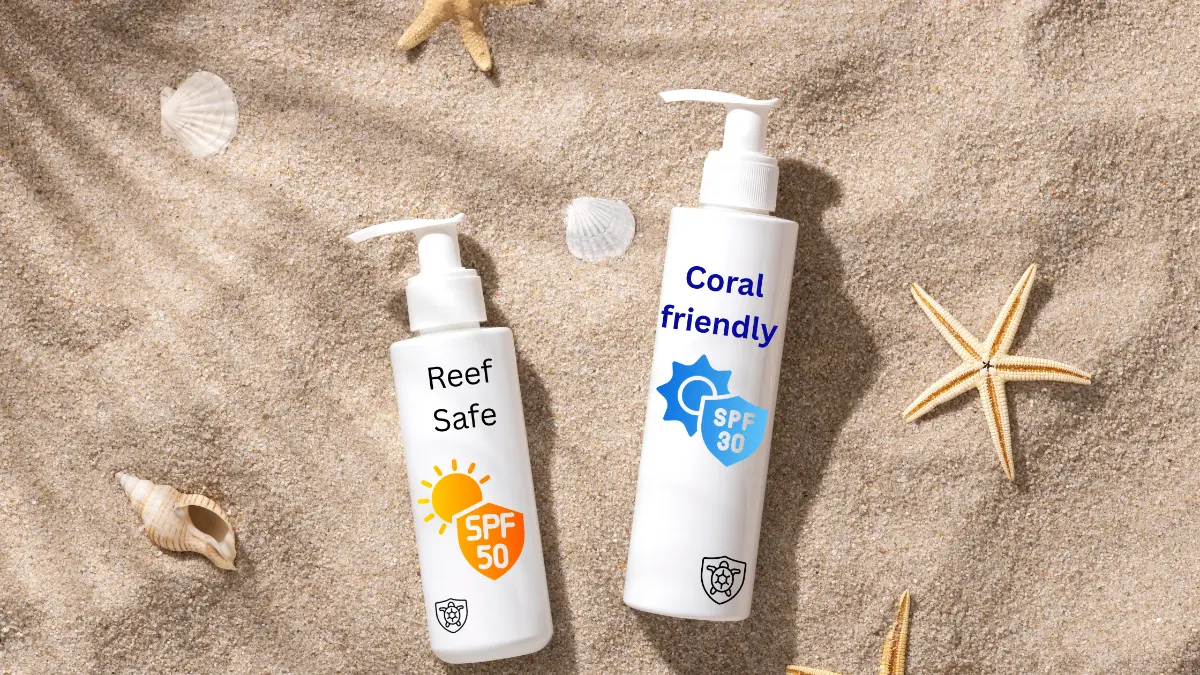
In a 2016 laboratory study, oxybenzone deformed coral larvae, bleached them and damaged their DNA, and it was far more toxic in light than in darkness. The same researchers measured it in the water at reef sites in Hawaii and the Virgin Islands. Rising sea temperatures do far more damage to reefs overall, but oxybenzone became the clearest sunscreen target for lawmakers.
Oxybenzone vs. Avobenzone and Octinoxate
These three names travel together on labels and in headlines, which is why they're so easy to mix up. Here's how they actually differ.
Is oxybenzone the same as avobenzone? No. Oxybenzone is a benzophenone, while avobenzone belongs to a separate group called dibenzoylmethanes, and they protect against different parts of the UV spectrum. Avobenzone has its own open questions, but it absorbed far less in the same FDA study (7.1 ng/mL from lotion) and isn't on Hawaii's banned list.
Which Products Contain Oxybenzone?
Many sunscreen brands have reformulated without oxybenzone, but it hasn't disappeared, and it shows up well beyond the beach bag. These are the product types where you're most likely to find it.
We don't publish a list of sunscreen brands with oxybenzone because formulas change often, sometimes without a new name on the bottle. The ingredient label on the version in your hand is the only list that's always current.
How to Find an Oxybenzone-Free Sunscreen
Oxybenzone-free sunscreen simply means the formula doesn't use oxybenzone as a UV filter. Confirming it takes three quick checks.
A sunscreen without oxybenzone and avobenzone is almost always a mineral formula, since those two were the standard UVB and UVA pair in American chemical sunscreen. The same goes for most oxybenzone and octinoxate free sunscreen sold as "reef-friendly."


Oxybenzone Myths vs. Facts
Frequently Asked Questions About Oxybenzone
What is oxybenzone used for?
Oxybenzone is used as a UV filter. In sunscreen, it absorbs UVB and short-wave UVA rays before they reach your skin. Manufacturers also add it to lip balms, makeup with SPF, fragrances, nail polish and plastic packaging, where it keeps colors and materials from breaking down in sunlight. On European labels it may appear under its other name, benzophenone-3.
Is oxybenzone bad for you?
Oxybenzone hasn't been shown to harm people at sunscreen doses, but it has more open questions than any other common filter. It absorbs into the body at high levels, acts like a weak estrogen in lab studies, and causes more sun-triggered skin allergies than any other UV filter. If those trade-offs bother you, plenty of oxybenzone-free sunscreens protect just as well.
Why is oxybenzone banned in Hawaii?
Hawaii banned sunscreens containing oxybenzone or octinoxate starting January 1, 2021, to protect its coral reefs. Lab research found oxybenzone can deform and bleach coral larvae and damage their DNA, and it has been measured in the water at Hawaiian reef sites. Sunscreens with oxybenzone can still be sold there with a prescription, but regular stores can't stock them.
Does oxybenzone cause cancer?
There's no evidence that oxybenzone in sunscreen causes cancer in people. A two-year National Toxicology Program study that fed it to rats found an uncertain, "equivocal" signal for brain, thyroid and uterine growths, while mice given oxybenzone showed no evidence of cancer activity. Regular sunscreen use lowers skin cancer risk, so if you're concerned, switch to a mineral formula rather than skipping SPF.
Is oxybenzone safe during pregnancy?
There's no proof that oxybenzone harms a pregnancy, but it's commonly the first filter dermatologists suggest skipping while pregnant. It reaches the bloodstream at high levels, behaves like a weak estrogen in lab research, and some human studies link exposure to changes in birth weight. Zinc oxide and titanium dioxide formulas avoid the question, and your OB-GYN or dermatologist can help you choose one.
What is another name for oxybenzone?
Oxybenzone's most common other name is benzophenone-3, often shortened to BP-3. Its full chemical name is 2-hydroxy-4-methoxybenzophenone. US labels usually say oxybenzone, while European and many imported products list benzophenone-3 and must state "Contains Benzophenone-3" on the packaging. All of these names refer to exactly the same ingredient.
Which sunscreens don't have oxybenzone?
Every mineral sunscreen is oxybenzone-free, since mineral formulas rely on zinc oxide and titanium dioxide alone. Many chemical sunscreens have also dropped it, so the reliable way to tell is to read the Active ingredients box on the Drug Facts label rather than the front of the bottle. Our sunscreens for sensitive skin are a good place to start if you've reacted to oxybenzone before.