What Is Zinc Oxide?
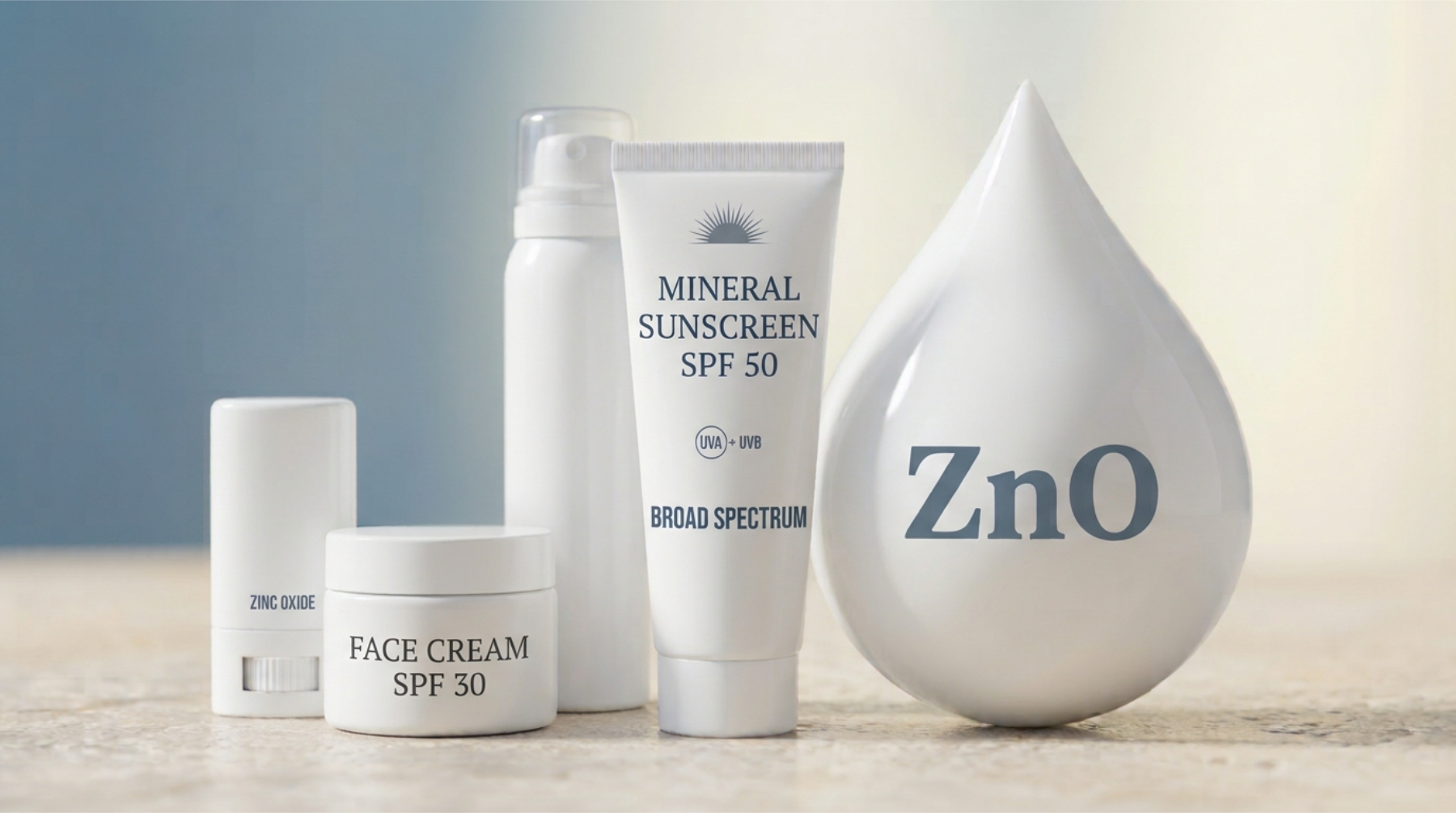
Zinc oxide is a white mineral powder made from zinc and oxygen. In skincare it does two jobs: it shields skin from ultraviolet light, and it forms a protective layer over irritated skin. That second job is why the same ingredient shows up in a baby's diaper cream and in a dermatologist's favorite SPF.
On a sunscreen label it's listed under Active Ingredients, often on its own and sometimes alongside titanium dioxide. Because it's a mineral rather than a lab-made chemical filter, a formula that relies on it is called a mineral or physical sunscreen. In its current sunscreen review, the FDA proposed that zinc oxide sunscreens be recognized as safe and effective at concentrations up to 25%.
How Does Zinc Oxide Work in Sunscreen?
Zinc oxide particles form a thin film on top of your skin. When UV light hits that film, the particles absorb most of it and reflect and scatter the rest, so far less reaches the living cells underneath. That's the main difference from chemical sunscreens, which are absorbed into the upper layers of skin and turn UV energy into heat there.
Is zinc oxide a good sunscreen? Yes. It's the only single sunscreen ingredient sold in the US that covers the whole UVA and UVB range, which is why a short label that lists only zinc oxide can still carry a broad-spectrum claim.
Is Zinc Oxide Safe? What the FDA and Research Say
The short answer is yes, and the evidence is more consistent for zinc oxide than for almost any other sunscreen filter. Here's how the main reviews line up.
Does Zinc Oxide Absorb Into Your Skin?
Not in any meaningful amount. A 2020 study in the Journal of Biomedical Optics used advanced microscopy on human volunteers and found strong evidence that zinc oxide nanoparticles didn't penetrate the skin, across different skin types and ways of applying it. That's a clear contrast with chemical filters such as oxybenzone, which has been measured in the bloodstream at far higher levels.
Is Zinc Oxide Toxic?
Not on your skin. The concern people run into online is usually about breathing in fine particles or swallowing large amounts, not about applying sunscreen. A tiny amount of dissolved zinc can be absorbed, but zinc is also a mineral your body needs, and sunscreen use isn't linked to zinc toxicity.
Does Zinc Oxide Cause Cancer?
No study has linked zinc oxide sunscreen to cancer in people. Searches for "zinc oxide carcinogen" often mix it up with titanium dioxide, the other mineral filter, which carries a warning only for breathing in loose powder. Wearing sunscreen consistently cuts your skin cancer risk, and zinc oxide is one of the gentlest ways to do it. Our full sunscreen ingredient breakdown ranks it against every other filter.
Zinc Oxide Side Effects
Zinc oxide sunscreen side effects are mostly about how it looks and feels, not about your health. These are the ones worth knowing.
Does zinc oxide dry out skin? It can, a little, which is also why it's helpful on oily or irritated skin. If a mineral SPF leaves your face tight, apply moisturizer first and let it sink in for a few minutes. If you get a rash rather than dryness, our sunscreen allergy guide explains how to find the ingredient behind it.

Nano vs. Non-Nano Zinc Oxide
Nano zinc oxide is ground into particles smaller than 100 nanometers so it spreads clear instead of white. Non-nano particles are larger and leave more of a cast. Both protect your skin, and the differences come down to looks, sprays and the ocean.
Is nano zinc oxide safe? On your skin, yes. The European Commission's scientific committee on consumer safety found no evidence that zinc oxide nanoparticles are absorbed through the skin and judged them safe at up to 25%, while ruling out their use in sprays. Is non-nano zinc oxide safe? Yes, and it's the more cautious choice if you swim near reefs or use spray formulas.
Zinc Oxide vs. Titanium Dioxide
Titanium dioxide is the other mineral filter, and the two often appear together. They're both considered safe in lotions, but they don't protect in quite the same way.
Is titanium dioxide in sunscreen safe? In lotions and creams, yes. The worry comes from animal studies of inhaled titanium dioxide dust, which led California to list airborne titanium dioxide particles as a possible carcinogen. That warning covers loose powders and some sprays, not sunscreen you rub in. If you want the broadest UVA coverage from a single mineral, zinc oxide is the stronger pick.
Zinc Oxide Benefits for Skin
Beyond sun protection, zinc oxide is one of the gentlest ingredients you can put on reactive skin. That's why the white stripe of thick zinc paste became a lifeguard signature, and why it still shows up on noses, ears and shoulders at the beach.
The American Academy of Dermatology suggests mineral formulas when skin is easily irritated and for young children, because zinc oxide and titanium dioxide rarely cause a reaction. If your skin reacts to almost everything, a zinc-only formula without fragrance is a smart place to start.
What Else Is Zinc Oxide Used For?
Zinc oxide uses go well beyond sunscreen. Under federal skin protectant rules, it's approved at 1 to 25% in products that protect and soothe irritated skin.
What is zinc oxide good for in skincare, then? Mostly protection: from the sun, from moisture and friction, and from irritation. It doesn't treat wrinkles on its own, but by blocking UVA every day it helps prevent new ones.
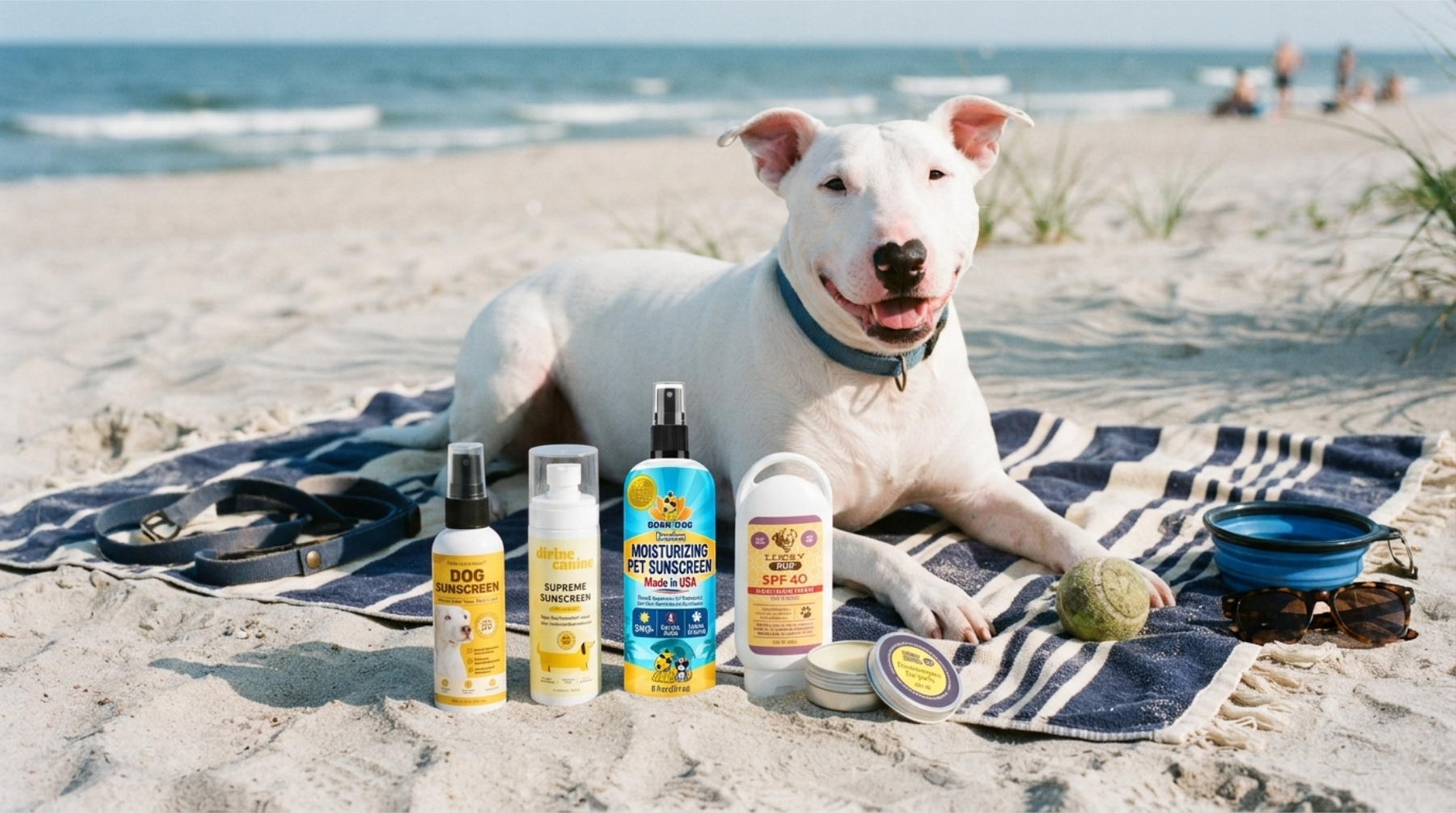
One place zinc oxide doesn't belong is your dog's nose. Dogs lick off whatever you put on them, and swallowed zinc oxide can upset their stomach, which is why sunscreens made for dogs use titanium dioxide or other filters instead.
How Much Zinc Oxide Should Sunscreen Have?
US sunscreens can contain up to 25% zinc oxide. More zinc generally means more protection and more white cast, but the percentage alone doesn't tell you the SPF, because particle size and the rest of the formula change how well it spreads.
What is the SPF of zinc oxide? Zinc oxide doesn't have a fixed SPF of its own. The same percentage can test differently in a thin lotion and a thick stick, which is why every sunscreen has to be tested as a finished product.
How to Choose a Zinc Oxide Sunscreen
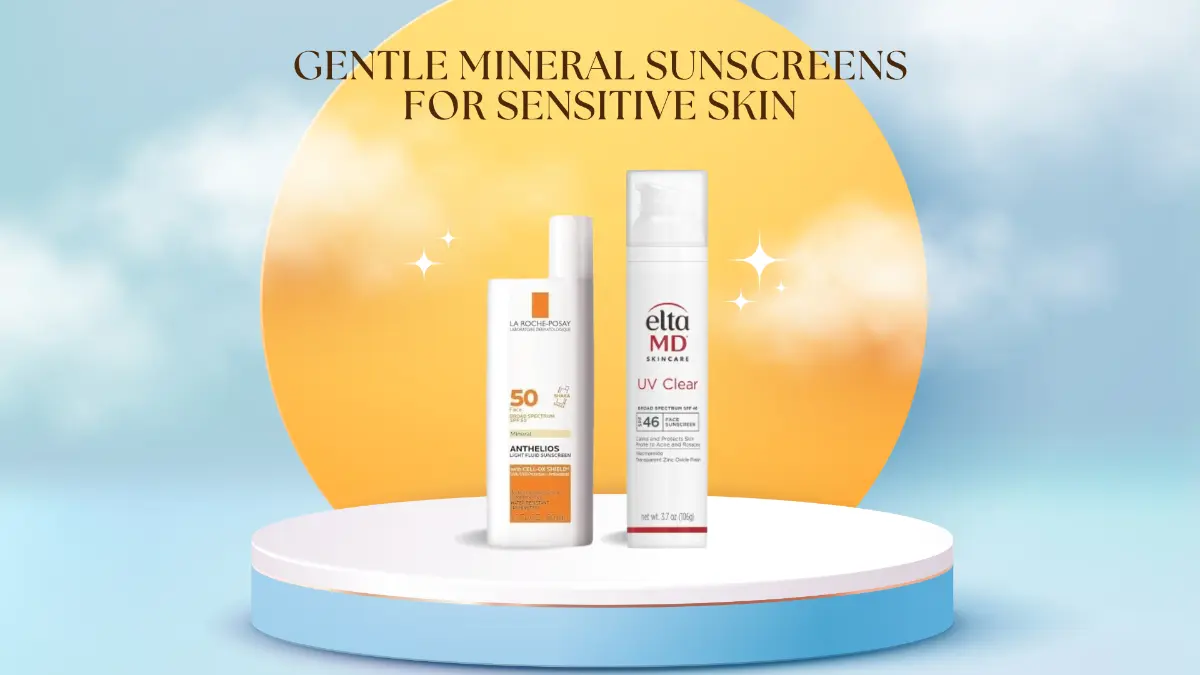
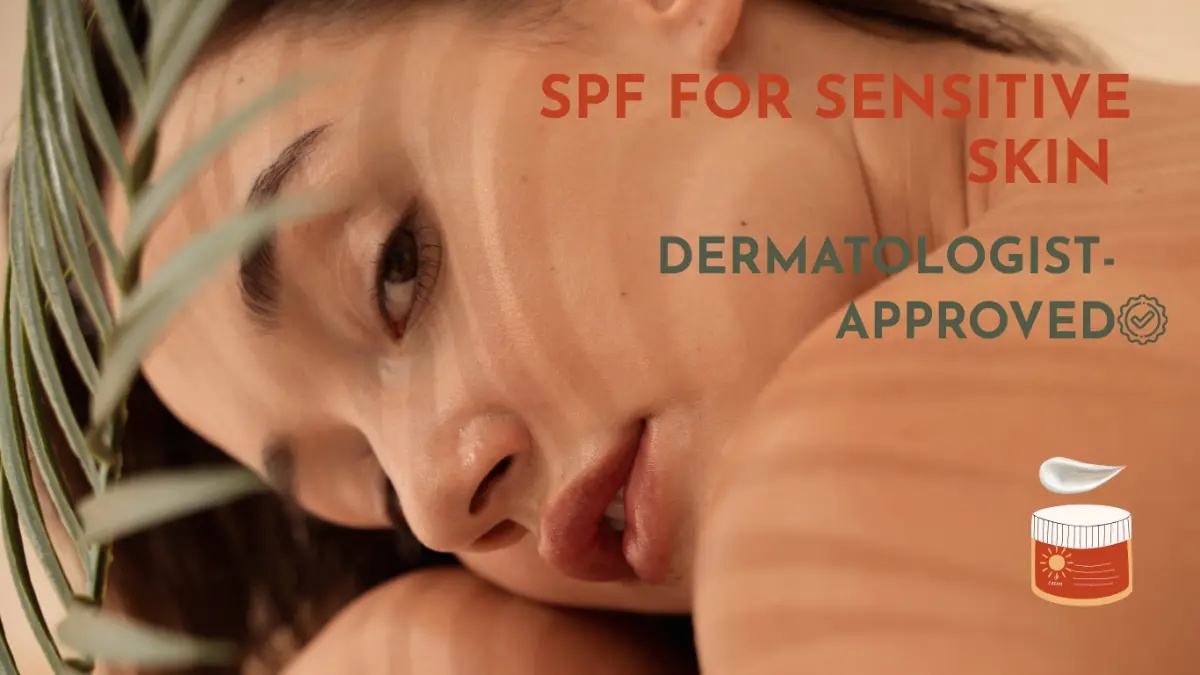
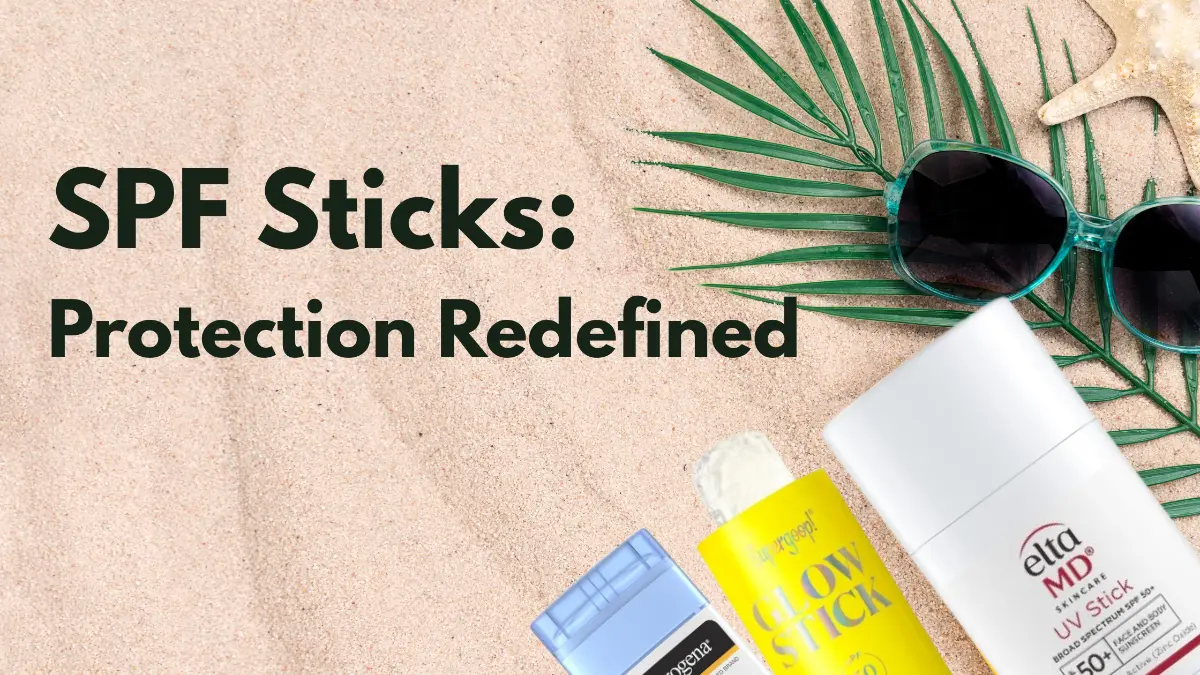
If you're shopping for your face, the edit above covers sheer and tinted options. For sensitive skin or quick touch-ups, these two are good next stops.
Frequently Asked Questions About Zinc Oxide
Can you use diaper cream as sunscreen?
No. Diaper creams often contain a lot of zinc oxide, but they're made and labeled as skin protectants, not sunscreens. They haven't been tested for SPF, so you have no way of knowing how much UV protection they give or how evenly they cover. For sun protection, use a product labeled with an SPF and a broad-spectrum claim.
Can you put zinc oxide on a sunburn?
Zinc oxide sunscreen helps prevent sunburn, but it isn't a treatment for one. On burned skin, cool it with a damp cloth or a cool shower, then use a gentle moisturizer such as aloe. Thick ointments can trap heat in fresh sunburn. Once the skin has calmed, a zinc oxide sunscreen is a gentle way to protect it while it heals.
Is zinc oxide safe during pregnancy?
Yes. Zinc oxide sunscreens are a common choice during pregnancy because the mineral stays on the skin's surface instead of being absorbed. There's no evidence that zinc oxide sunscreen harms a pregnancy. Bring the label to your next prenatal visit if you'd like a second opinion on a specific product.
Is zinc oxide sunscreen safe for babies?
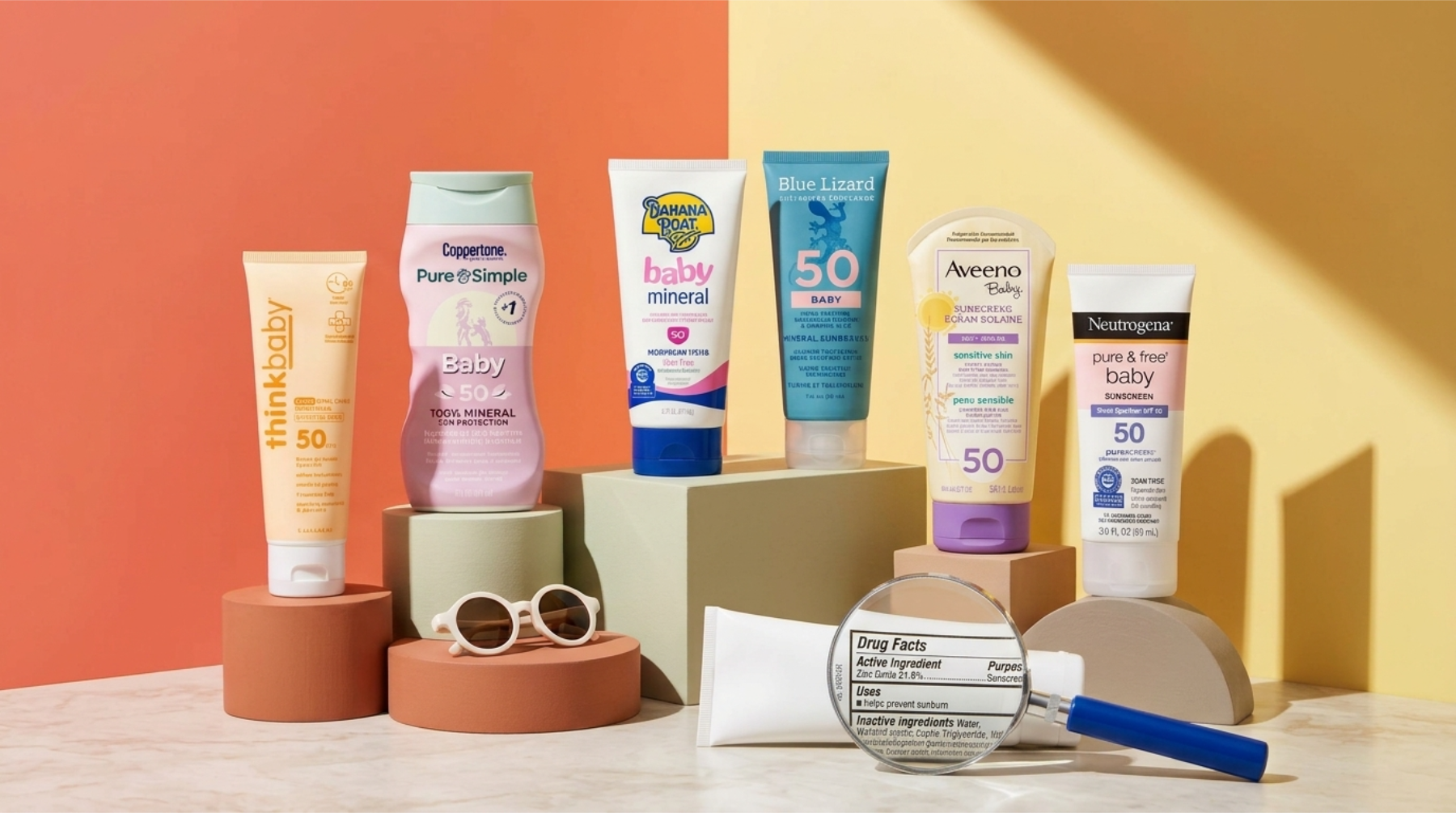
For babies 6 months and older, a zinc oxide sunscreen is the usual first choice because it's gentle and stays on the skin. For babies younger than 6 months, keep them in the shade and in protective clothing, and ask your pediatrician before using any sunscreen. Our mineral sunscreens for babies and kids are a good place to compare formulas.
Is zinc oxide reef safe?
Zinc oxide is much less of a concern than oxybenzone and octinoxate, the filters Hawaii banned. In a 2018 lab study, uncoated zinc oxide nanoparticles caused coral bleaching, so non-nano zinc oxide is the safer pick for reef trips. Our reef-safe sunscreen picks focus on non-nano mineral formulas.
Can you use zinc oxide sunscreen on your face every day?
Yes. Zinc oxide is gentle enough for daily use on most skin types, including sensitive and acne-prone skin. Pick a lightweight or tinted formula so it wears comfortably under makeup and doesn't leave a white cast. Reapply every two hours when you're outside, and after swimming or sweating.