
How We Checked Each Baby Sunscreen
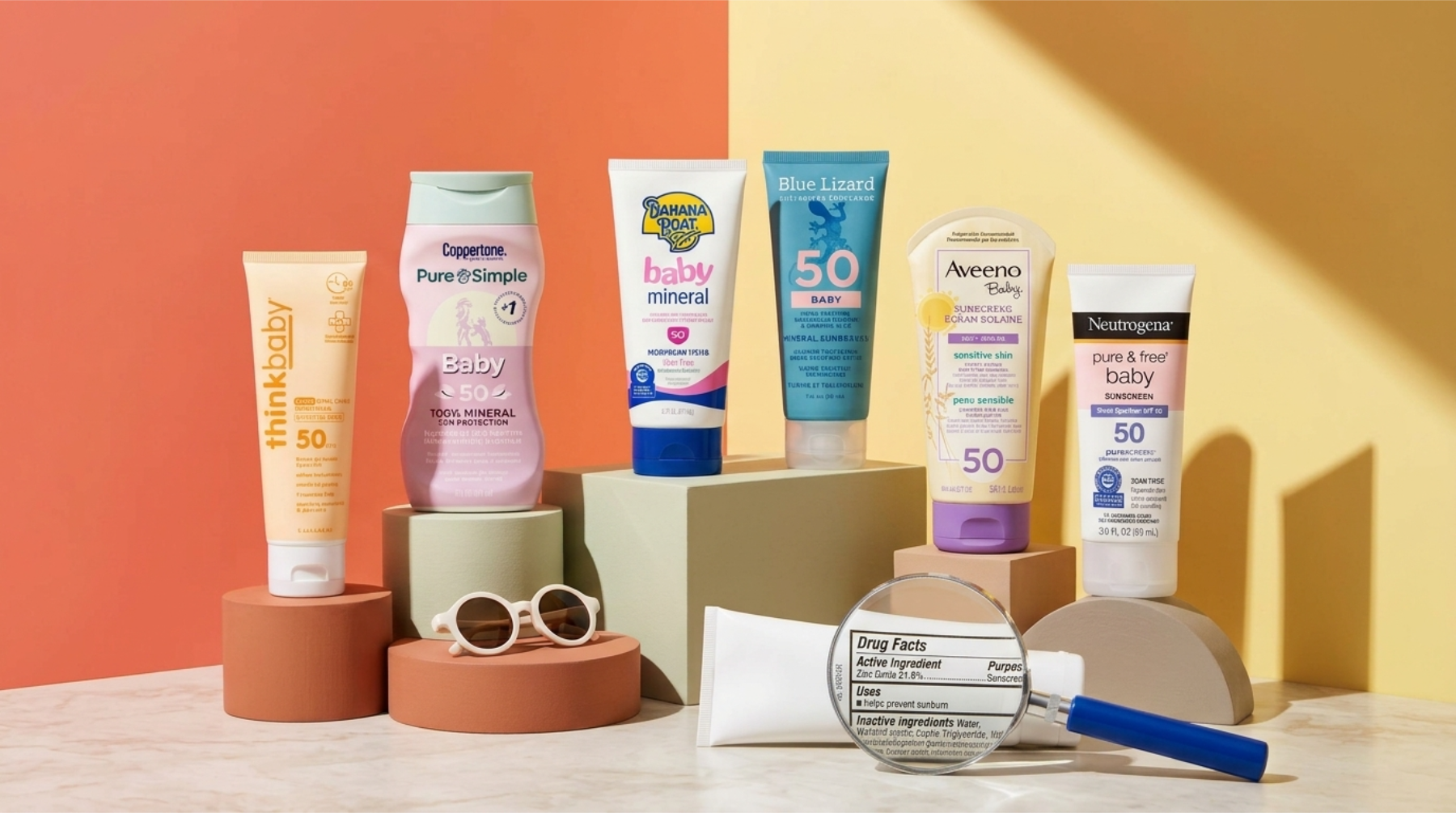
No single source answers whether a sunscreen is safe. The FDA rules on ingredients but does not rate brands, EWG rates brands but does not run lab tests, and seals only cover the products a brand submits. So we read each brand's own Drug Facts label first, then checked it against every source below.
All six products are labeled for babies 6 months and older and tell you to ask a doctor for anything younger, which our guide to when babies can start wearing sunscreen explains in detail. We looked at the lotion each brand sells for babies, since lotions are what pediatric groups suggest over sprays.
Here is how the six brands line up across those sources at a glance. Each brand section below has the full details.
Is Aveeno Baby Sunscreen Safe?
Yes, Aveeno Baby Continuous Protection is one of the gentlest drugstore options we checked. According to Aveeno's own Drug Facts, it relies on 21.6% zinc oxide as its only active ingredient and leaves out fragrance, parabens and phthalates. It is also listed in the National Eczema Association's Seal of Acceptance directory.
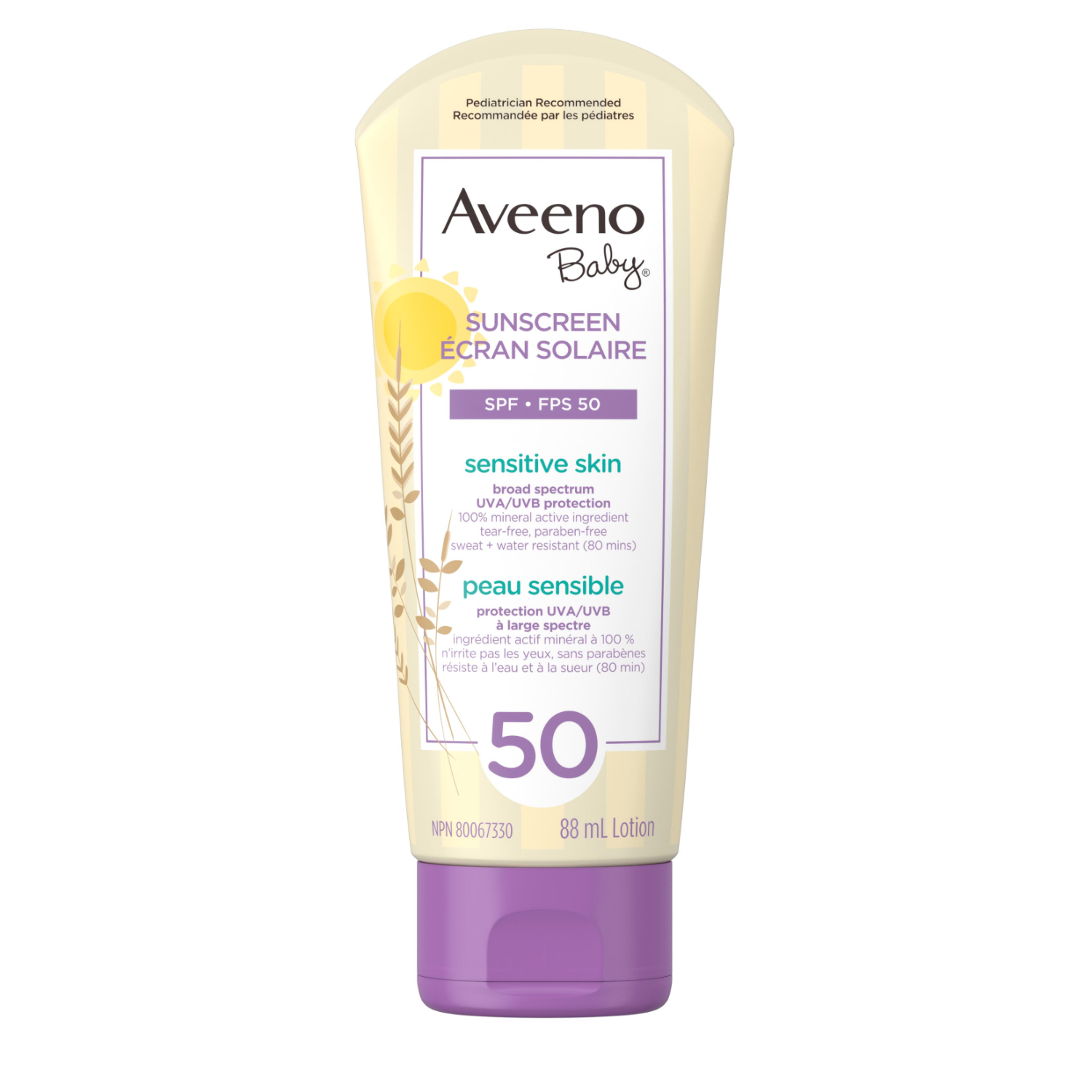
Aveeno Baby Continuous Protection Sensitive Skin Lotion SPF 50
Zinc oxide mineral formula, fragrance-free
Buy on AmazonPhysical or chemical? Physical. Zinc oxide is the only active, so it sits on top of the skin rather than absorbing into it. Does it leave a white film? A light one, which is normal at this much zinc and fades as you rub it in. Does it clog pores? The label does not claim non-comedogenic, so it is a better fit for bodies than for an oily, breakout-prone face. Is it reef safe? It skips oxybenzone and octinoxate, the two filters Hawaii banned, though reef safe is not a regulated term.
If you remember Aveeno Baby Natural Protection, Aveeno's baby sunscreen lineup now lists only the Continuous Protection lotion, its matching face stick and an SPF 30 daily face lotion.
Is Neutrogena Baby Sunscreen Safe?
Yes. Neutrogena Pure & Free Baby uses the same 21.6% zinc oxide as Aveeno Baby, and the inactive ingredient lists are nearly identical, because both brands now belong to the same parent company, Kenvue. The main difference is that Aveeno adds oat flour. Neutrogena's product page also lists hypoallergenic and tear-free claims and the National Eczema Association seal.
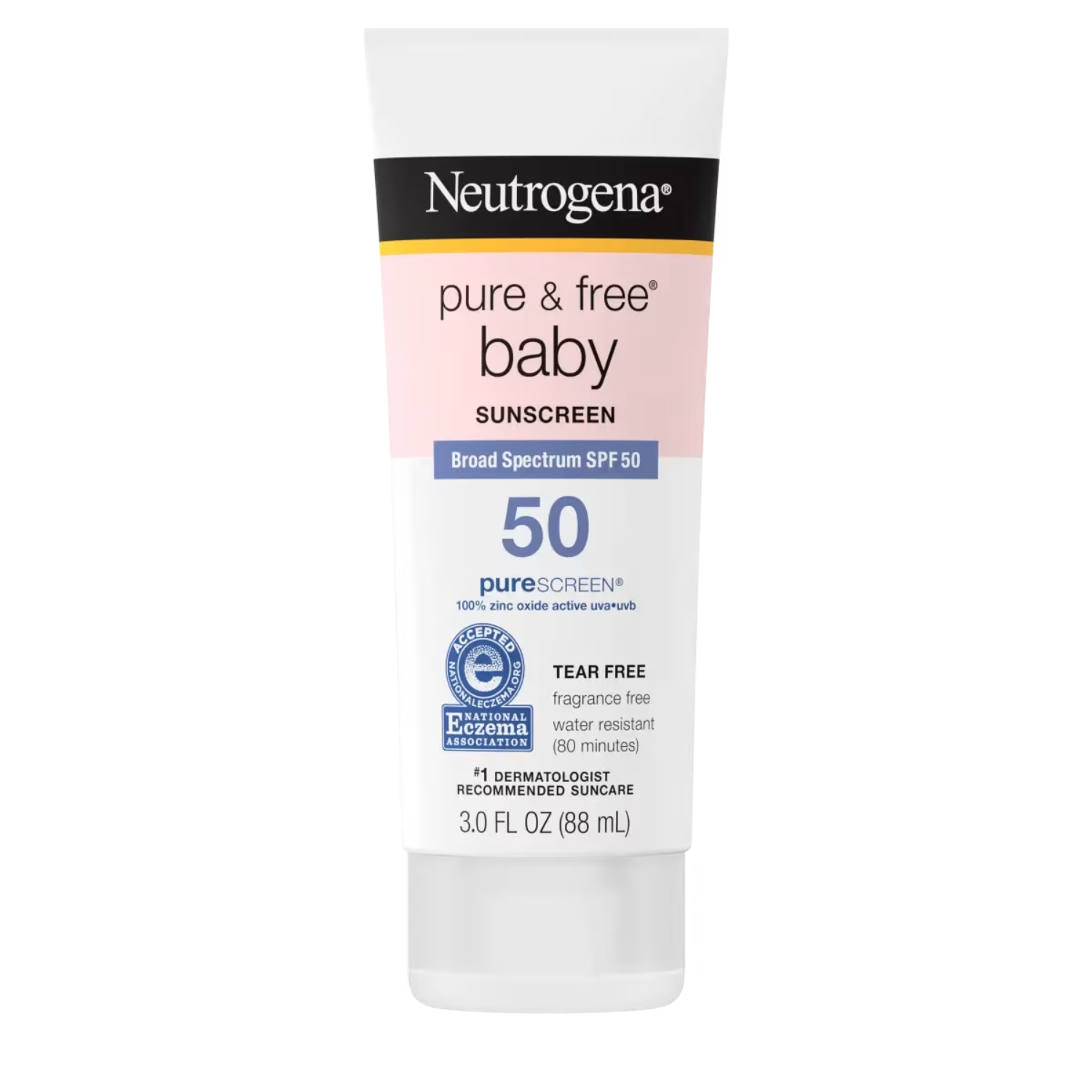
Neutrogena Pure & Free Baby Mineral Sunscreen SPF 50
Zinc oxide mineral formula, fragrance-free
Buy on AmazonNeutrogena’s 2021 recall, announced in Johnson & Johnson’s recall notice, covered four adult aerosol sprays: Beach Defense, CoolDry Sport, Invisible Daily Defense and Ultra Sheer. No baby lotion was included. Since the two formulas match so closely, choosing between Neutrogena and Aveeno baby sunscreen mostly comes down to price and whether you want the oat.
Is Banana Boat Baby Sunscreen Safe?
The mineral one is. Banana Boat Baby 100% Mineral Lotion pairs 6.5% zinc oxide with 4.5% titanium dioxide, has no added fragrance, and carries both the National Eczema Association seal and the Skin Cancer Foundation's recommendation. Its lower mineral load also makes it one of the lighter, less chalky options here.

Banana Boat Baby 100% Mineral Lotion SPF 50+
Zinc oxide and titanium dioxide, no added fragrance
Buy on AmazonMost of the searches for Banana Boat baby sunscreen ingredients come from parents who have also seen the brand in recall headlines. That 2022 recall, covered by ABC7 News, pulled three batches of Hair & Scalp Sunscreen Spray SPF 30 after benzene was detected. Banana Boat also sells kids sprays and sport formulas with chemical filters, so read the active ingredients box before assuming any Banana Boat bottle is mineral.
Is Coppertone Baby Sunscreen Safe?
It depends on which Coppertone you buy, because the brand sells two very different baby lotions. Pure & Simple Baby is a mineral formula with 24.08% zinc oxide, no fragrance and a tear-free claim. Water Babies uses four chemical filters, avobenzone, homosalate, octisalate and octocrylene, and lists fragrance among its ingredients.
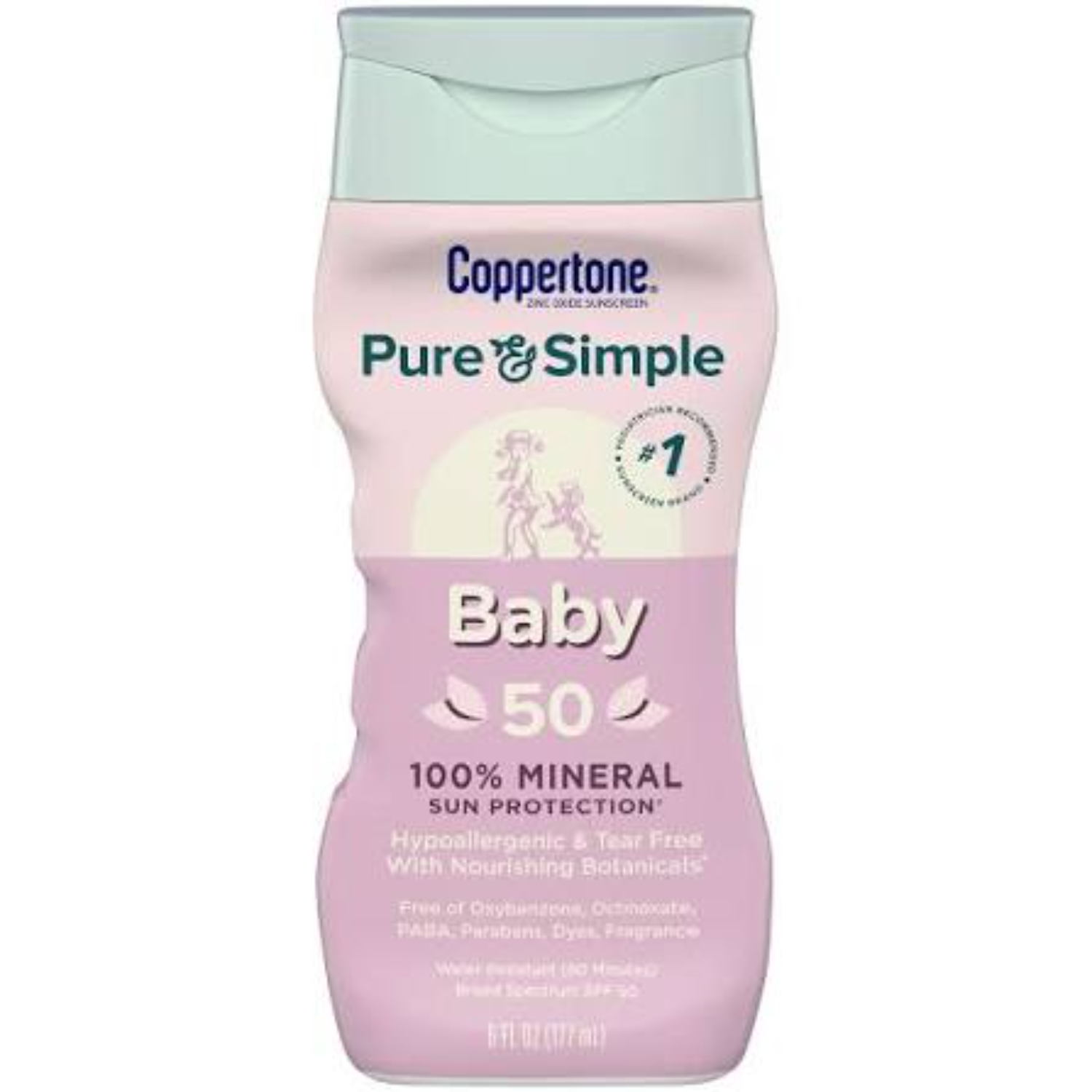
Coppertone Pure & Simple Baby Mineral Sunscreen SPF 50
The mineral Coppertone baby lotion, fragrance-free
Buy on AmazonThe Pure & Simple recall matters if you buy sprays. The company's recall notice, posted by the FDA covered 12 lots of five aerosol sprays in September 2021, including three lots of Pure & Simple Baby SPF 50 spray, after benzene was found. The lotion was not part of it.
Water Babies tells a different story. In its 2026 lab ratings of more than 100 sunscreens, Consumer Reports gave Water Babies Lotion SPF 50 the highest possible overall score, as WRAL reported, so it protects well. The trade-off is the ingredient list: pediatric groups lean toward mineral filters and no fragrance for babies, which Water Babies does not offer.
Is Thinkbaby Sunscreen Safe?
Yes, on ingredients alone it is one of the simplest formulas here. Thinkbaby Safe Sunscreen uses 20% zinc oxide and leaves out parabens, phthalates, avobenzone and oxybenzone. The brand says it is third-party verified gluten-free and Leaping Bunny certified for no animal testing.
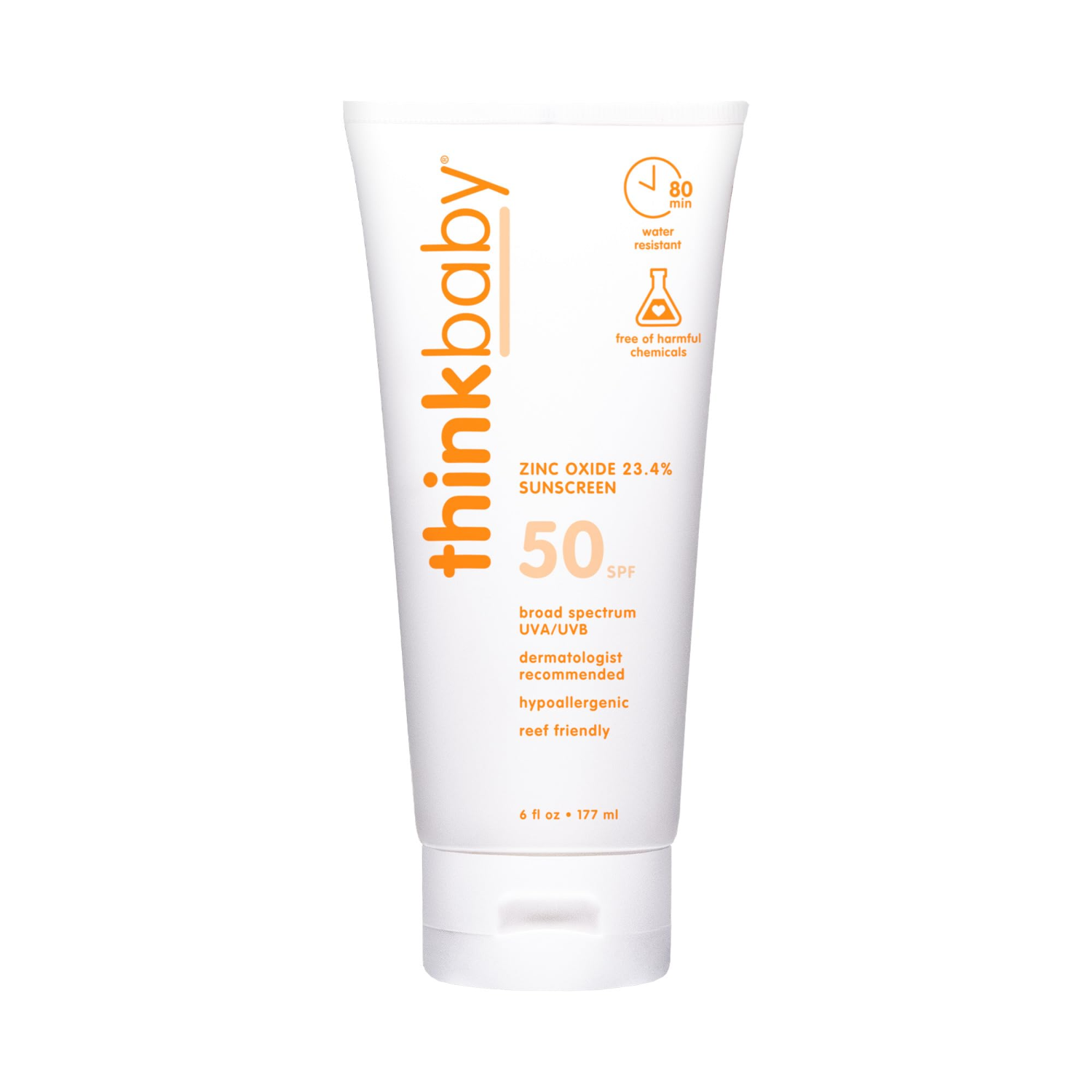
Thinkbaby Safe Sunscreen SPF 50+
Zinc oxide mineral formula, water resistant 80 minutes
Buy on AmazonThe one caution is the botanical list. Sunflower, jojoba, olive, raspberry and cranberry seed oils, plus pine resin, are all plant ingredients that can bother skin prone to eczema or contact allergies. If your child reacts easily, patch test a small amount on the inner arm first, as our guide to sunscreen allergy walks through.
Thinkbaby also sells a separate Sensitive Skin SPF 50 lotion in a different bottle. That version is labeled fragrance-free, uses non-nano zinc oxide and swaps the long fruit-oil list for chamomile and shea butter, which makes it the better Thinkbaby pick for eczema-prone skin.
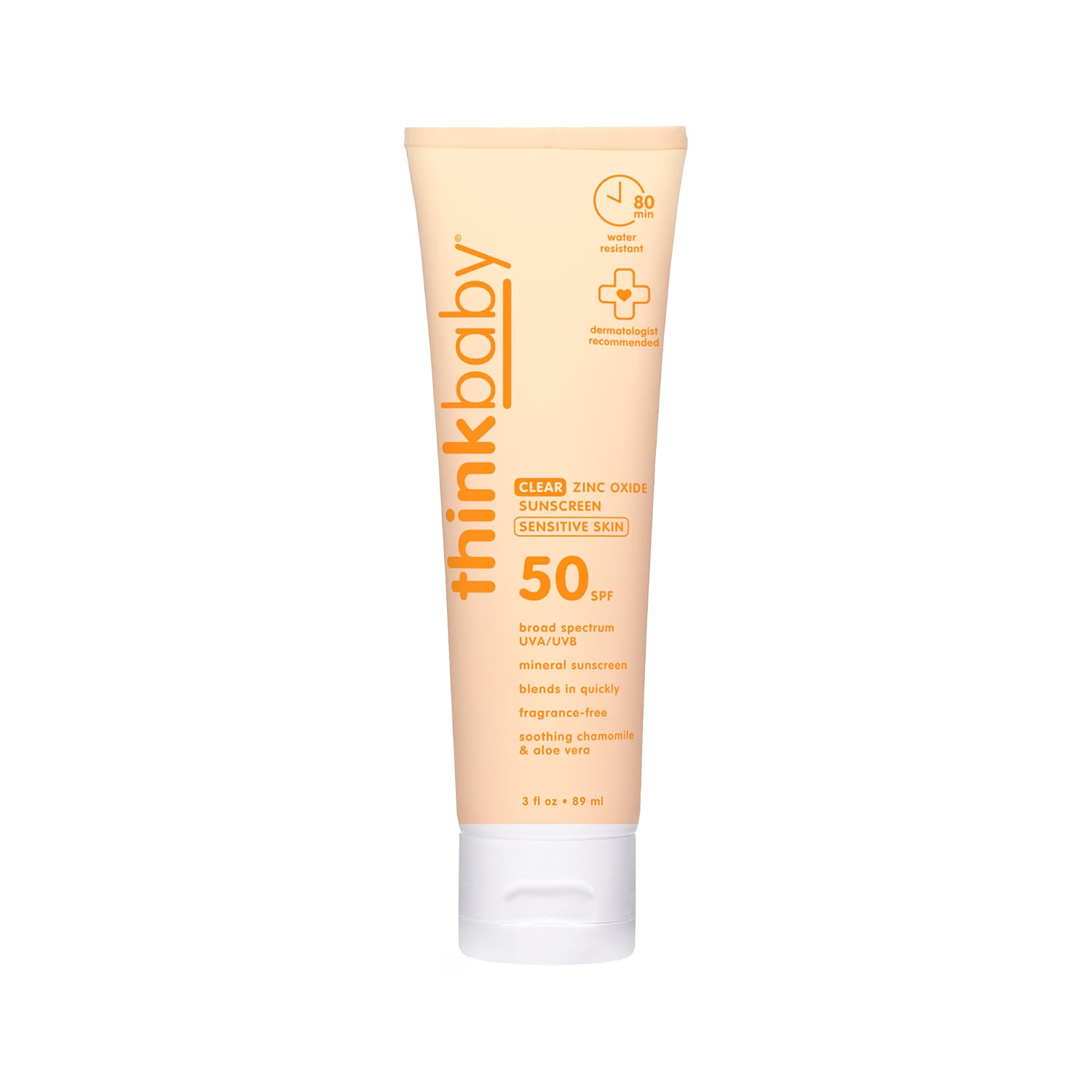
Thinkbaby Baby Sunscreen for Sensitive Skin SPF 50
Non-nano zinc oxide with chamomile and shea butter
Buy on AmazonIs Blue Lizard Baby Sunscreen Safe?
Yes. Blue Lizard Baby combines 10% zinc oxide with 8% titanium dioxide, lists no fragrance or parabens and skips oxybenzone and octinoxate, according to Blue Lizard's product page. Its signature Smart Cap turns pink in UV light, a simple reminder that the sun is strong enough to need sunscreen.
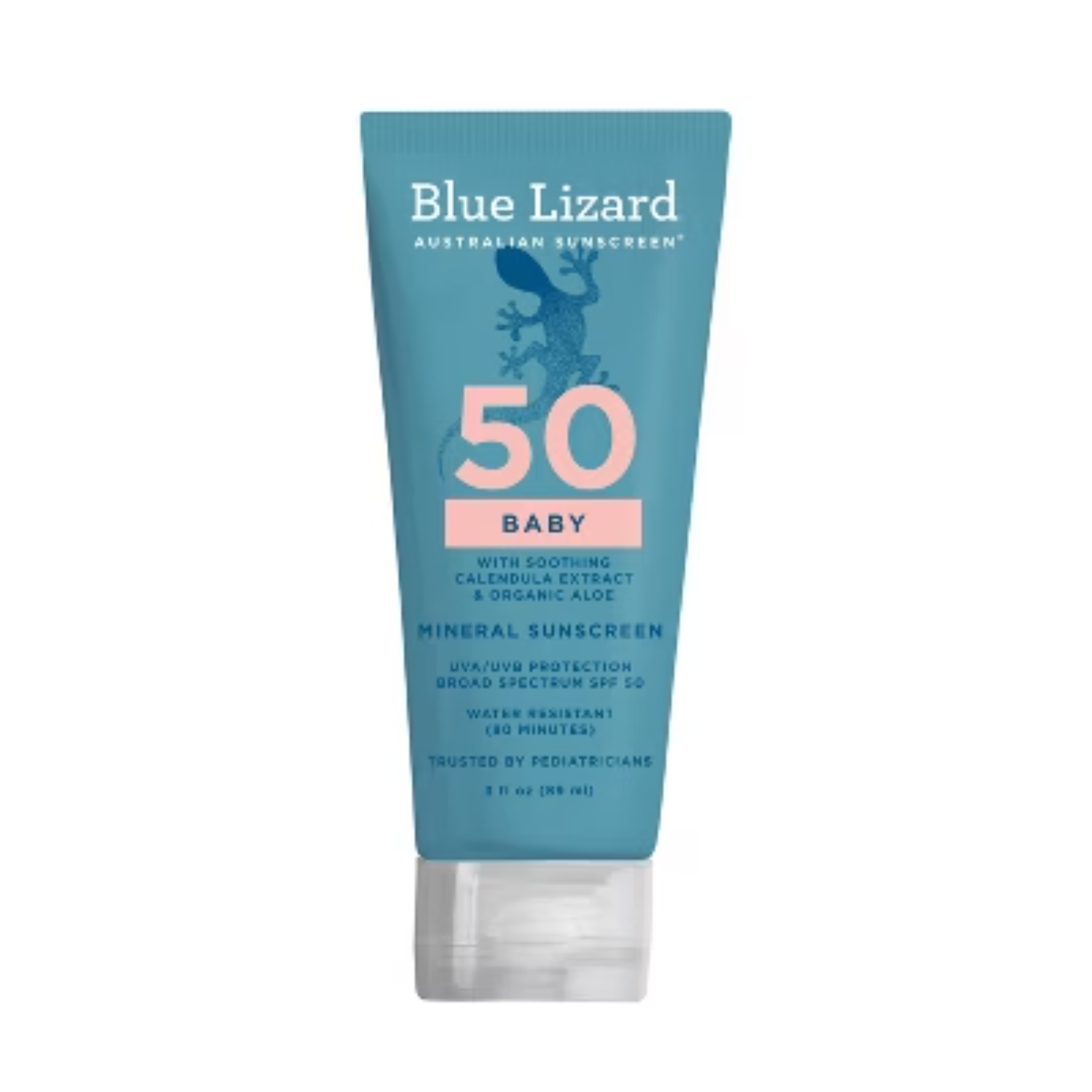
With 18% mineral filters in total, it lands between Banana Boat's lighter feel and Aveeno's thicker coverage. It is also one of the pricier tubes per ounce in this group.
Aveeno vs Neutrogena vs Thinkbaby and More: Side by Side
Most comparison searches pit two of these brands against each other. Since five of the six lotions share mineral filters, the real differences are how much mineral they use and what else sits in the base.
Aveeno vs Neutrogena: close to the same lotion, so buy whichever costs less. Thinkbaby vs Aveeno: Thinkbaby swaps silicones for plant oils, which some parents prefer and some eczema-prone skin does not tolerate. Aveeno vs Babyganics: check the Babyganics label first, since the brand has sold both mineral and chemical versions.
What Do EWG Sunscreen Ratings Mean?
EWG's ratings are the most searched safety scores for baby sunscreen, so it helps to know how they work. According to its published methodology, EWG does not lab-test products. It scores each sunscreen from its ingredient list and published data, weighing ingredient health concerns alongside estimated UVA and UVB protection and how stable the formula is, and it updates the guide every year.
A low-concern EWG score pairs well with a seal or a clean recall history. A product that is missing from EWG's top lists is not automatically unsafe, as dermatologists often point out.
Have Baby Sunscreens Been Recalled?
Yes, but every recall among these brands involved aerosol sprays. The wave started in May 2021, when the independent lab Valisure screened 294 batches from 69 companies and found benzene, a contaminant linked to cancer, in 78 of them. The same screening found trace benzene, under 0.1 ppm, in one batch of Aveeno Baby lotion, which was never recalled.
If you keep older sprays at home, compare the lot number on the can with the recall notice before using it. For babies and toddlers, a lotion or stick is the simpler choice anyway, since it avoids both the inhalation risk and the aerosol recall history.
Baby Sunscreen Ingredients to Avoid
The American Academy of Pediatrics recommends avoiding oxybenzone when possible, because of concerns about mild hormonal effects, and favors zinc oxide or titanium dioxide for babies. It also stresses that any sunscreen is better than none. Beyond that, a few label red flags are worth knowing.
Homosalate and octocrylene, two of the filters in Coppertone Water Babies, are still under FDA review, and our breakdown of safe sunscreen ingredients covers where the science stands. For more on oxybenzone itself, see what oxybenzone does in sunscreen.
Frequently Asked Questions
Is it okay to use a chemical sunscreen like Coppertone Water Babies on a baby?
It is allowed for babies 6 months and older, but it is not the first choice. Pediatric groups prefer zinc oxide or titanium dioxide for babies because mineral filters are less likely to irritate skin. If a chemical sunscreen is all you have on a sunny day, use it, since any broad-spectrum sunscreen is better than none, and switch to a mineral lotion next time.
Are spray sunscreens safe for babies?
Sprays are best kept off babies and toddlers. A child can breathe in the mist, it is hard to tell whether you covered every spot, and every benzene recall from 2021 and 2022 involved aerosol sprays. If you do use a spray on an older child, spray it into your hands first and rub it on, keeping it well away from the face.
What should I do if my baby eats sunscreen?
Wipe out their mouth, give a few sips of water and call Poison Control at 1-800-222-1222. A small lick of a lotion usually causes nothing worse than mild stomach upset, but the experts there can tell you what to watch for based on the product and amount. Call 911 right away if your child has trouble breathing, is very sleepy or has a seizure.
Is baby sunscreen gluten-free?
Some are, but few say so. Thinkbaby states that its formula is third-party verified gluten-free, while Aveeno Baby contains oat flour and does not make a gluten-free claim. Gluten on the skin is not a concern for most children, but babies put their hands in their mouths, so families managing celiac disease often choose a sunscreen that is clearly labeled gluten-free.
Where is the expiration date on baby sunscreen?
Look on the crimped end of the tube, the bottom of the bottle or near the Drug Facts box. Sunscreens are made to last at least three years, so a product without a printed date should still work for about three years after you buy it. Write the purchase date on the bottle, and toss any sunscreen that has separated or changed smell.
Does nano zinc oxide in baby sunscreen absorb into the skin?
Current research suggests it stays on the surface. Studies of nano zinc oxide on intact skin show the particles remain in the outer layer rather than passing into the body. Some parents still prefer non-nano zinc, like Thinkbaby's, for extra reassurance, and most brands do not say which they use. Our zinc oxide explainer covers the research in more detail.
What does the National Eczema Association seal mean on sunscreen?
It means the product was reviewed and judged suitable for people with eczema or sensitive skin, largely by screening for ingredients known to irritate. Brands apply for it, so a missing seal does not mean a sunscreen is harsh. Aveeno, Neutrogena and Banana Boat baby lotions carry it. Even with a seal, patch test first if your child reacts easily.