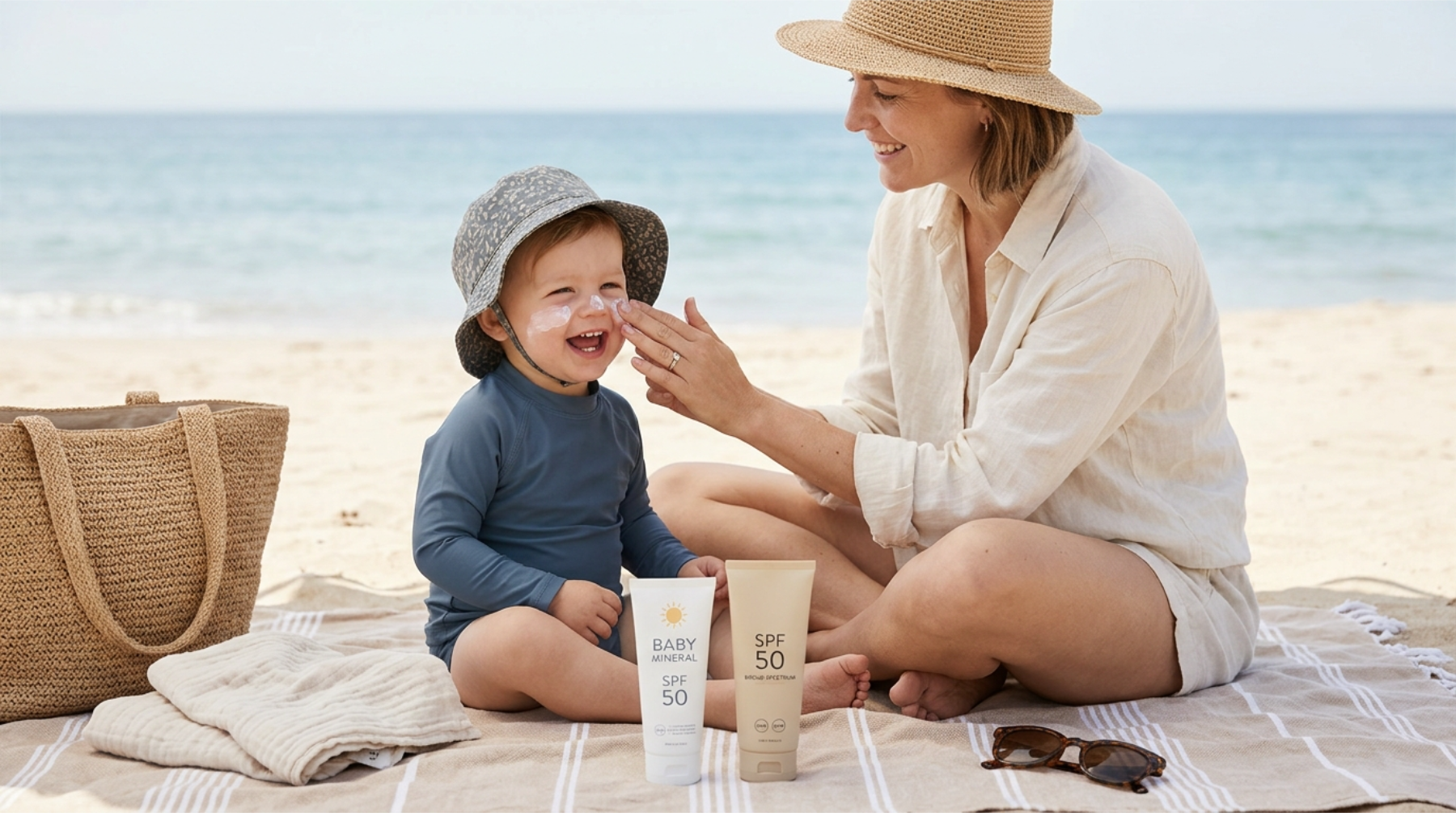

Baby Sunscreen vs Regular Sunscreen: What's Actually Different
Every sunscreen sold in the US is an over-the-counter drug, and the baby ones play by the same rulebook as yours. The U.S. Food and Drug Administration requires the same SPF and broad-spectrum testing for every bottle, allows water-resistance claims only as 40 or 80 minutes, and does not let any brand call its formula waterproof. There is no separate test a product has to pass to be sold as baby sunscreen.
So the real differences sit in the ingredient list, not the protection level. If the filter types themselves are new to you, our chemical vs mineral sunscreen guide covers how each one works.

Is Baby Sunscreen Just Marketing?
Partly, yes. A 2025 study in the Journal of the American Academy of Dermatology looked at 94 bestselling sunscreens in Amazon's baby category: 91% carried a baby-friendly claim, a phrase with no agreed meaning, and about one in four did not use mineral filters at all. The same products averaged $11.53 per ounce.
The formulas do tend to be gentler, though. A 2026 comparison published in the journal Dermatology found that baby creams, both conventional and organic, contain significantly fewer ingredients and fewer allergens than standard adult creams. In short, the word baby guarantees nothing, but the products behind it usually lean simpler.
Here is how the claims you will see on both kinds of bottles break down.
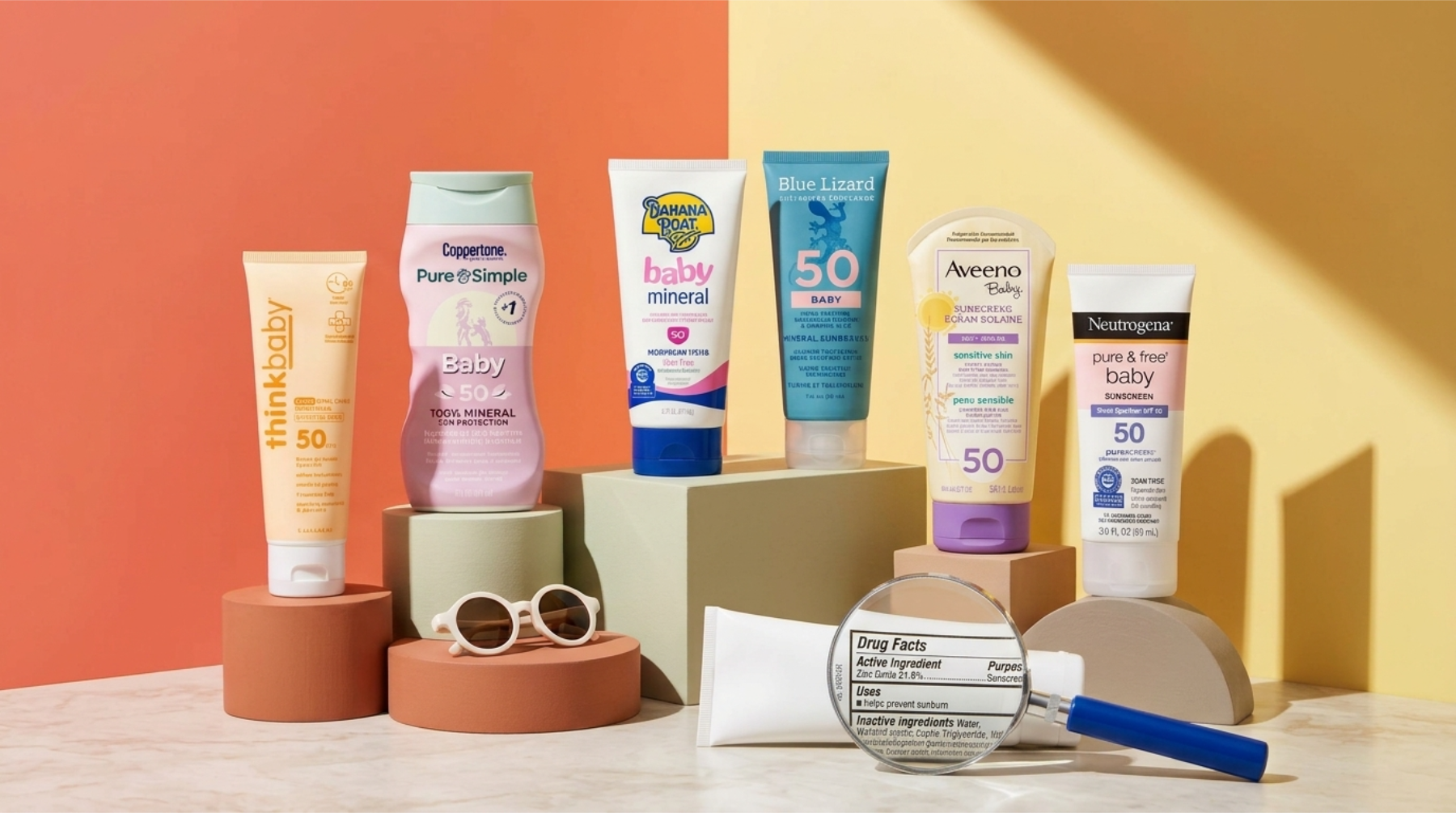
If tear-free is the claim you care about most, our explainer on why sunscreen burns your eyes covers which ingredients cause the sting and how to keep sunscreen out of small eyes.
Can Kids Use Adult Sunscreen?
Yes, once your child is 6 months old, as long as the adult formula ticks the right boxes. The American Academy of Dermatology recommends a broad-spectrum, water-resistant SPF 30 or higher for everyone, and for children it points parents to formulas made with zinc oxide and titanium dioxide. An adult mineral sunscreen with those filters does the same job as one with a cartoon on the label.
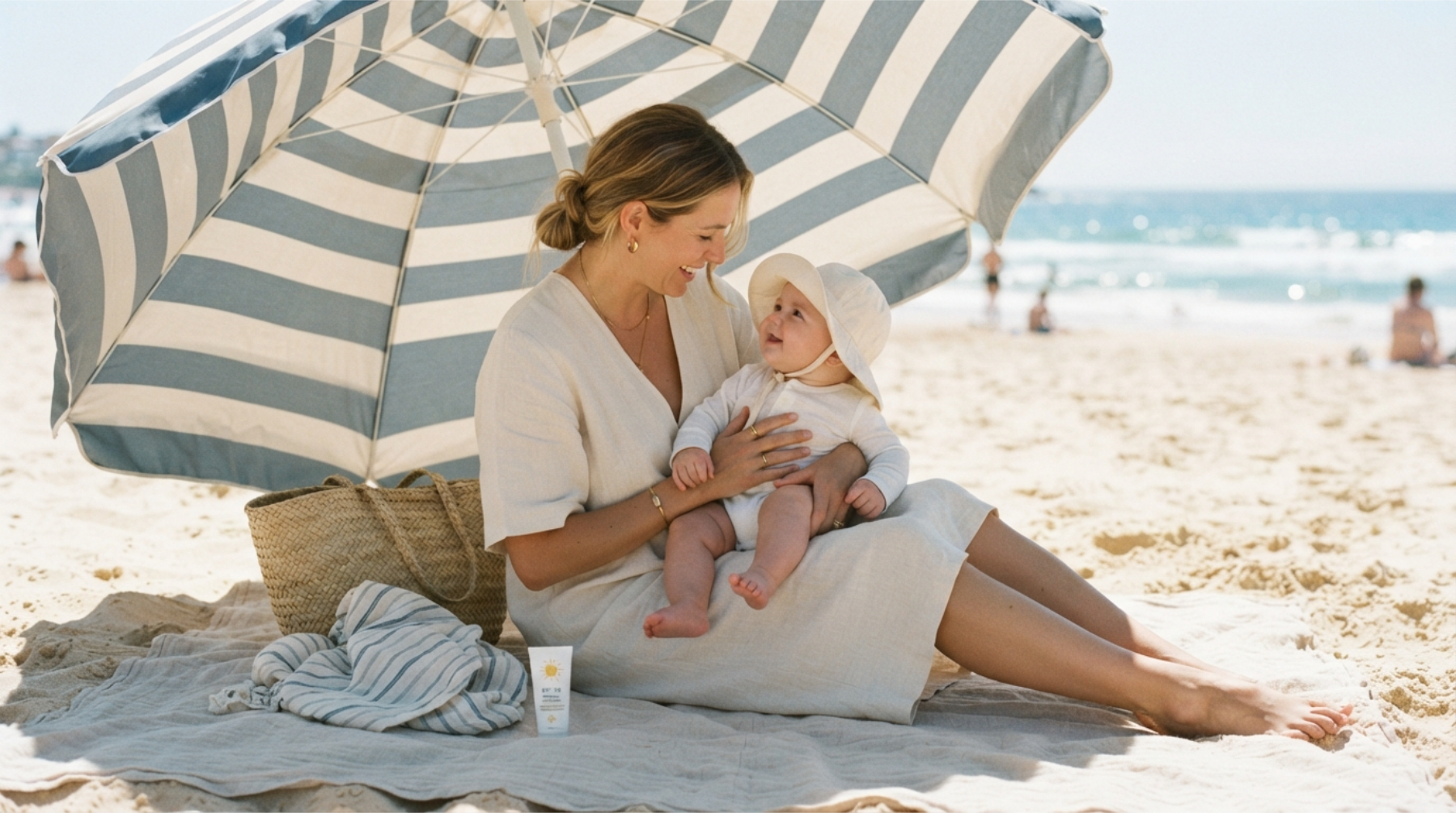
Pediatric specialists at Children's Hospital of Philadelphia note that zinc oxide and titanium dioxide are gentle enough for the most exposed spots on a child's face, the nose and cheeks. Babies younger than 6 months are a different case, and our guide to when babies can start wearing sunscreen explains why shade comes first.
Can Adults Use Baby Sunscreen?
Yes, and it works on adult skin exactly as the label says. An SPF 50 baby lotion gives you SPF 50 protection, because the number comes from the same lab method used for adult bottles. Nothing in a baby formula is too weak for grown-up skin.
Many adults choose it on purpose. A short, fragrance-free mineral formula is what dermatologists tend to suggest for skin that stings, flushes or breaks out in a rash from regular sunscreen, which is why baby bottles turn up in so many beach bags without a baby in sight. The trade-offs are mostly cosmetic: thicker texture, a visible white cast on deeper skin tones and a finish that may not sit well under makeup. Our zinc oxide explainer explains where that cast comes from.
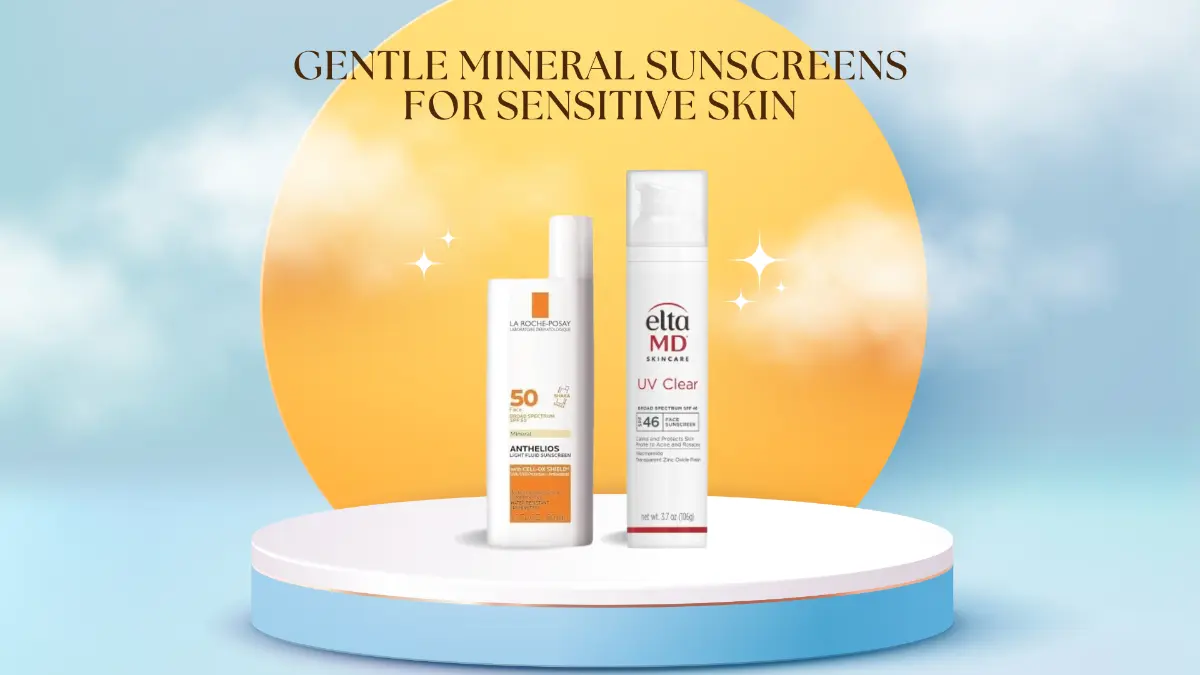
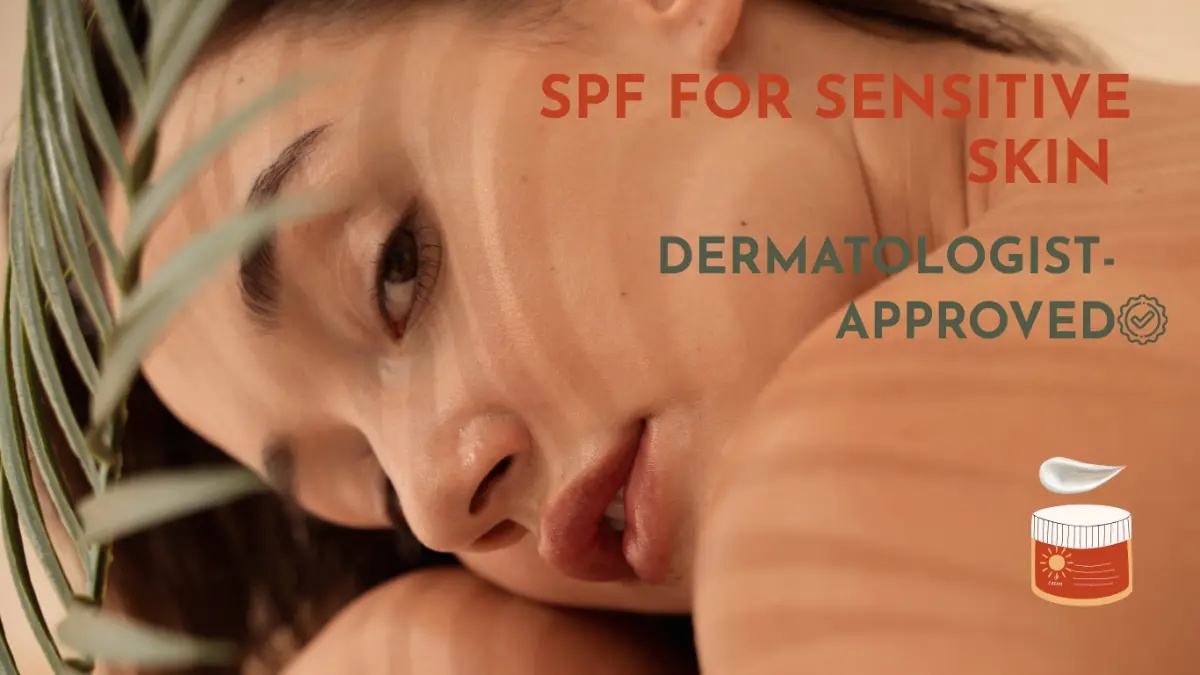
If you like the gentle formula but want something made for your face, these two edits narrow it down.
Baby vs Kids vs Regular Sunscreen
Kids sunscreen sits between the two. Many brands sell the exact same lotion under both a baby and a kids label, so compare the active ingredients before paying for a second tube. Here is how the three usually line up.
What to Look For in Baby Sunscreen
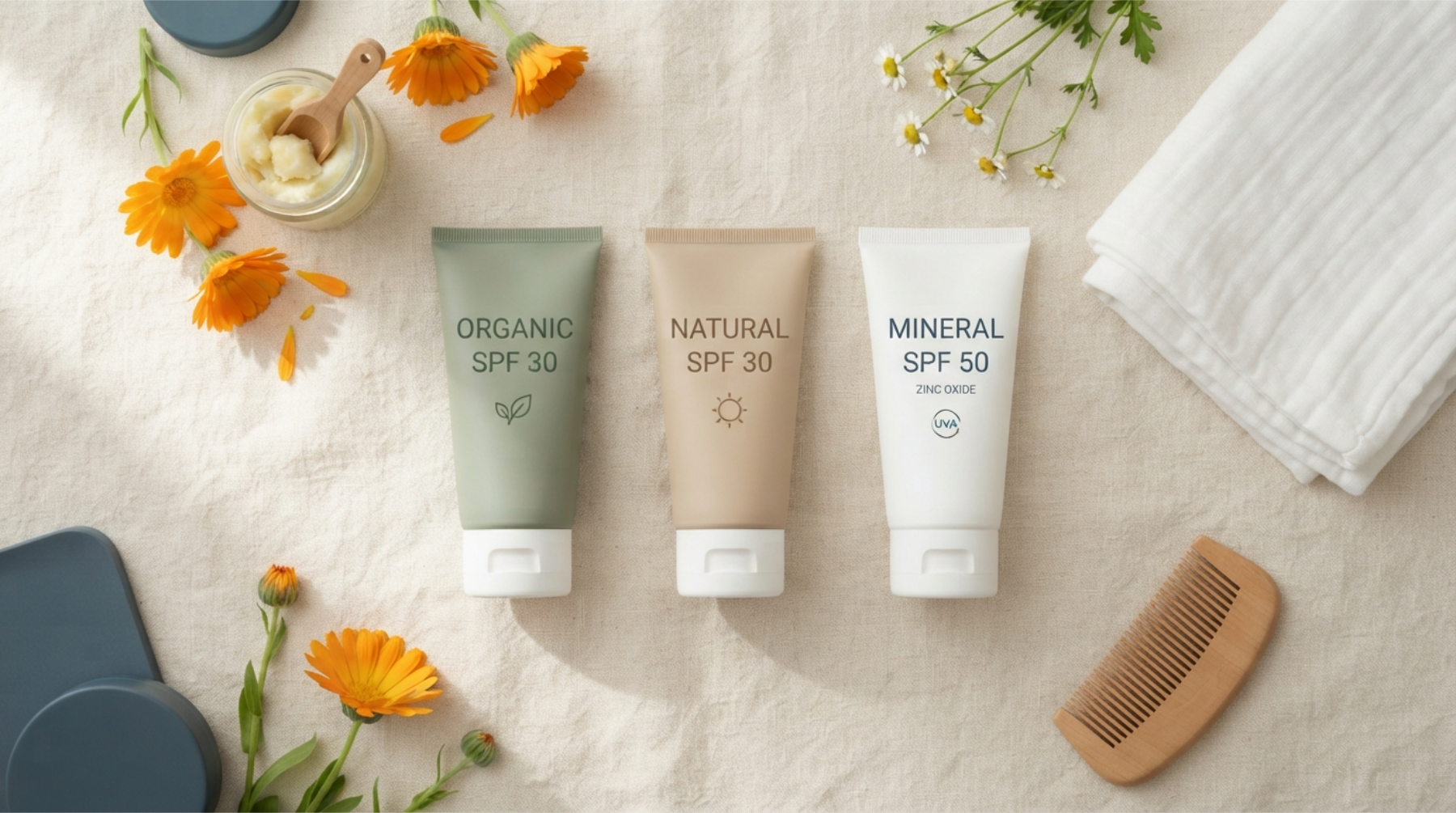
Whether the bottle says baby or not, five details on the back decide if it suits your child. Run through them in this order and the front-of-pack words stop mattering. For a closer read of claims like organic, natural and clean, see our guide to organic vs natural baby sunscreen labels.
One Sunscreen for the Whole Family?
For most families, one bottle can cover everyone over 6 months. A fragrance-free mineral lotion with broad-spectrum SPF 50 and 80-minute water resistance protects a toddler's legs and a parent's shoulders equally well, and buying the larger size brings the price per ounce down.
Two small additions make the shared bottle easier to live with: a mineral stick for little faces, where lotion tends to run into eyes, and a lighter face sunscreen for any adult who wears makeup. The family-size picks in our baby and kids roundup at the top of this page were chosen with exactly that kind of sharing in mind.
Frequently Asked Questions
Is baby sunscreen better for your face?
It can be if your skin is sensitive. Baby sunscreen usually pairs mineral filters with no fragrance, which suits skin prone to stinging, redness or rosacea. The catch is texture: many baby lotions are thick and leave a white cast on the face. A mineral face sunscreen offers the same gentle filters in a lighter, more blendable finish.
Can you wear baby sunscreen under makeup?
You can, but expect mixed results. Rich baby lotions take longer to set and may pill or look patchy under foundation. Apply a thin, even layer, wait about 10 minutes, then press makeup on with a sponge instead of rubbing. If it keeps balling up, switch to a lightweight mineral face SPF for daytime and keep the baby bottle for your body.
Why is baby sunscreen more expensive than regular sunscreen?
Mostly because of packaging size and positioning, not stronger protection. Baby sunscreens often come in small 3 to 4 ounce tubes, which pushes the price per ounce up, and the baby label itself lets brands charge a premium. Compare the unit price on the shelf tag: a family-size mineral lotion with the same actives often costs less per ounce.
Do kids need a higher SPF than adults?
No. Children and adults need the same minimum, a broad-spectrum SPF 30 or higher. What matters more for kids is using enough to coat every exposed spot, including ears and the tops of feet, and reapplying every two hours or after swimming. SPF 50 is a sensible choice for beach days, but SPF 100 adds little real benefit over it.
Does baby sunscreen expire faster than regular sunscreen?
No, it follows the same rules. Sunscreens are made to stay effective for at least three years, and any product with a shorter shelf life must print an expiration date. Heat speeds up the breakdown, so do not leave a tube in a hot car all summer. Toss any sunscreen that has separated, changed color or smells off.
How do you remove baby sunscreen from skin?
Use an oil or balm first, then a gentle cleanser. Mineral baby sunscreens are designed to cling to skin and resist water, so soap alone often leaves a white film. Massage a little baby oil, coconut oil or cleansing balm over the area, wipe it off with a soft washcloth, then follow with a mild, fragrance-free wash.
Can teens use baby sunscreen on acne-prone skin?
Sometimes, but check the label first. Many baby sunscreens are rich lotions made for dry skin and do not claim to be non-comedogenic, so they can clog pores on an oily teenage face. Teens with breakouts do better with a lightweight mineral face SPF labeled non-comedogenic or oil-free, and can still use the family baby lotion on their body.